
DOJ debunks social media claim of discrepancy in LA mayor voting count
DOJ debunks social media claim of discrepancy in LA mayor voting count
DOJ debunks social media claim of discrepancy – On June 6, 2026, a Justice Department official based in Los Angeles refuted a claim that circulated on social media regarding an alleged inconsistency in the vote count for the city’s mayoral election. The assertion, which gained traction among conservative figures on X, suggested that a late-night update on election night showed Republican candidate Spencer Pratt receiving no additional votes. This comes amid ongoing efforts by former President Donald Trump to propagate unfounded allegations of election fraud across the United States.
Trump’s Claims and the DOJ’s Response
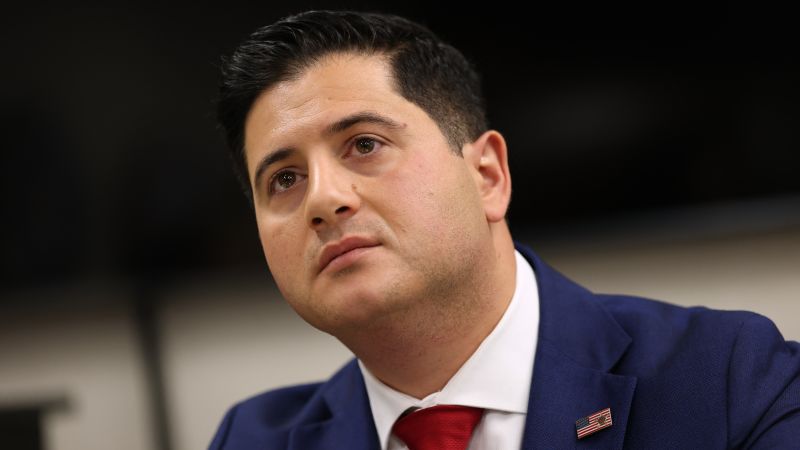
Bill Essayli, the First Assistant US Attorney for Los Angeles and a Trump appointee, addressed the controversy in a statement. He noted that the claim had been circulating online, with right-wing influencers, including Elon Musk, amplifying it. Essayli emphasized that the department had scrutinized official county records and found the claim to be without merit. “Every candidate was represented in the updates,” he wrote, “and no one received zero votes in the entire process.”
“We reviewed official county records. The claim is false. Each candidate received votes in every update.”
The claim originated from an automated update shared by the Los Angeles Registrar of Voters. According to the update, Spencer Pratt appeared to have zero new votes during one of the early reports. However, the AP spokesperson clarified that this was a temporary delay in the system, not an error in the actual tally. “There was a lag in an automated update such that some candidates’ votes were added in one update and the other candidates followed about a minute later,” the representative said.
Details of the Vote Count Discrepancy
The Associated Press explained that the vote counts were processed in batches, with different groups of candidates receiving their totals at different times. Pratt, a former reality TV star, was among the second set of candidates to be updated, which led to a brief period where his votes were not immediately visible. “Exactly one minute later, the electronic update picked up the votes for another group of candidates, including Spencer Pratt,” the AP spokesperson added. The combined totals from both updates revealed that Pratt received 21,870 votes, while the other leading candidates—Mayor Karen Bass and City Councilwoman Nithya Raman—gained 12,850 and 9,521 votes, respectively.
Despite the clarification, the confusion sparked renewed speculation about the integrity of the election. Essayli, who has been a vocal critic of the Democratic Party in previous statements, echoed the sentiment by asserting, “There is evidence of election fraud in California,” and that investigations are ongoing. This aligns with Trump’s broader strategy of casting doubt on election results, even in the absence of concrete proof.
Context of California’s Voting Process
The incident highlights the unique characteristics of California’s electoral system. Unlike states that rely heavily on in-person voting, California’s process includes a significant reliance on mail ballots. This means that many votes are not finalized until several days after Election Day, as officials verify each ballot before tabulating it. As a result, the initial results can be delayed, creating opportunities for misinterpretation.
The California Voter Foundation, a nonprofit dedicated to improving the election process, has pointed out that this delay is standard practice. Ballots can be submitted to local election offices up to seven days after the election, provided they are postmarked by the deadline. This system, while thorough, can lead to fluctuations in real-time updates, especially when multiple batches of votes are processed simultaneously.
Historically, California’s slower reporting pace has been attributed to its large volume of mail ballots and the meticulous verification process required. Critics have argued that this process gives Democrats an edge, as mail ballots are more likely to be completed by voters in the days following the election. However, the recent discrepancy in the LA mayor’s race has been used as a focal point in debates over the fairness of the system.
The Candidates and Election Outlook
Spencer Pratt, a Republican, ran against two Democrats—Mayor Karen Bass and City Councilwoman Nithya Raman—in the June 6 nonpartisan primary. CNN has projected that Bass will advance to the November general election, but the final outcome remains uncertain as votes continue to be tallied. The AP’s real-time updates, which are based on reports from election officials, are expected to resolve the situation soon.
While the vote counts for Pratt, Bass, and Raman are now clear, the incident has underscored the importance of transparency in the electoral process. Essayli’s intervention has been seen by some as an attempt to counter the narrative of widespread fraud, while others view it as a continuation of efforts to challenge the legitimacy of election results.
Broader Implications of the Claims
The social media claim about the LA mayor’s race is part of a larger pattern of misinformation that has persisted since the 2020 presidential election. Trump, who lost that race to Joe Biden, has repeatedly alleged that the outcome was influenced by Democratic tactics, including vote counting irregularities. His comments on the LA race have further fueled these claims, even as officials work to dispel them.
California’s election office confirmed that a Justice Department attorney had been dispatched to observe ballot processing, underscoring the seriousness with which the administration is monitoring the state’s electoral procedures. This move follows a series of statements from Trump and his allies, who have characterized the slow count as evidence of “cheating.”
Although the AP’s explanation has resolved the immediate confusion, the episode has reignited discussions about the reliability of real-time updates and the potential for them to be misinterpreted. The discrepancy in the LA mayor’s race serves as a reminder of how critical it is to distinguish between technical delays and intentional manipulation of data. As the vote count continues, the focus will remain on ensuring that the process is both transparent and accurate.
In summary, the DOJ’s debunking of the social media claim has clarified that the initial update was not a sign of fraud but a result of the automated system’s timing. The role of mail ballots in California’s electoral process, combined with the pressures of real-time reporting, has created a scenario where minor delays can be magnified into major controversies. As the election moves forward, the challenge will be to maintain public trust while addressing the complexities of the voting system.
