
Ötzi the Iceman is long dead, but some of his ancient microbes are still alive
Ötzi the Iceman is long dead, but some of his ancient microbes are still alive
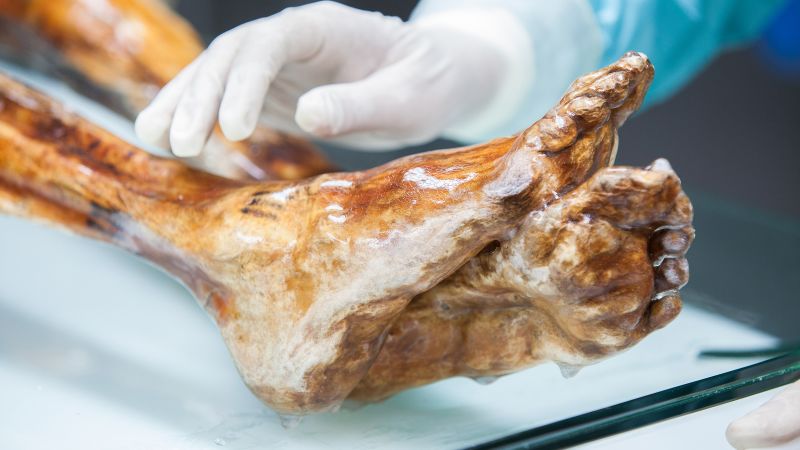
Ötzi the Iceman is long dead – In a groundbreaking study, researchers have discovered that Ötzi the Iceman, the remarkably preserved and extensively studied mummy of a man who died 5,300 years ago, may still host a living microbial community. Despite being frozen for millennia, certain microbes from his body have not only survived but continue to exhibit signs of activity, challenging previous assumptions about the permanence of ancient biological material. This revelation, published recently in the journal Microbiome, sheds new light on how microbial life can persist in extreme environments and raises questions about the accuracy of DNA analysis in ancient remains.
Microbial Longevity and Activity in Ötzi’s Remains
The study, led by scientists at Eurac Research in Bolzano, Italy, examined both the internal and external microbes of Ötzi’s mummified body. By analyzing fungal and bacterial species found in his tissues, the researchers found that some of these organisms remained viable even after thousands of years. The findings suggest that these microbes may have entered a dormant state rather than being entirely preserved as inert remnants. “Some of the microbes are not merely dormant relics but may be multiplying slowly in micropockets of mummy moisture,” explained Frank Maixner, a senior author of the study. This slow activity implies that microbial life in ancient remains is more dynamic than previously believed, with potential implications for how we store and study such specimens.
Ötzi’s microbes were linked to the high-altitude environment where his body was discovered in the Ötztal Alps. Fungal species found on and within his remains appear to have colonized his corpse shortly after death, surviving the freezing conditions of the glacier. “The fungi’s natural resistance to cold kept them dormant but still alive and capable of reviving,” noted the study. This resilience highlights the unique conditions of the Alpine environment, which may have shielded microbial life from degradation. The research also revealed that some microbes likely originated from the surrounding soil, while others were part of the human gut microbiome at the time of Ötzi’s death.
Revealing Ötzi’s Microbial Ecosystem
Scientists employed a range of techniques to investigate Ötzi’s microbial activity. They collected samples from water reservoirs inside his body, swabbed the exterior of the mummy, and analyzed exposed internal tissues. Additionally, they examined soil from the site of his discovery and compared it to microbial samples gathered from the museum where his remains are stored. By culturing these microbes and sequencing their DNA, researchers could distinguish between ancient species and modern contaminants, providing a clearer picture of Ötzi’s original microbial composition.
One of the study’s key findings was the identification of gut bacteria that have not been commonly observed in modern industrialized populations. These microbes, preserved in Ötzi’s remains, are rare in today’s humans but still present in individuals with traditional lifestyles. “These microbes give us a unique and precious snapshot of what the human gut looked like in the Copper Age,” said Maixner. The analysis also suggested that Ötzi’s body was home to a diverse array of microbial communities, some of which may have thrived in the cold, moist conditions of the glacier.
Ötzi’s microbial profile offers clues about his health, diet, and environment. The presence of certain bacteria could indicate his exposure to specific foods or pathogens, while fungi may reflect the conditions of his burial. This microscopic evidence complements other findings from Ötzi, such as his 61 tattoos, which were recently reinterpreted as evidence of a different method of application than previously thought. The study’s focus on microbes underscores the importance of understanding not just the human body but also the unseen ecosystems that coexisted with it.
Preservation Challenges and Contamination Risks
While glacial ice and freezing temperatures have long protected Ötzi’s body, the study raises concerns about whether these conditions also safeguarded his microbial life from damage. Once Ötzi was discovered in 1991, his remains were stored in a controlled environment at approximately 21 degrees Fahrenheit (minus 6 degrees Celsius) with 99% relative humidity—conditions similar to those of the glacier. However, scientists are now questioning if this setup was sufficient to prevent microbial growth or contamination from modern sources.
“In many studies of DNA from ancient human remains, the microbial DNA is largely ignored,” wrote Anders Bergström, an evolutionary genomics researcher at the University of East Anglia, in an email to CNN. Bergström, who was not involved in the new research, pointed out that it’s often unclear whether the DNA recovered from ancient remains is as old as the human body itself or represents recent contamination. The study on Ötzi provides a framework for addressing this ambiguity, emphasizing the need to account for microbial activity when interpreting genetic data from mummies.
The research also highlights the risks associated with handling preserved remains. Even in a cold, humid storage environment, exposure to modern bacteria and fungi can alter the microbial profile of a mummy. This contamination complicates efforts to determine which microbes were originally present and which arrived later. For instance, airborne microbes from the museum’s storage chamber and handling areas were sampled to compare with those in Ötzi’s tissues, revealing potential sources of modern influence. Such findings underscore the importance of meticulous sampling techniques to preserve the integrity of ancient microbial communities.
Implications for Ancient Microbiome Research
The study’s results have broader implications for the field of paleomicrobiology. If microbes in ancient remains can remain active for millennia, then their analysis may provide more accurate insights into the biological processes of the past. This could redefine how researchers interpret the microbial ecosystems of ancient environments, from the Copper Age to the Ice Age. “Ötzi’s microbes are almost as interesting as Ötzi himself,” Maixner said. “They offer a window into the health of ancient individuals and the microbial diversity of their surroundings.”
Future research may focus on how microbial activity evolves over time in frozen remains. By comparing Ötzi’s microbes to those found in other mummies, scientists can better understand the factors that contribute to microbial survival. Additionally, the study could inform the development of new preservation methods that minimize contamination while maintaining the viability of microbial life. “The discovery that some microbes remain alive challenges our assumptions about the permanence of ancient biological material,” Bergström added. “It’s a reminder that even in the most extreme conditions, life can persist in unexpected ways.”
Ötzi’s case is a testament to the complexity of ancient ecosystems. His microbes, now studied in detail, reveal not only the conditions of his death but also the resilience of life in the face of time. As researchers continue to explore the microbial world of mummies, they may uncover more about the interplay between human biology and the environment, offering a deeper understanding of how life has shaped and been shaped by history.
