
Cuba’s doctors are its biggest soft power export. Several Latin American countries are cutting ties
Cuba’s Doctors: Its Biggest Soft Power Export as Latin America Shifts Ties
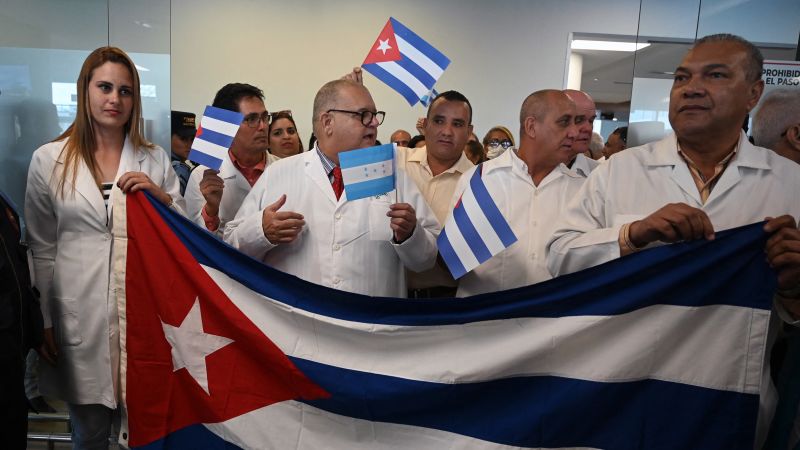
Cuba s doctors are its biggest – Cuba’s doctors are its biggest soft power asset, yet the country faces growing pressure from several Latin American nations to reevaluate their reliance on the program. Hector Zelaya, a middle-aged man from Honduras, walks through an abandoned ophthalmology clinic in Catacamas with cautious steps, the once-bustling facility now a symbol of shifting priorities. The clinic, four hours east of Tegucigalpa, was a lifeline for eye care in a region where access is limited. Zelaya’s cataract surgery was canceled in March, severing a crucial link to affordable medical services. This decision marks a turning point for Cuban-led missions, which have long been central to Cuba’s global health diplomacy.
The Strain on Cuba’s Medical Diplomacy
Latin American countries, including Honduras, Jamaica, Guyana, and Guatemala, are rethinking their ties with Cuba’s medical missions. President Nasry “Tito” Asfura, who received support from former U.S. President Donald Trump, cited regulatory noncompliance as the reason for halting the program. Known as “Mission Miracle,” the initiative has dispatched thousands of Cuban healthcare workers to underserved communities, offering low-cost or free services. However, recent actions signal a broader erosion of trust, as nations weigh the benefits of Cuban medical expertise against concerns over labor practices.
Cuba’s medical diplomacy has long been a cornerstone of its international influence, particularly in Latin America. For decades, the country has provided critical healthcare support to countries with limited resources, bolstering its reputation as a reliable partner. Yet, the U.S. has increasingly framed the program as a tool of political coercion, accusing Havana of using forced labor to sustain its economic model. These criticisms, amplified by recent decisions to cut ties, have created a ripple effect across the region, challenging Cuba’s soft power legacy.
Political Tensions and Economic Leverage
U.S. Secretary of State Marco Rubio, whose family originates from Cuba, has been a key voice in opposing the program. In February 2025, he announced restrictions on visas for officials overseeing Cuban missions, aiming to hold the regime accountable. “We will promote accountability for the Cuban government,” Rubio stated, emphasizing the program’s role in economic and political leverage. The move has forced countries like Jamaica and Guyana to reconsider their partnerships, aligning with Washington’s broader campaign against authoritarianism.
The Inter-American Commission of Human Rights has also weighed in, highlighting both the program’s benefits and its controversies. While acknowledging the positive impact of Cuban medical brigades in rural areas, the report accused the regime of coercive tactics. Medical workers, often earning wages significantly lower than their host countries, face movement restrictions and are expected to support political narratives. These findings have fueled debates, with some countries now questioning whether the missions align with their national interests.
“Most of the people here wouldn’t be able to pay for that,” said Hector Zelaya, reflecting on his personal struggle. His $2,250 eye surgery at a private clinic, funded through family support, illustrates the financial burden on low-income individuals. In Honduras, where the average monthly wage ranges from $400 to $800, the Cuban clinic in Catacamas was the sole public option for such procedures. Zelaya’s experience underscores the vital role these missions play in communities that depend on them for essential care.
A Divided Landscape of Support and Skepticism
Cuba’s medical missions have sparked a polarized debate. Supporters argue that they provide life-saving services to regions lacking infrastructure, embodying a spirit of international solidarity. For many, the presence of Cuban doctors represents a commitment to public health, even in the face of political challenges. However, critics view the program as a tool for regime promotion, linking it to Cuba’s authoritarian policies.
Despite the controversies, Cuban doctors often express pride in their work. “Our philosophy is to help people regardless of their political beliefs,” said a medical professional interviewed by Breakthrough News in 2022. The doctor, who had served in Guatemala, Liberia, and Europe during the pandemic, noted that the missions were initially praised for their pandemic response. Yet, as political tensions with the U.S. intensify, the same program now faces scrutiny in countries where economic and ideological pressures mount.
Havana’s Response and the Path Forward
Cuban officials have defended their medical missions, emphasizing their role in global health and humanitarian aid. The government has highlighted the program’s success in improving healthcare access, particularly in rural and underserved areas. However, as nations like Honduras and Guyana move toward reducing their dependence on Cuban services, Havana must adapt its strategy. The challenge lies in balancing its ideological goals with the practical needs of its partners, ensuring the missions remain a valuable asset rather than a political liability.
