
Blue Origin rocket explodes during ground test
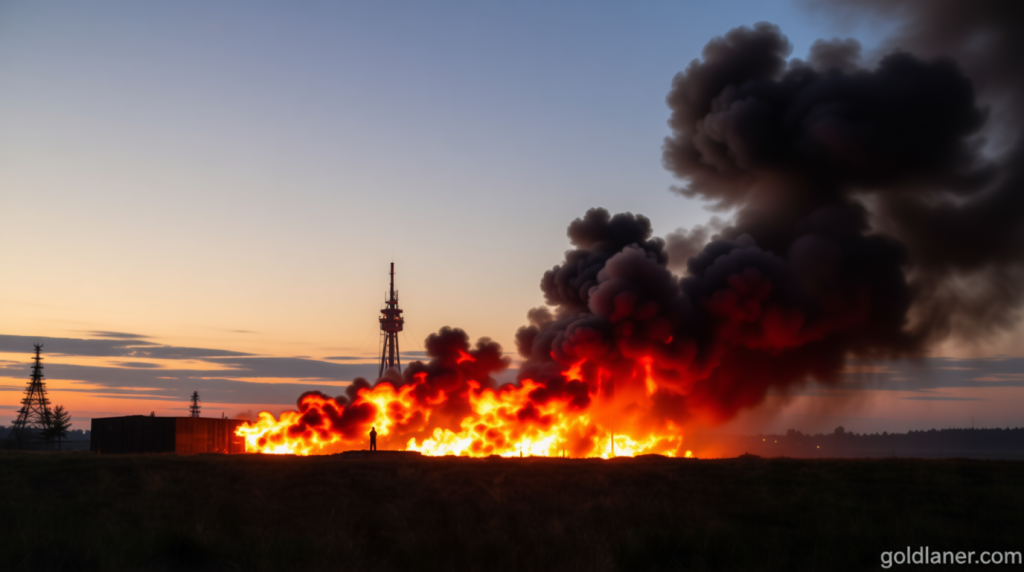
Blue Origin Rocket Explodes During Ground Test
Blue Origin rocket explodes during ground – On Thursday, a Blue Origin New Glenn rocket suffered an unexpected incident during a ground test, according to the company’s announcement on X. Footage from Cape Canaveral Space Force Station in Florida, released in the evening, appears to depict the rocket catching fire on its launchpad. Despite the dramatic visuals, Jeff Bezos, the founder of Blue Origin, reassured followers in a separate X post that all personnel involved were safe. “It’s too early to determine the exact cause, but we’re already working to identify it,” he stated. “This was a tough day, but we’ll rebuild and return to flight. It’s worth the effort.”
Federal Aviation Administration Response
The Federal Aviation Administration (FAA) confirmed that the anomaly occurred during a static fire test at Cape Canaveral around 9 p.m. local time on May 28. “This test was not part of FAA licensed activities, and there was no impact to air traffic,” the agency noted in a statement to CNN. The incident, while significant, is seen as a standalone event that does not disrupt ongoing regulatory processes. Blue Origin has not yet provided further details on the cause of the explosion, though they are expected to release more information as investigations progress.
NASA’s Acknowledgment and Industry Context
NASA’s chief, Jared Isaacman, shared a message on X confirming awareness of the anomaly at Launch Complex 36. “Spaceflight is unforgiving, and developing new heavy-lift launch capabilities is an immense challenge,” he said. The US Space Force added that range officials are collaborating with Blue Origin and its partners to pinpoint the root of the issue. “The Eastern Range supports critical testing and launch activities that advance national security and space exploration,” the statement emphasized. “Such operations often involve experimental systems, and anomalies are a natural part of the process.”
The incident marks the second major setback for Blue Origin’s New Glenn rocket, following a failure during its third flight on April 19. The FAA investigation into that event has been ongoing, but the recent explosion occurred independently. While the April mission achieved a successful first-stage landing on a seafaring barge, the second stage failed to deliver AST SpaceMobile’s BlueBird 7 satellite to orbit. This fourth mission, originally planned to deploy 48 satellites to Amazon’s Leo broadband network, now faces delays.
Reusability Goals and Previous Successes
Blue Origin’s New Glenn rocket is designed to enable reusable launch systems, a strategy similar to SpaceX’s Falcon rockets. The company had spent over 10 months refining the vehicle to ensure consistent booster recovery, a key component of reducing launch costs. The second flight in November 2025 demonstrated this capability, with the first-stage booster landing safely and carrying the NASA mission Escapade, a pivotal journey to Mars. However, the April 19 launch, despite the successful landing, fell short of its primary objective due to insufficient thrust from one of the BE-3U engines.
“While we are happy with the nominal booster recovery, we clearly didn’t meet the mission expectations our customer wanted,” CEO Dave Limp remarked on X at the time. This highlights the dual challenges of technical performance and customer satisfaction for Blue Origin. The company has since acknowledged that the failed recovery attempt in April was due to engines that did not reignite properly, a critical factor in achieving full reusability. Analysts suggest that consistent success in this area could help Blue Origin compete more effectively with SpaceX in the commercial space industry.
Shift in Focus for New Shepard
Meanwhile, Blue Origin has redirected its efforts from its space tourism rocket, New Shepard, to lunar lander development. The company announced a two-year pause on New Shepard flights in January, citing the need to prioritize advanced projects. New Shepard had been conducting 10-minute suborbital missions since 2021, transporting celebrities and wealthy passengers to the edge of space. This shift underscores Blue Origin’s strategic focus on expanding its capabilities beyond short-duration space tourism.
The explosion during the static fire test raises questions about the timeline for New Glenn’s next launch. While the fourth mission was intended to be a major milestone, the setback could delay progress. However, Blue Origin’s track record of overcoming technical hurdles suggests resilience. The debut flight of New Glenn on January 16, 2025, was hailed as a success, though it missed the bonus goal of recovering the first-stage booster. The company attributed this to engine ignition issues, a problem that has since been addressed in subsequent tests.
Broader Implications for the Space Industry
As the space sector intensifies competition, incidents like this highlight the complexities of developing cutting-edge launch systems. Both Blue Origin and SpaceX hold contracts with NASA to advance space exploration, but their approaches differ in execution. While SpaceX has consistently demonstrated rapid iteration and scalability, Blue Origin’s emphasis on reusability and precision aims to carve out its own niche. The recent anomaly may test the company’s ability to maintain its momentum, but it also reinforces the importance of thorough testing in aerospace engineering.
The explosion at Cape Canaveral is not the first time Blue Origin has faced challenges. The first launch of New Glenn in January 2025, though successful, revealed the need for further refinement. The company’s commitment to resolving these issues is evident in its swift response to the incident. “We will work with our partners to conduct a comprehensive investigation,” NASA’s Isaacman reiterated. “This will help us understand the anomaly and assess its impact on future missions.”
Industry experts note that such setbacks are common in the race to innovate. “Every major player in this field has experienced failures,” said a space analyst. “The key is how quickly they adapt and how well they communicate with stakeholders.” Blue Origin’s ability to recover from this incident will likely be a key indicator of its long-term viability. The company’s investments in reusability and its partnership with NASA suggest that it remains a formidable force in the industry, despite the recent setback.
The incident also underscores the risks inherent in testing new technologies. The US Space Force emphasized that developmental systems like New Glenn are essential for progress, even if they occasionally result in anomalies. “Testing is the foundation of innovation,” the statement read. “These challenges are part of the journey toward achieving safer, more efficient spaceflight.”
As Blue Origin moves forward, the focus will remain on both technical and operational recovery. The company’s leadership has expressed confidence in its ability to overcome the current hurdle, reaffirming its commitment to advancing space exploration. With the fourth mission’s original goals now in jeopardy, the timeline for deploying New Glenn’s full potential will need to be reassessed. Yet, the resilience shown in the wake of the explosion suggests that the company is prepared to face the challenges of spaceflight head-on.
Meanwhile, the FAA and NASA continue to monitor the situation, ensuring that all regulatory and safety protocols are upheld. “We will work closely with Blue Origin to evaluate the anomaly’s implications,” NASA officials stated. This collaboration is crucial as the company navigates the next phase of its development. The incident may also prompt a review of current testing procedures, emphasizing the importance of redundancy and contingency planning in aerospace operations.
For Blue Origin, the explosion serves as a reminder of the high stakes involved in space exploration. The company’s vision of reusable rockets and affordable access to orbit is now under scrutiny, but the determination to succeed remains unchanged. “We are determined to learn from this and return to flight stronger,” Bezos wrote in a follow-up post. The road to recovery will likely involve extensive analysis, adjustments to the rocket’s design, and renewed efforts to ensure the reliability of its systems.
As the space industry continues to evolve, incidents like this are not just technical challenges but also opportunities to showcase progress. Blue Origin’s experience with New Glenn and New Shepard highlights the diverse strategies being employed to achieve spaceflight milestones. While the explosion may temporarily slow its momentum, the company’s history of innovation and perseverance suggests it is well-equipped to overcome this obstacle and continue its journey toward orbital dominance.
