
Radicalization concerns, seized guns and 911 calls: San Diego shooting prompts questions about parental awareness, gun access
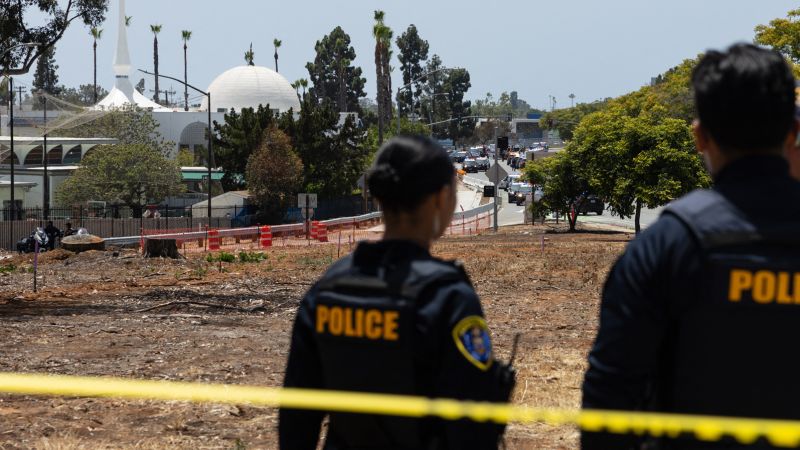
San Diego Shooting Sparks Debate on Parental Oversight and Gun Access
Radicalization concerns seized guns and 911 calls – Two hours after a 911 call from a mother described a concerning situation involving her 17-year-old son, authorities received reports of an active shooter at the Islamic Center of San Diego. The mosque, the city’s largest, became the site of a tragic attack that claimed the lives of three men: Amin Abdullah, Mansour Kaziha, and Nadir Awad. The assailants, dressed in camouflage, were later identified as Cain Clark and Caleb Vazquez, two teenagers whose names would become synonymous with the violence that unfolded. According to San Diego Police Chief Scott Wahl, the pair were found dead inside a car, having taken their own lives with self-inflicted gunshot wounds.
Gun Seizures and Online Radicalization
The mother’s initial 911 call revealed that her son had disappeared, along with several of her weapons and his vehicle. She informed officers that the teenager had left behind a possible suicide note before vanishing with a man he had met online, someone she had never encountered. This incident raised immediate questions about parental awareness of their child’s mental state and access to firearms. Law enforcement officials highlighted that the attack was not isolated, as the shooters had already been linked to the mosque’s violent assault.
Caleb Vazquez, one of the perpetrators, was previously under a psychiatric hold. In January of last year, a gun violence emergency protective order was issued, prompting authorities to confiscate firearms from his parents’ home. The order cited concerns about Vazquez’s “suspicious behavior idolizing Nazis and mass shooters,” as noted in court documents. Despite these measures, Vazquez was released from a mental health facility the day before the shooting, though the reasons for his release remained undisclosed. The facility cited medical privacy laws and the ongoing investigation as justification for withholding details.
“Although measures were taken to help him through his mental instability, it ultimately was not enough,” Vazquez’s parents said in a statement. “We repeatedly encouraged him to seek help, and he voluntarily spent time in multiple rehabilitation centers.”
Vazquez’s father had also declared in a written court statement that he and his wife had already removed around two dozen firearms from their home. This action, taken prior to the shooting, underscores the tension between parental control and the ease with which firearms can be accessed. Meanwhile, Cain Clark, the other shooter, had not been on law enforcement radar, yet the weapons used in the attack were reportedly taken from his family’s residence. This detail has fueled further scrutiny into how Clark’s parents might have been aware of his potential risk.
Challenges in Identifying Red Flags
Experts in gun violence and legal affairs have emphasized the complexities of recognizing warning signs in young individuals. “Even when red flags are reported by parents and law enforcement, there are challenges in preventing future acts of violence,” said one analyst. The case of Vazquez exemplifies these challenges, as his parents’ efforts to monitor his behavior were not sufficient to stop the attack. However, the question remains: how much responsibility should parents bear for their children’s actions, especially when those children are minors?
Authorities are still investigating whether Clark’s parents could be held legally accountable. San Diego Police Chief Wahl noted that it is unclear how the teenagers obtained the weapons, and the police have not yet provided details on whether Clark’s parents disclosed their storage methods. The District Attorney’s Office has similarly chosen to withhold information, citing the sensitivity of the case. “We are still looking into the matter,” Wahl said, leaving room for speculation about the role of parental oversight in the tragedy.
Parental Liability and Legal Precedents
The incident has sparked discussions about the legal liability of parents in cases of youth violence. In the past two years, two notable cases have resulted in convictions against parents for their children’s actions: the Oxford High School shooter Ethan Crumbley and the Apalachee High School shooter Colt Gray. These precedents suggest that parents may face charges if their involvement in their child’s access to firearms or radicalization is deemed significant.
For Clark, the potential for liability hinges on his parents’ knowledge of his risk factors and the steps they took to secure the weapons. “Parental liability will ultimately depend on prior awareness of the child’s behavior and whether firearms were properly stored,” said a legal expert. The case also highlights the difficulty of assessing whether parents missed warning signs, such as an interest in extremist ideologies or a pattern of aggressive behavior.
“We reject hatred, extremism, bigotry, and violence in every form,” said Vazquez’s family. “We will forever live with the burden of wondering whether there was more we could have done to help prevent this senseless tragedy.”
Online Radicalization and Societal Ties
The shooting has reignited debates about the role of online platforms in shaping young minds. Vazquez’s parents pointed to the influence of digital rhetoric as a key factor in their son’s radicalization. They described his “descent into radicalized ideologies and violent beliefs” as a result of exposure to extremist content. This perspective aligns with broader concerns about how social media and the internet can amplify hateful ideologies, particularly among impressionable teenagers.
Meanwhile, the mosque attackers shared video footage of the shooting and writings that cited racist ideologies. These materials, which were later made public, have drawn attention to the intersection of gun violence and extremist thought. The attackers’ ability to carry out the assault with camouflaged clothing and quick access to weapons suggests a level of preparation that raises questions about both their individual motivations and the broader societal context in which such violence occurs.
Community and Legal Implications
As the investigation continues, the community is grappling with the implications of the shooting. Many are asking how families can better monitor their children’s activities and ensure firearms are stored safely. The case has also prompted calls for improved communication between parents, law enforcement, and mental health professionals. “There is a need for clearer protocols to flag potential risks and coordinate responses,” said a legal analyst.
Gun violence experts argue that the incident underscores the importance of addressing both the availability of weapons and the psychological factors that lead to radicalization. “This case is a reminder that even with protective measures, such as gun seizures, there are gaps in preventing harm,” one expert noted. The fact that Vazquez had been in a mental health program just days before the attack adds another layer to the discussion about the effectiveness of such interventions.
San Diego’s police department has maintained that the investigation is “very extensive” and involves multiple agencies. While the exact sequence of events and the shooters’ motivations remain under scrutiny, the case has already led to significant public discourse. The combination of parental responsibility, access to firearms, and online radicalization has created a multifaceted narrative that challenges the community to rethink its approach to youth violence.
In the days following the attack, the mother of the missing teenager expressed deep concern over the loss of her son and the potential for others to follow a similar path. “It’s heartbreaking to think about how quickly things can escalate,” she said, reflecting on the urgency of identifying and addressing warning signs. As the investigation progresses, the outcome may shape future policies on gun control and parental accountability, setting a precedent for how society addresses the roots of such tragedies.
