
US funding cuts have hampered response to the deadly Ebola crisis, aid workers say
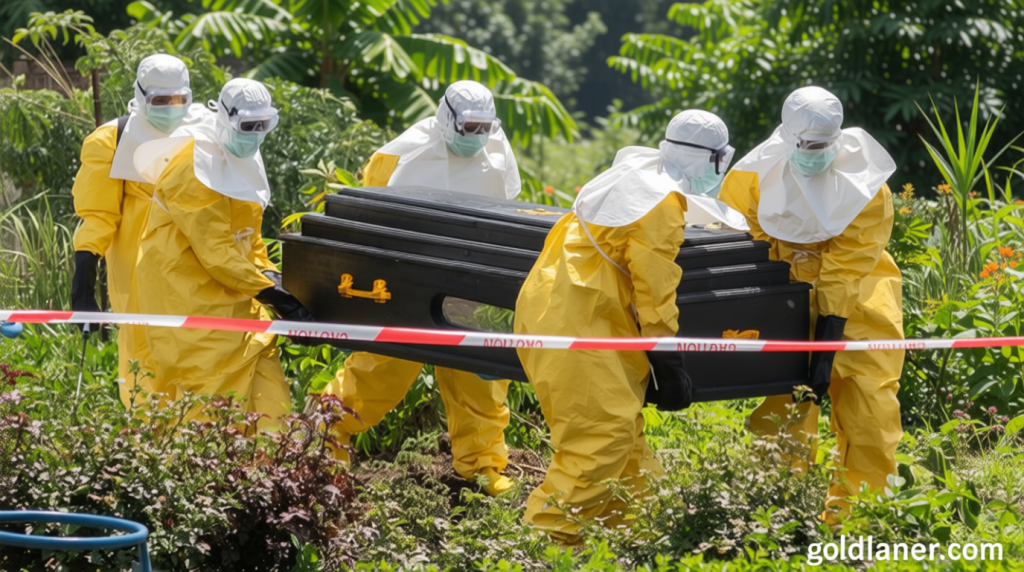
US Funding Cuts Have Impacted Ebola Response in Democratic Republic of the Congo, Aid Workers Report
US funding cuts have hampered response – The current Ebola epidemic in the northeastern region of the Democratic Republic of the Congo (DRC) has raised concerns among frontline workers about the factors that contributed to the delayed response. They point to the U.S. government’s decision to reduce funding for international health programs, which led to the dismissal of healthcare professionals and a shortage of essential medical resources. This shift in support has left local health systems struggling to contain the outbreak, which has claimed over 170 lives and affected nearly 750 individuals. The World Health Organization (WHO) has emphasized that the scale of the epidemic in the DRC is likely greater than initially reported, with the outbreak possibly circulating undetected for months before it was officially recognized.
Challenges in Early Detection
Experts attribute the slow identification of the virus to a combination of factors, including the presence of a less common strain, the limited capacity of health infrastructure in remote areas, and ongoing ethnic tensions that disrupted testing efforts. The Bundibugyo strain, which is not as well-known as the Zaire strain, has been identified as a key contributor to the delayed detection. Humanitarian workers in the region explained that local testing facilities lacked the equipment and expertise to confirm the outbreak, forcing samples to be sent over a thousand miles to a laboratory in Kinshasa for analysis. This logistical hurdle prolonged the time it took to recognize the severity of the situation, according to officials.
“Weakened disease surveillance systems following severe health funding cuts in eastern DRC are contributing to the rapid escalation of the latest Ebola outbreak,” said the International Rescue Committee (IRC) in a statement.
The IRC highlighted how years of underinvestment and recent budget reductions have left many health centers without basic protective gear, the ability to monitor disease trends, or the manpower needed to act swiftly. Heather Reoch Kerr, the group’s country director for the DRC, added that these conditions created a perfect storm for the virus to spread unchecked. “Frontline workers are now operating with diminished resources, which has compromised their ability to respond effectively to this growing threat,” she noted.
Trump Administration’s Cutbacks
The Trump administration’s approach to global health funding has been a focal point of criticism. Officials have outlined four main areas where financial support was reduced: the withdrawal of U.S. funding from the WHO, the dissolution of the U.S. Agency for International Development (USAID), cuts to the Centers for Disease Control and Prevention (CDC), and a decline in health aid provided to the DRC and Uganda, the epicenters of the outbreak. These measures, according to aid workers, have created a ripple effect, weakening the networks that are critical for early outbreak detection and rapid containment.
Josh Michaud, associate director for global and public health policy at KFF, stated that the cumulative impact of these changes has significantly hindered the region’s capacity to manage the crisis. “When you add up all of those elements, it’s hard to see how there could not have been an effect on the surveillance and response capabilities in these countries,” he said. The CDC, which has maintained a presence in the region for decades, acknowledged its role in the response but argued that its operations were not entirely disrupted by the funding cuts.
“The CDC has worked in this area for many years, with 100 staff members in Uganda and nearly 30 in the DRC. We have also deployed hundreds of personnel as part of our emergency response efforts this week,” said Dr. Satish Pillai, the agency’s incident manager for the Ebola response.
Defending the Administration’s Actions
A State Department spokesperson attempted to counter the criticism, asserting that the Trump administration’s changes did not impede the response to the outbreak. They claimed that once the WHO identified the epidemic, the U.S. acted promptly, with health management programs and funding allocations continuing seamlessly despite the dismantling of USAID. “There was no specific program or individual within USAID that was responsible for detecting this outbreak,” the official stated. “Our team retained numerous staff who had expertise in these areas, ensuring continuity in the response.”
However, aid workers remain skeptical. They argue that the reduction in USAID’s budget and the loss of dedicated personnel created gaps in the system. “Even though staff were retained, the overall capacity was diminished because funding was redirected away from programs that focused on disease surveillance and early intervention,” one expert explained. This sentiment was echoed by the WHO, which stressed that the epidemic’s early stages were exacerbated by a lack of preparedness and resources. The organization noted that the Bundibugyo strain, which is less well-understood and more difficult to track, further complicated efforts to respond quickly.
Timeline of the Outbreak
Health officials have confirmed that the first death linked to this outbreak occurred in Ituri Province on April 20. Yet it wasn’t until May 15 that the outbreak was officially declared, a delay that critics say underscores the challenges in detecting and responding to the crisis. The time lag was primarily due to the inability of local laboratories to conduct rapid tests for the Bundibugyo strain, forcing reliance on distant facilities. “The delay in testing made it harder to act quickly, which allowed the virus to spread more extensively before containment efforts could begin,” a regional health worker said.
“It’s a little tough to get to it, because it’s in a rural area, so it’s kind of confined in a hard to get to place in a war-torn country,” stated U.S. Secretary of State Marco Rubio, who blamed the WHO for being “a little late to identify this thing.”
Rubio acknowledged that other factors, such as the geographic isolation of affected areas and the ongoing conflict, contributed to the challenges. But he also emphasized the importance of the WHO’s role in global health coordination, suggesting that the organization’s delays were significant. The DRC’s health ministry has since called for increased international support, citing the need for additional funding to improve local infrastructure and expand testing capabilities. With the outbreak still unfolding, the debate over the U.S. role in global health remains a central issue in the ongoing crisis.
Broader Implications for Global Health Systems
Experts warn that the U.S. funding cuts are not just a local problem but a global concern. The CDC and USAID have historically played a vital role in monitoring and responding to outbreaks, particularly in regions with limited healthcare resources. Their reduction has left a void in the international response network, forcing other countries and organizations to step in with limited capacity. “The U.S. has long been a leader in global health initiatives, and its withdrawal has created uncertainty for programs that rely on consistent funding,” said a public health analyst. “This crisis is a stark reminder of how interconnected our health systems are.”
Meanwhile, the WHO continues to advocate for urgent financial and logistical support to address the current outbreak and prevent future ones. The organization has highlighted the need for sustained investment in health infrastructure, particularly in conflict-affected and remote regions. “Without adequate resources, it will be more difficult to detect and manage outbreaks in their early stages,” the WHO spokesperson said. The situation in the DRC has now become a test case for how well global health systems can adapt to the consequences of reduced international aid. As the number of suspected cases grows, the question remains: how much longer can these systems function without significant support?
The ongoing debate underscores the tension between political priorities and public health needs. While the Trump administration maintains that its cuts were necessary to streamline operations and reduce deficits, critics argue that the long-term consequences for global health are too severe to ignore. The DRC’s experience with the Ebola outbreak serves as a cautionary tale, illustrating the real-world impact of funding decisions on the ability to protect communities from disease. As the situation evolves, the role of the U.S. in supporting international health efforts will be scrutinized more closely, with the hope that future administrations will prioritize rebuilding the systems that keep outbreaks at bay.
