
National Mall prayer event sparks concern about Trump administration eroding the wall between church and state
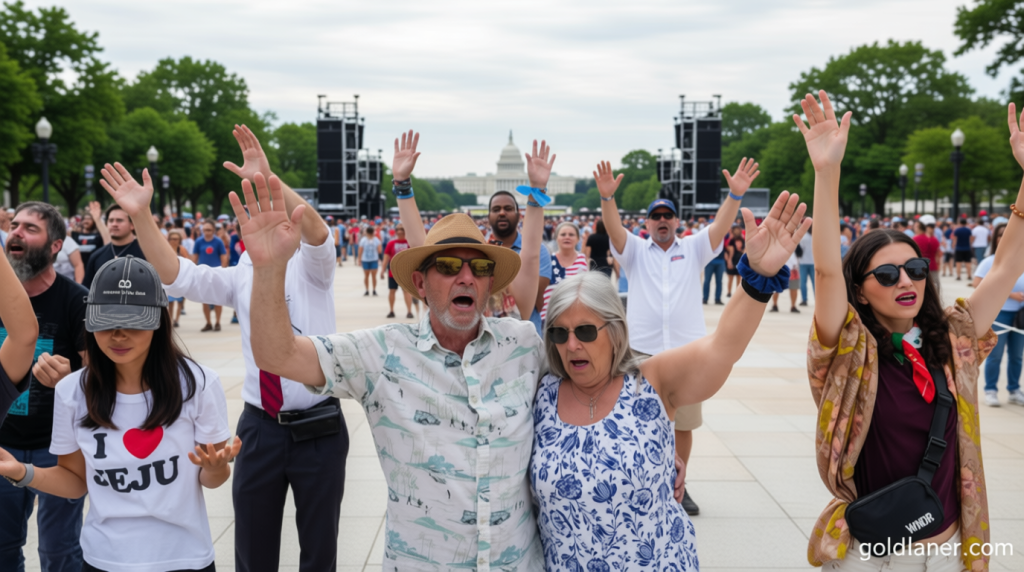
Trump Administration’s National Mall Prayer Event Sparks Debate Over Religious Influence in Governance
National Mall prayer event sparks concern – A Sunday prayer event spanning the entire day on the National Mall has ignited discussions about the Trump administration’s efforts to redefine the boundary between religious practice and governmental operations. This gathering, supported by the White House through a combination of public funds and private contributions, is the latest in a sequence of initiatives aimed at intertwining faith with national identity. Organizers have framed the event as a celebration of America’s 250th anniversary, emphasizing unity and reflection, yet critics argue it represents a deliberate move to prioritize Christianity over other faiths.
The Event and Its Participants
Named “Rededicate 250: A National Jubilee of Prayer, Praise & Thanksgiving,” the event is designed to highlight the nation’s religious heritage. It will feature speeches from President Donald Trump and members of his Cabinet, alongside remarks from House Speaker Mike Johnson. Faith leaders, public officials, and musicians are expected to gather on the Mall, offering a platform for communal worship and historical remembrance. The White House has described the occasion as a tribute to the values that have shaped the country, including freedom of religion and moral tradition.
Among the faith leaders invited, the majority are evangelical Christians, with notable exceptions including one Orthodox rabbi and two conservative Catholic bishops. This composition has raised questions about the event’s inclusivity and its alignment with the constitutional principle of religious neutrality. Brittany Baldwin, a senior policy adviser at the White House and leader of the Task Force America 250, emphasized the administration’s vision of the United States as a Judeo-Christian nation in a planning webinar that was later removed from public access. The session, shared before the event, outlined the administration’s intent to connect national history with specific religious narratives.
Expert Perspectives on the Constitutionality of the Event
Legal scholars have expressed divided opinions on whether the event violates the First Amendment’s separation of church and state. Andrew Koppelman, a constitutional law professor at Northwestern University, argued that the event is constitutionally permissible since no court has issued an injunction against it. However, he criticized its implications, stating, “This kind of divisive embrace of a particular religion and trying to associate the incumbent administration with that religion is bad for religion, bad for government and bad for America.”
“This kind of divisive embrace of a particular religion and trying to associate the incumbent administration with that religion is bad for religion, bad for government and bad for America,” said Andrew Koppelman.
Contrastingly, Douglas Laycock, a religion and law expert at the University of Texas School of Law, contended that the event is “flagrantly unconstitutional.” He explained, “It is unconstitutional because it is explicit government promotion of religion, and not just religion in general, but of a fairly specific version of one particular religion.” Laycock’s critique underscores concerns that the event could be seen as favoring Christianity over other faiths, thereby undermining the principle of religious pluralism.
“It is unconstitutional because it is explicit government promotion of religion, and not just religion in general, but of a fairly specific version of one particular religion,” said Douglas Laycock.
Michael Moreland, a professor of law and religion at Villanova’s Charles Widger School of Law, offered a more balanced view. He noted that the public square has long been a space where religious expression coexists with secular governance, citing examples such as prayers at Congress and the presidential inauguration. Moreland argued that the event does not necessarily challenge the First Amendment, asserting, “I think that it’s kind of overemphasizing that idea of separation to think that an event like this raises any constitutional problems.” He criticized the “too strong a separationist view” of the Constitution, suggesting it is overly rigid in its interpretation.
“I think that it’s kind of overemphasizing that idea of separation to think that an event like this raises any constitutional problems,” said Michael Moreland. “It’s too strong a separationist view of what the First Amendment requires.”
White House Defense and Criticisms of Christian Nationalism
House Speaker Mike Johnson, a devout Christian, defended the event during a Fox News interview on the National Mall. He described the gathering as a recognition of the country’s religious and moral roots, accusing critics of seeking to erase historical truths. “Americans will come together on the National Mall to rededicate this country as ‘one nation under God,’” Johnson stated, framing the event as a natural extension of America’s founding principles.
White House spokeswoman Taylor Rogers reiterated the administration’s stance, calling the event a “beautiful and unifying moment” that reflects the nation’s faith-driven history. “Rededicate 250 will be a fantastic event in our nation’s capital to celebrate freedom of religion for all people of faith — a cornerstone of the sacred principles enshrined in our Constitution by the founding fathers,” she said. Rogers emphasized that the event aims to honor the diverse contributions of individuals who have shaped America through their spiritual convictions.
Broader Implications and the Rise of Christian Nationalism
Critics have accused the Trump administration of reinforcing Christian nationalism, a movement that asserts the United States was founded as a Christian nation and should uphold its values in public policy. Rabbi Jonah Dov Pesner, director of the Religious Action Center of Reform Judaism, questioned the use of the term “Judeo-Christian” to describe the event, arguing it reflects a narrow interpretation of American history. He pointed out that the phrase has been repeatedly employed by the administration to legitimize its religious agenda.
While the National Mall event is a single instance, it is part of a larger trend of faith-based initiatives under the Trump administration. These efforts have included policies that prioritize Christian values in public life, such as the appointment of religiously aligned officials and the promotion of religious symbolism in federal institutions. Advocates of these initiatives claim they celebrate the nation’s heritage, but opponents warn that such actions risk institutionalizing a particular religious viewpoint, thereby marginalizing others.
The debate over the event highlights a fundamental tension in American governance: the balance between acknowledging religious traditions and maintaining neutrality. Supporters argue that recognizing the role of faith in shaping the country’s history is a valid expression of patriotism, while critics maintain that it crosses into government endorsement of religion, violating the First Amendment’s intent. As the event unfolds, it serves as a focal point for broader conversations about the role of religion in public life and the enduring challenge of preserving the separation between church and state.
