
Protests and defeat: Chelsea fans run out of patience with club’s billionaire American owners
Protests and defeat: Chelsea fans run out of patience with club’s billionaire American owners
Protests and defeat – Four years into the reign of Todd Boehly, the American billionaire who purchased Chelsea in May 2022, the once-dominant football club finds itself in a precarious position. Boehly’s BlueCo consortium initially promised a revival, declaring, “We’re all in – 100%” to fans during the transition. Yet, as the season nears its conclusion, the team’s struggles have become undeniable, with fans increasingly disenchanted by the decisions of the new ownership. The club’s recent performances, marked by a string of poor results, have left even the most loyal supporters questioning the direction of Chelsea’s future.
A Season of Struggles
The problems confronting the team have reached their peak this season. Chelsea now sits ninth in the Premier League table, having already missed out on a Champions League spot for the next campaign—a benchmark that fans of the storied club would have expected to meet long ago. The FA Cup final, which saw the Blues reach the final, provided a fleeting reprieve from the mounting disappointment. However, their 1-0 loss to Manchester City on Saturday sealed the season’s fate, leaving supporters to grapple with a sense of futility. The dejected atmosphere at Wembley, both on and off the pitch, underscored a growing rift between the club and its admirers.
Amid the turmoil, a clear pattern has emerged: Chelsea’s investment in players has not translated to on-field success. The squad has grown to unsustainable proportions, with a bloated roster that lacks cohesion and leadership. Fans, accustomed to the club’s former glory, now demand more than just a survival plan—they want a return to dominance. The recent loss to Manchester City, after a season of inconsistent play, has deepened this frustration. Even in the FA Cup final, the team’s ability to challenge top-tier opponents has been called into question.
Fan Sentiment and Protests
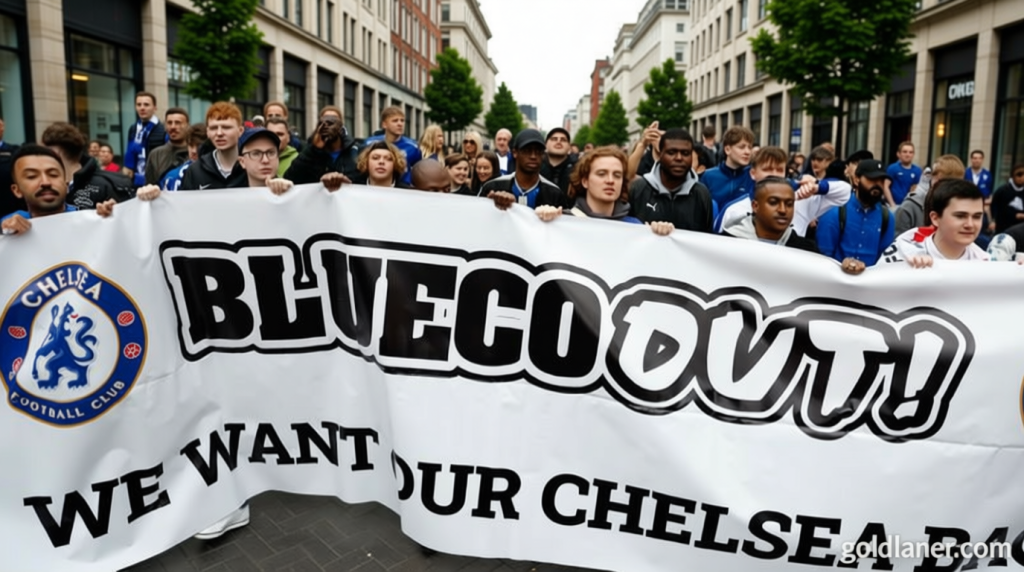
At the heart of the discontent is the fanbase, which has long been synonymous with success. Their patience has worn thin as the new owners’ strategies have failed to deliver. A protest against the BlueCo group before the FA Cup final highlighted this sentiment, with supporters marching down Wembley Way carrying a banner that read: “BlueCo out! We want our Chelsea back.” The demonstration was a stark reminder of the division brewing within the club’s loyal following.
Despite the protest, the fans’ passion for the team remained evident inside the stadium. As the final whistle blew, supporters gave the players a standing ovation, a gesture that symbolized their hope for a rebound. Yet, the performance that followed was far from reassuring. The players, though motivated, were unable to overcome Manchester City’s superiority, a result that felt particularly harsh given the billions spent on transfers since Boehly’s takeover. The contrast between the emotional support and the on-field underachievement has intensified the sense of disillusionment among fans.
“I think we’re going to get smashed,” one Chelsea fan said while boarding the tube three hours before the match. “I think you’re probably right,” his companion replied with a weary sigh. Their exchange, lighthearted yet tinged with resignation, mirrored the broader mood of the supporters who have watched the team’s fortunes decline since the turn of the year.
Managerial Chaos and Reckoning
The managerial turmoil at Chelsea has added to the chaos. Calum McFarlane, who led the team to the FA Cup final, is functioning as a temporary solution, with no clear long-term vision. His tenure has been marked by a lack of stability, as the club has frequently rotated coaches in recent months. The most recent casualty was Liam Rosenior, the manager who was poached from Strasbourg, a club also under the ownership of Chelsea’s hierarchy. His sacking in April was a blow, reflecting the instability that has plagued the coaching staff.
Before Rosenior, Enzo Maresca, the tactician who guided Chelsea to a FIFA Club World Cup victory last year, had stepped down in January. He cited the inability to work under the current regime as his reason for leaving. This exodus of managers has raised concerns about the club’s strategic direction. The turnover suggests a lack of commitment to sustainable development, with each new appointment often being a short-term fix rather than a calculated plan.
The recent appointment of Xabi Alonso as the new manager marks a significant shift in Chelsea’s approach. The former Bayer Leverkusen and Real Madrid tactician will take charge on July 1, tasked with revamping the squad and restoring the club’s competitive edge. His arrival signals a recognition of the need for change, but the question remains whether this will be enough to undo the damage caused by the previous strategies.
Financial Commitments and Strategic Missteps
Boehly’s tenure has been defined by hefty financial commitments, with over $1 billion spent on player transfers since taking control. This investment was meant to secure future success, yet the results have been underwhelming. The strategy of signing young talents to lengthy contracts in anticipation of future profits has backfired, leaving the squad with a mix of inexperienced players and overpriced stars. The lack of quality in key positions has been a recurring issue, with the team struggling to mount a credible challenge against rivals like Manchester City.
The recruitment process has become a source of frustration for fans. While the owners have emphasized long-term planning, the signings have often felt rushed or ill-conceived. The emphasis on youth has come at the expense of experience, a trade-off that has left the team lacking the guidance and composure required to succeed at the highest level. The result is a squad that, despite its size, lacks the cohesion and tactical discipline that defined Chelsea’s golden era.
As the dust settles on this season’s collapse, the focus shifts to what lies ahead. The appointment of Xabi Alonso offers a glimmer of hope, but it also raises questions about the club’s ability to implement a cohesive strategy. Fans are now demanding accountability, with the expectation that the new management will address the root causes of the team’s struggles. The path to redemption will be challenging, but for Chelsea’s supporters, it is a necessary step toward reclaiming the pride that has been eroded over the past four years.
The relationship between the club and its fans has deteriorated to a point where even the most optimistic supporters are struggling to maintain belief. The protests, the loss of the FA Cup, and the managerial instability have all contributed to a sense of alienation. Yet, the emotional attachment to Chelsea remains strong. As the team looks to rebuild, the fans will be watching closely, hoping that the next chapter will finally deliver on the promises made during the takeover. For now, the specter of Boehly’s vision lingers, but it is clear that the BlueCo era has reached a critical juncture.
