
Rebels jeered Putin’s troops out of a key African town. Now his regional grip is slipping away
Rebels jeered Putin’s troops out of a key African town. Now his regional grip is slipping away
The Retreat from Kidal
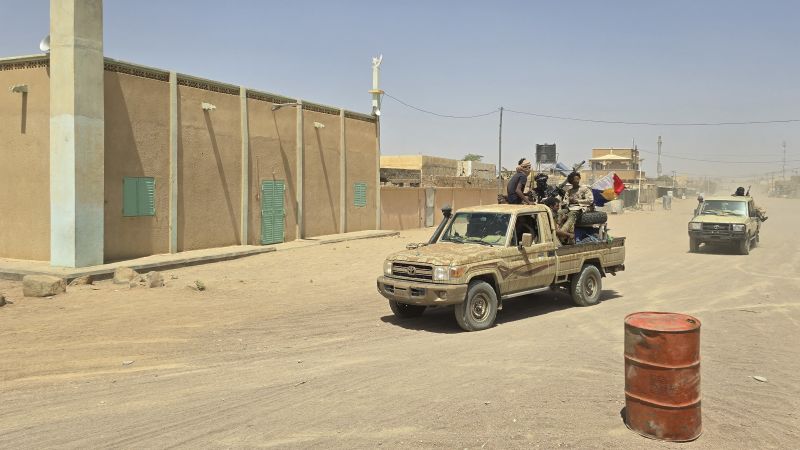
Rebels jeered Putin s troops out – In early May, Russian forces faced a dramatic reversal as they withdrew from Kidal, a critical town in northern Mali. The retreat, marked by the jeers of the rebels they were meant to subdue, symbolized more than just a territorial loss. Analysts describe the Russia-backed Africa Corps’ departure as a significant setback to Moscow’s influence in the Sahel region, a zone known for its intense militant activity and deadly conflicts.
The Africa Corps, operating under the Russian Defense Ministry after the Wagner Group’s exit, was forced to evacuate its personnel under a negotiated agreement with local militants. This move came after a wave of simultaneous attacks on April 25, the most daring in over a decade, which destabilized Mali’s military infrastructure. The assault, attributed to Tuareg separatists and al Qaeda-linked groups, left the country in further turmoil, eroding the fragile security that Russia had promised.
“The town is now free,” declared the Azawad Liberation Front (FLA), a Tuareg separatist group, in a social media post following the agreement. The message was underscored by videos showing Tuareg fighters mockingly watching Russian vehicles flee their base, a stark contrast to the earlier alliance that had enabled the capture of Kidal in 2023.
Kidal, situated approximately 1,000 miles northeast of the capital Bamako, had been a symbol of Moscow’s dominance in the region. Secured by the Malian army and Russian mercenaries in 2023, the town had ended nearly a decade of rebel control. Its fall this year, however, highlights the shifting dynamics of power in the Sahel, where anti-Western sentiment has long fueled resistance against foreign intervention.
Russia’s Growing Influence and Strategic Shifts
The Sahel, a vast expanse stretching over 3,000 miles across Africa just below the Sahara Desert, has become a focal point for global powers. With Western forces increasingly withdrawn due to political and military pressures, Russia has stepped in to fill the void. The 2023 Russia–Africa Summit in St. Petersburg, where Putin announced military cooperation agreements with more than 40 nations, marked the consolidation of this strategy.
Yet, the Africa Corps’ current situation reflects the complexities of Russia’s approach. Unlike the Wagner Group, which had previously operated in countries like Libya, Mozambique, and the Central African Republic (CAR), the Africa Corps focuses on security partnerships rather than direct military control. In CAR, a nation plagued by poverty and instability, Wagner’s legacy persists through gold and diamond concessions secured by companies tied to its leader, Yevgeny Prigozhin, now deceased. While the CAR government credits “Russian instructors” for stabilizing its military, the underlying fragility of its position remains.
African Alliances and Western Withdrawal
Mali, a former French colony, has become a prime example of this evolving dynamic. After cutting ties with French forces and United Nations peacekeepers, the country’s military junta turned to Moscow for support. This decision followed a series of coups in 2020 and 2021, which left the regime increasingly reliant on Russian-backed operations to counter domestic and external threats.
However, the fall of Kidal has exposed the limits of this strategy. The town’s surrender, which occurred under the pressure of a coordinated assault, demonstrates how quickly Moscow’s influence can be undermined. Analysts suggest that the Africa Corps’ ability to protect its allies is now in question, much like Moscow’s earlier struggles to secure regimes in Syria, Venezuela, and Iran.
Western nations, once central to the Sahel’s security efforts, have faced criticism for their presence. Their gradual withdrawal between 2022 and 2024 has allowed Russia to gain a stronger foothold. This shift is part of a broader trend where African leaders prioritize security assistance without the West’s human rights demands. Russia’s transactional model—offering military support in exchange for resources—has resonated with nations desperate for stability.
Shattered Promises and Rising Threats
The recent assassination of Malian Defense Minister Sadio Camara, a Russian-trained officer and key figure in the country’s pivot to Moscow, further complicates the situation. The attack, carried out via a suicide vehicle bombing near Bamako, was claimed by the al Qaeda-linked group Jama’at Nusrat al-Islam al-Muslimin (JNIM). This development has intensified fears of a complete blockade of Bamako, with JNIM urging Malians to revolt against the junta and embrace Sharia law.
Camara’s death underscores the vulnerability of Moscow’s strategic investments. Despite the Africa Corps’ efforts to stabilize the region, the regime’s promises to “neutralize” threats appear increasingly hollow. The rapid collapse of Kidal and the broader destabilization of northern Mali reveal how fragile the alliances between Russia and African nations can be, especially when internal and external forces converge against them.
The Path Forward for Russia in Africa
While the Africa Corps’ current setbacks are notable, Russia’s presence in Africa remains robust. The 2023 summit in St. Petersburg highlighted the scale of this partnership, with Moscow positioning itself as a key player in global security. Yet, the challenges in Mali and other regions suggest that Russia’s influence is not guaranteed. The country’s military support in the Sahel is now being tested by the very rebels it sought to pacify.
The Africa Corps’ reliance on local agreements for evacuation also signals a change in Moscow’s tactics. Rather than direct control, the Russia-backed force now depends on diplomatic negotiations with militant groups. This approach has both advantages and risks, as it allows for flexibility but also exposes the regime to criticism for not fully securing its interests.
As the Sahel continues to experience waves of violence, the question remains whether Russia can maintain its grip on African partnerships. The region’s instability, combined with the growing threat from al Qaeda-linked groups and Tuareg separatists, challenges Moscow’s reputation as a reliable security provider. While the Africa Corps represents a new phase of Russian involvement, the recent events in Kidal suggest that the path to dominance is far from secure.
For now, the town’s liberation marks a turning point. What was once a symbol of Russian strength in Africa has become a site of its growing vulnerability. The implications of this shift are far-reaching, not only for Mali but for the broader vision of Russia’s role as a global security power. As the continent’s dynamics evolve, Moscow must navigate a landscape where its influence is increasingly contested and its promises tested.
