
No title found
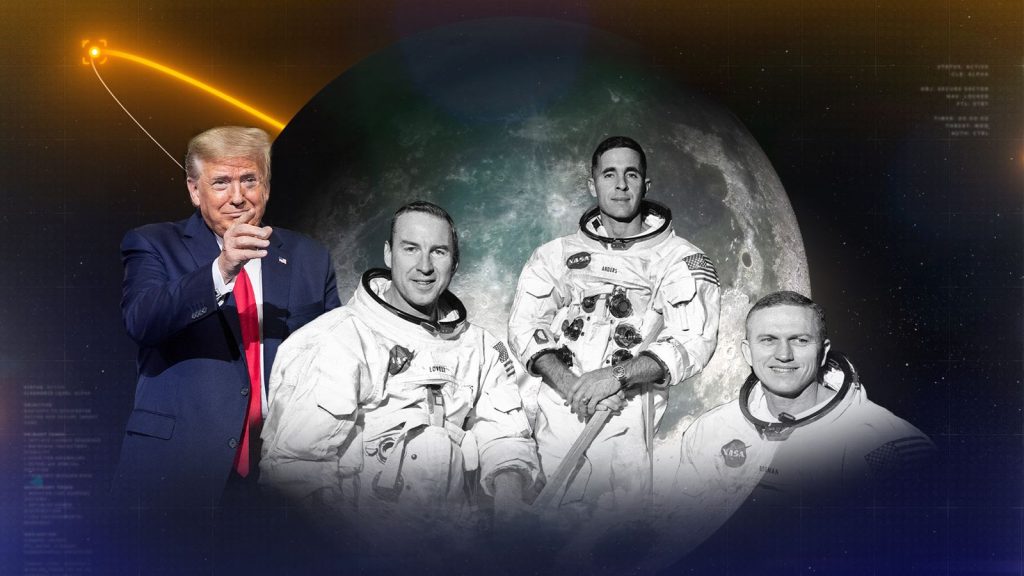
The Apollo 8 Mission and the Dawn of a New Era
The United States’ initial moon landing occurred in a year marked by intense political upheaval. Decades later, the nation finds itself once again at a crossroads, with division echoing the tensions of the past.
Apollo 8: A Pivotal Moment in Space History
On 21 December 1968, three astronauts—Frank Borman, William Anders, and James Lovell—launched aboard a Saturn V rocket from Kennedy Space Centre in Florida. This marked the eighth Apollo mission, a critical test for NASA’s lunar ambitions.
Their journey was pivotal, as it placed the U.S. on the cusp of a historic achievement. At the time, the Soviet Union had already set milestones in space, including the first satellite, the first human, and the first woman in orbit. Yet, the Apollo 8 crew defied the odds, orbiting the moon and capturing a moment that would resonate across generations.
The World as One
As the Apollo 8 mission unfolded, the U.S. was grappling with profound challenges. The Vietnam War had reached its most contentious phase, with public opinion shifting as casualties mounted. Simultaneously, civil rights movements surged, and the tragic assassinations of Martin Luther King Jr. and Robert F. Kennedy deepened societal rifts.
Despite these divisions, the crew’s actions carried a message of unity. From the vastness of space, they shared a photograph of Earth—a fragile blue sphere—sparking a global conversation about environmental stewardship. Their transmission, “To all of you on the good Earth,” became a symbol of hope during a time of unrest.
“It’s intriguing that we’re pushing to revisit the moon during a period of similar cultural fractures and political strife in the U.S.,” explains Jill Stuart, a space politics expert at the London School of Economics and Political Science. “While Artemis was planned over years, its timing might coincidentally foster a sense of collective purpose.”
Stuart adds that the program could serve as a tool for national cohesion, potentially embedding elements of propaganda to unite people around a shared endeavor.
From Apollo to Artemis
Following Apollo 8’s success, NASA swiftly advanced its moon program, culminating in the historic lunar landing just seven months later. Neil Armstrong’s first steps on the moon were witnessed by a fifth of the world’s population, a testament to the mission’s global significance.
Today, as the Artemis II rocket stands ready, figures like Secretary of War Pete Hegseth and NASA Administrator Jared Isaacman visit the site, underscoring the program’s current momentum. Yet, the legacy of Apollo 8 remains a reminder of how space exploration can transcend earthly conflicts.
A Legacy of Unity
Reflecting on the past, it’s striking that all lunar explorers were white men. Still, their journey symbolized a brief moment of collective aspiration, a beacon of unity in a fractured world.
