
Houthi forces enter Iran conflict with missile attacks on Israeli military sites
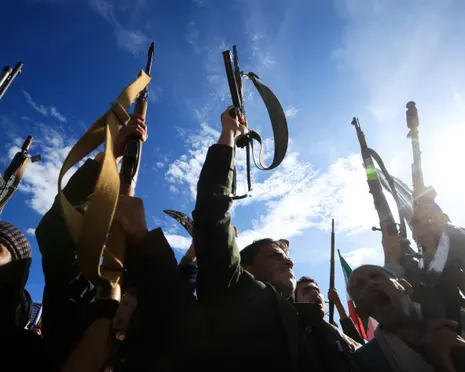
Houthi Forces Join Iran Conflict with Missile Strikes on Israeli Targets
As the US and Israel intensify their engagement in the Iran war, Yemen-based Houthi rebels have stepped into the fray, launching ballistic missiles at Israeli military installations. This move has raised concerns about the conflict’s global reach and its economic repercussions. Pakistan announced plans for a regional summit on Monday, inviting Middle Eastern leaders to address the crisis, but the gathering reportedly excluded the main combatants, undermining confidence in US assertions of progress.
Houthi Claims of Continued Operations
Houthis, longstanding Iranian allies, stated on Saturday they had struck “Israeli military sites deemed critical” and vowed to persist with attacks until all fronts saw an end to aggression. Israel confirmed intercepting a single missile from Yemen, though no other details were shared. Intelligence reports suggest the US has only definitively neutralized a third of Iran’s missile and drone stockpiles, despite claims of broader destruction.
“The Houthis’ decision to escalate the conflict marks a serious and deeply concerning turn. The potential impact on key commercial maritime routes, especially in the Red Sea and the Bab al-Mandab strait, cannot be overstated,” said Farea Al-Muslimi of Chatham House.
Meanwhile, US military personnel at Saudi Arabia’s Prince Sultan airbase were injured in a drone strike, with at least 12 reported wounded and two in critical condition. Drones also targeted Kuwait’s international airport, damaging its radar systems. The Houthis’ control of Yemen’s densely populated regions threatens the Bab al-Mandab Strait, a vital passage near the Horn of Africa, which could disrupt energy and trade flows critical to the Middle East.
With Iran already blocking the Hormuz Strait, a closure of Bab al-Mandab could compound economic disruptions. Saudi Arabia has rerouted some oil exports via the Red Sea since the February 28 US-Israeli assault on Iran, but officials warn that a threat to this route might force Riyadh into direct conflict. The war’s spread raises fears of renewed hostilities between Saudi Arabia and Yemen, which caused significant humanitarian tolls before a 2022 ceasefire.
Escalation in Weaponry and Regional Alliances
Further signs of escalation emerged as Iran’s command claimed to have attacked a Ukrainian anti-drone system depot in Dubai, which it alleges supports US operations. Ukraine has been supplying anti-drone technology to Gulf nations since the war began, leveraging its experience with Russian attacks. The country recently inked defense pacts with Saudi Arabia, the UAE, and Qatar, expanding its regional partnerships.
Experts highlighted the use of cluster munitions, with Bellingcat citing Gator anti-tank mines found in an Iranian village near Shiraz as evidence. These mines, banned by over 100 countries due to their indiscriminate effects, were deployed by the US, though Iran has also used them in strikes on Israel. US Central Command’s head, Adm Brad Cooper, condemned the attacks, calling cluster bombs “inherently indiscriminate” and warning of their devastating effects.
As the conflict enters its second month, Pakistan has positioned itself as a mediator. Prime Minister Shehbaz Sharif and Army Chief Field Marshal Asim Munir aimed to revive US-Iran negotiations, but Tehran denied any prior discussions. Trump claimed, without evidence, that talks were already underway and progressing smoothly, while Saudi officials remained skeptical of diplomatic breakthroughs.
