How a scenic enclave at the bottom of the Grand Canyon turned into an epicenter of deadly destruction

How a Scenic Enclave at Grand Canyon Became a Death Trap
Goldlaner.com – How a scenic enclave at the base of one of America’s most iconic landscapes could become a corridor of lethal destruction in under ten minutes is a question now haunting families, park officials, and rescue crews alike. On a Saturday afternoon, a violent thunderstorm slammed into the Grand Canyon’s innermost corridors, channeling torrential rain down the sheer walls of Bright Angel Canyon. Normally gentle streams swelled into roaring, debris-choked torrents that obliterated footbridges, swallowed campgrounds, and carried away anyone standing in their path. At least two people were killed, and a third remains missing according to the latest statements from park and county authorities.
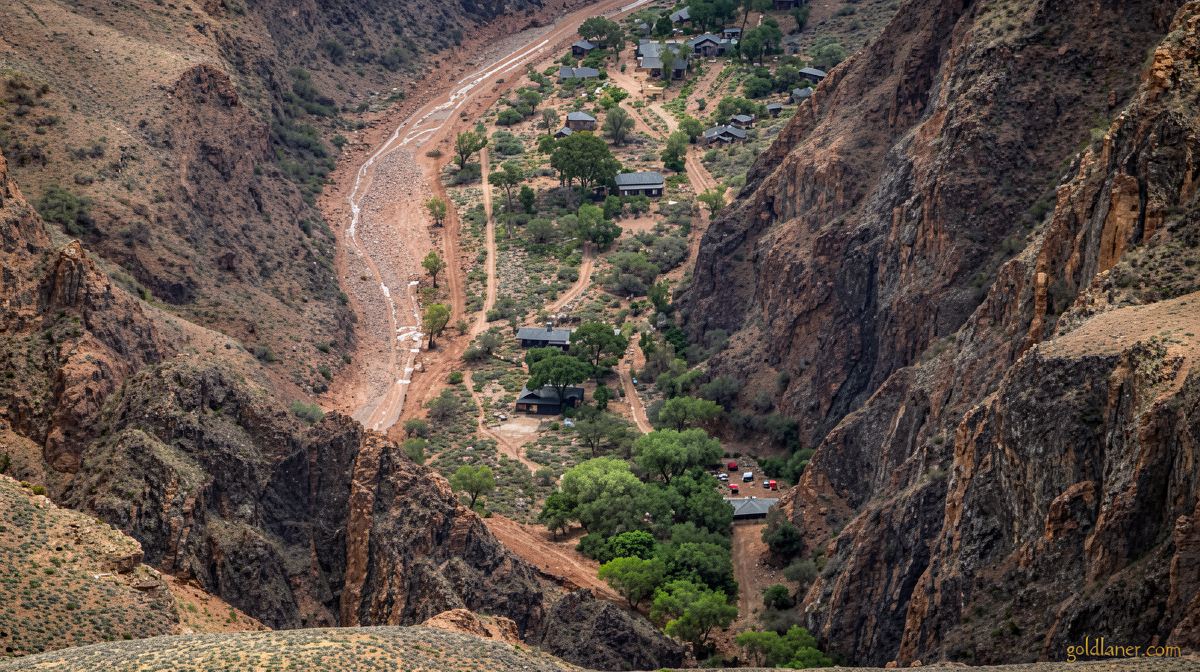
The devastation centered on the canyon floor near Phantom Ranch — the only lodging facility situated below the Grand Canyon rim — and the adjacent Bright Angel trail corridor. Dozens of hikers and campers found themselves imperiled as muddy water surged through narrow ravines, sparking frantic multi-agency rescue operations that stretched into subsequent days.
The Storm Hits Without Warning
For visitors on the rim, the shift from routine weather to catastrophic flooding was nearly instantaneous. Jesse Jaremczak, a South Rim employee, captured the sequence in blunt language:
“In the beginning, it was a normal thunderstorm. Then the supercell monster came.”
Christopher Dry, hiking with his son on higher ground above the canyon floor, recalled spotting a lightning bolt and the sudden onset of rain. Within minutes, visibility vanished entirely. He described clouds forming below the rim and surging upward out of the canyon in seconds — a phenomenon that left those at the bottom with virtually no time to react.
Evacuation and Near-Misses at Phantom Ranch
David Gregory had just begun unpacking his gear at Phantom Ranch when a park ranger appeared and advised him to prepare for a possible evacuation. Ten minutes later, the same ranger returned in a state of urgency, instructing all visitors to leave immediately. Gregory described the nearby creek as already black with debris and moving at terrifying speed.
“When the rain hit … it just got faster and faster. It was probably moving faster than I think I could run.”
Gregory was ultimately extracted by helicopter. Nearby, Parth Desai and a colleague heard a desperate shout — “up, up, up, up” — as a four-foot wall of debris and water surged toward them. Desai scrambled into a patch of cacti for cover. He later described seeing waterfalls materializing from nowhere, boulders tumbling, mud flows, and landslides cascading across the canyon floor. His group, too, was airlifted to safety.
Two Lives Lost, One Still Missing
Not everyone escaped. John Giusti, a chiropractor from Texas, and Brent Rosenkranz were among a group of three friends on what had been planned as a multi-day trek through the canyon. Family members confirmed both men were killed in the flooding. The third member of the group, Timothy Smith, remains missing, his family said.
The tragedy was compounded by the fact that Giusti and Rosenkranz had shared their excitement about the trip on social media just one day before the storm. Giusti posted photographs of his adventure on his chiropractic practice’s Facebook page. Rosenkranz, confronting a long-standing fear of heights, wrote about the challenge ahead:
“Will be hiking over 31 miles next four days with vertical change of over a mile. Carrying a 40 lb backpack. This should be an adventure! Most of you know don’t handle heights. So I should have lots of funny stories when I get back.”
By Tuesday morning, both families had confirmed their losses. Elisha Rosenkranz posted a tribute to her husband:
“It is with a broken heart that I share the passing of my husband, Brent Rosenkranz, while on his final adventure, a hike at the Grand Canyon. Thank you for every adventure, every meal, every laugh, and every hug. Most of all, thank you for giving me the love of a lifetime.”
Search Efforts and Weather Constraints
Authorities have expressed hope that the missing individual is still alive, though repeated bouts of heavy rain have hampered search operations by making terrain unsafe for ground teams. Incident commander Dave Black noted Monday evening that weather conditions were improving heading into Tuesday. Specialized search units from the U.S. Border Patrol were slated to join the effort, and a drone operated by the Maricopa County Sheriff’s Office would be deployed to scan for devices emitting Bluetooth frequencies, offering a potential technological means of locating the missing person.
Warning Systems and the Limits of Communication
As the storm intensified on Saturday, park officials received a flash-flood alert from the National Weather Service at approximately 12:23 p.m. How a scenic enclave at the canyon floor, normally a place of quiet contemplation and guided walks, could receive such a brief window before conditions turned lethal remains under review. The alert’s reach to visitors already below the rim — where cellular coverage is sparse and evacuation routes are limited to narrow trail corridors — exposed critical gaps in the park’s communication infrastructure.
FAQ: Practical Information for Grand Canyon Visitors
What should hikers do if a flash-flood warning is issued while they are on the canyon floor?
Move immediately to higher ground away from stream channels, side canyons, and low-lying flat areas. Do not attempt to cross swollen creeks or wait out rain in a wash. If you are at Phantom Ranch or another rim-adjacent facility, follow ranger instructions without delay. Carry a whistle, a headlamp, and at least two liters of water per person per day on multi-day trips.
How can families track search-and-rescue updates for a missing person in the Grand Canyon?
The National Park Service issues periodic updates through its Grand Canyon press office and official social-media channels. Maricopa County Sheriff’s Office and U.S. Border Patrol also publish status briefings. Families are encouraged to designate a single point-of-contact to receive consolidated updates and avoid spreading unverified information.
Is Phantom Ranch accessible year-round, and what are current entry requirements?
Phantom Ranch operates seasonally and requires a permit obtained through the National Park Service reservation system. Visitors must arrive via mule train or helicopter;