
A 90-Day Beef Import Window Opens — But Grocery Shelves May Barely Notice
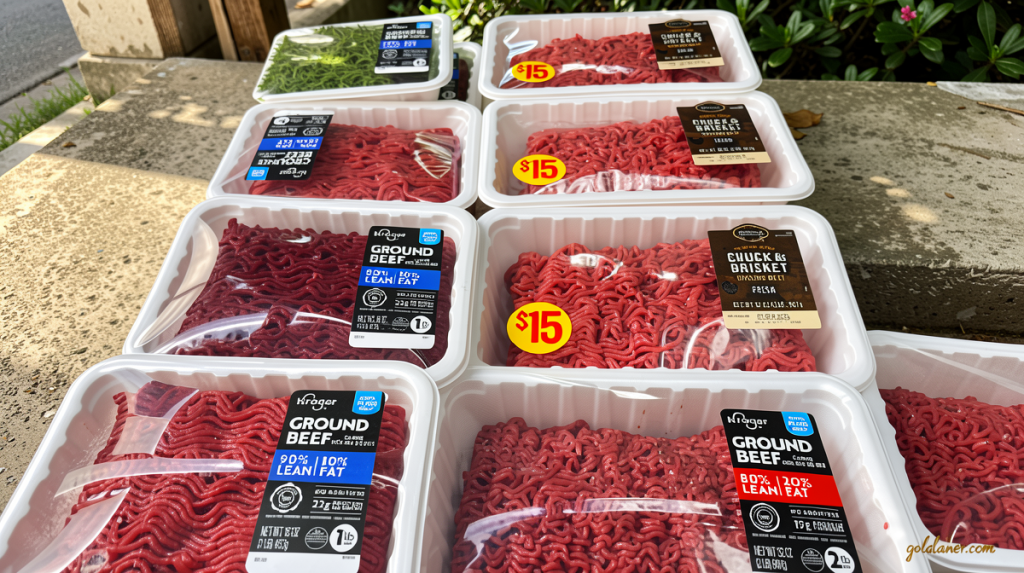
Goldlaner.com – Americans are already paying some of the highest beef prices in years, and the White House believes a temporary flood of foreign meat into the country could ease the squeeze at the checkout counter. President Donald Trump signed an executive proclamation last week authorizing the entry of 300,000 metric tons of beef into the United States free of tariffs for a 90-day window beginning September 1. The proclamation mandates that the imported product be offered at a price “25 percent below the market price,” a condition intended to ensure the discount reaches shoppers rather than vanishing into wholesale margins.
The average American currently spends roughly $6.89 per pound on ground beef, per Bureau of Labor Statistics figures. Against that baseline, a mandated quarter-price discount sounds substantial. Yet economists who track meat markets daily are skeptical that the policy will produce any meaningful relief for households.
The Scale Problem
The most immediate concern is sheer volume. Three hundred thousand metric tons of beef translates to approximately two percent of total domestic beef consumption, according to US Department of Agriculture data. In a market consuming tens of millions of tons annually, that slice is thin enough that grocery chains may absorb it without adjusting shelf prices at all.
“It’ll be some additional pounds on the market that we didn’t have before, and in that context, that could be good for consumers,” said Glynn Tonsor, an agricultural economist at Kansas State University who specializes in meat pricing. “But I think it’s easily overstated how much it might help.”
Tonsor’s caution is compounded by a narrower technical detail: the tariff exemption applies specifically to beef trimmings — the fatty, connective-tissue byproducts that processors blend into ground beef alongside leaner cuts. Because the waiver does not extend to steaks, roasts, or other whole-muscle cuts, the discount is structurally confined to one component of a blended product. Even if trimmings arrive at a lower cost, the final price of a pound of ground beef depends on the cost of every other ingredient in the mix, limiting how far the discount can propagate.
There is also the question of substitution. If processors simply swap foreign trimmings for domestic trimmings they would have purchased anyway, total supply does not increase. The price effect then depends on whether the imports genuinely expand the available pool of meat or merely redirect existing procurement contracts.
Who Watches the Watchers?
The proclamation requires a 25 percent price discount, but the White House has not detailed which agencies will verify compliance or what enforcement mechanisms exist if exporters fail to honor the mandated margin. The administration told CNN that foreign exporters are prepared to discount their shipments precisely because no duties apply, but the absence of a transparent monitoring framework leaves consumers without a clear recourse if shelf prices remain unchanged.
Supply Shortage or Demand Surge?
White House spokesperson Kush Desai framed the price problem as one of scarcity. In a statement, he attributed elevated beef costs to “insufficient supply to meet consumer demand” and positioned the import window as a bridge measure.
“The President’s action is helping meet short-term beef needs while the Administration works with American ranchers to expand domestic production and grow the American cattle herd, which is currently at a multi-decade low,” Desai said.
The cattle-herd claim is accurate — US cow numbers sit near their lowest levels in several decades. Yet Tonsor argues that herd size alone does not explain the full magnitude of price increases, particularly because modern ranching practices have produced larger animals that yield more beef per head. A smaller herd does not automatically mean proportionally less meat.
On the supply side, other disruptions have played a role. An outbreak of New World screwworm in Mexico temporarily halted imports of live cattle from that country until recently, tightening the domestic supply picture during a vulnerable period.
The Demand Story Telling
Tonsor contends the sharper driver of rising prices is consumer appetite, not scarcity. His Meat Demand Monitor, a monthly survey of roughly 3,000 Americans, tracks willingness to pay for beef products. Last month, respondents indicated they would pay $10.09 per pound for ground beef and $24.62 for a hamburger ordered at a restaurant. Three years earlier, those figures stood at $8.67 and $20.19 respectively.
Consumers are now paying 27 percent more for ground beef, all beef categories, and veal compared with three years ago. Over the trailing twelve months alone, both categories have climbed approximately nine percent, per July Consumer Price Index readings.
Tonsor attributes the willingness to pay premium prices to genuine quality improvements in beef — better marbling, more consistent grading, and enhanced flavor profiles that have shifted consumer preferences toward higher-tier cuts. Survey responses he collects corroborate that shoppers are actively seeking out premium products rather than simply accepting whatever is on the shelf.
What It Means for the Burger
The practical upshot for the average household is modest. Even under the most optimistic reading — full compliance with the discount mandate, genuine supply addition, and immediate retail pass-through — the two-percent volume increase, confined to trimmings, is unlikely to move the price of a pound of ground beef by more than a few cents. For a consumer already stretched by a 27 percent three-year price escalation, that margin is negligible.
The deeper challenge the administration faces is not tariff arithmetic but demand management. If Americans’ appetite for beef continues to outpace domestic production capacity, no temporary import window will close the gap. The cattle herd must grow, processing capacity must expand, and the screwworm threat must remain contained. Until those structural conditions improve, the September import window will function less as a price remedy and more as a political signal that the administration is aware of the problem at the register.
Related Reading
Frequently Asked Questions
What is Trump is letting in 300 000 tons?
Trump is letting in 300 000 tons is the main topic of this guide. The article explains the context, practical details, and next steps readers should understand.
Why does Trump is letting in 300 000 tons matter?
Trump is letting in 300 000 tons matters because readers are looking for a useful answer, not just a short summary. Good content should match search intent and help them decide what to do next.