
Headscarf or No Headscarf: Iran’s Women Push Back as Hardliners Tighten the Grip
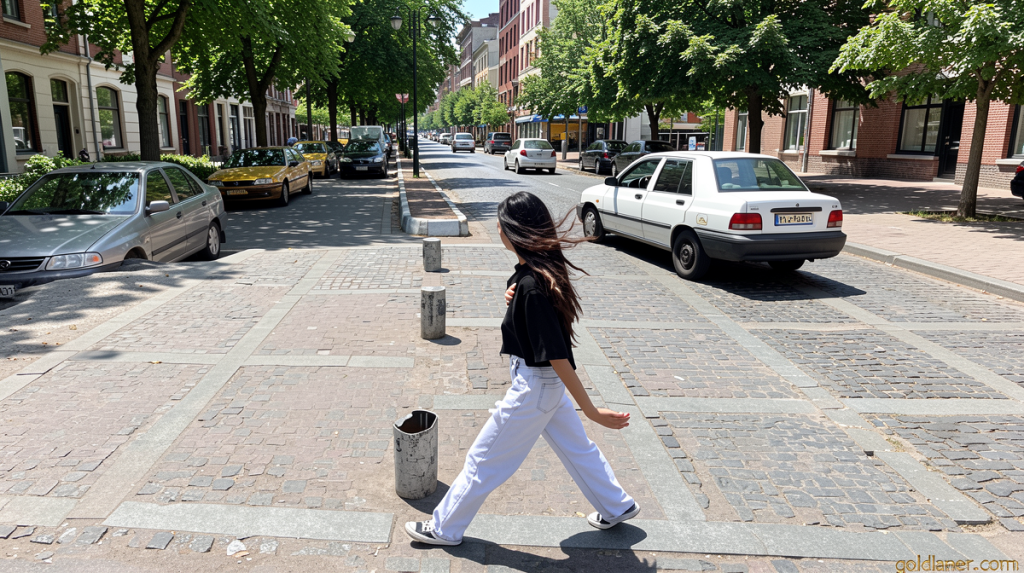
Goldlaner.com – Across Tehran’s bustling café districts and the shopping corridors of Isfahan, a quiet civil disobedience has become the norm: Iranian women walk through public spaces with their hair uncovered, their shoulders bare, their faces unmasked by the headscarf that decades of state policy demanded. Yet the question of whether the state will once again move to punish that defiance has resurfaced with force in recent weeks, layered atop a backdrop of wartime upheaval and a reshuffling of the country’s hardline power structure.
During the most intense phase of this year’s conflict with the United States, the hijab question effectively receded from public enforcement. Women without head coverings appeared openly at rallies supporting the government and on state television channels. In one widely shared clip, a woman carrying the Iranian flag explained that her husband was serving in the military and that she felt pride in his service. The security apparatus, consumed by the existential stakes of the war, had little bandwidth to police dress codes at the time.
A Wartime Pause That Is Now Ending
That pause, however, appears to be drawing to a close. With the conflict framed by the leadership as a fight for national survival, with deep economic fallout still rippling through households, and with the security architecture being reorganized under the direction of Mojtaba Khamenei, the regime has had more urgent priorities than policing women’s attire. Still, state-run outlets have begun spotlighting stories of cafés and commercial establishments ordered to shut their doors for failing to enforce clothing regulations. A review of Iranian media coverage at the close of last month surfaced enforcement actions in roughly half a dozen cities, Tehran among them.
The underlying tension is not new. Four years ago, the death of Mahsa Amini—a young woman detained by police on suspicion of improper dress—ignited the “Woman Life Freedom” movement, a nationwide uprising that was met with severe repression. Amnesty International documented at the end of 2024 that Iranian authorities were waging what it described as a war on women and girls through an increasingly violent crackdown on those defying compulsory veiling laws. Yet the protests left a durable imprint on public behavior. Despite periodic warnings and sporadic enforcement sweeps, widespread noncompliance persists, particularly among younger generations of Iranian women.
Enforcement Actions Accelerate
The most recent wave of closures landed on July 19, when at least seven cafés and restaurants in Tehran were ordered shut for not enforcing the mandatory hijab requirement, according to the human rights organization HRANA. That group also compiled lists of social media accounts blocked for publicly defying dress codes. HRANA noted that authorities relied on deliberately vague charges—phrases such as “violation of norms,” “violation of modesty,” and “failure to observe Islamic decency”—to pursue alleged offenders. In one instance this month, the organization reported that a boutique was closed simply “due to unveiling,” with no further explanation offered.
On Monday, the Tehran Prosecutor’s office announced it would take “serious action” against alleged indecency violations at specific cafés and restaurants in the capital, as well as at shops selling clothing deemed unconventional or inappropriate. In eastern Iran’s South Khorasan Province, the chief prosecutor confirmed that ten cafés had been closed over alleged breaches of social norms and mandatory hijab rules, information carried by the Mehr news agency.
The Religious and Cultural Framing
State media coverage of the issue frequently invokes clerical voices who insist the headscarf is inseparable from Iranian cultural identity and that women bear a religious obligation to observe modesty in public. Mohammad Javad Haj Ali Akbari, who leads Friday prayers in Tehran, has claimed that organized efforts exist to promote what he calls “nudity,” and that some individuals are paid to appear in public wearing what he deems improper dress.
“Unconventional behaviors should not be exhibited by anyone in public places such as parks.”
That line came from an episode of “Park Way,” a television program produced for the Tehran Municipality that has devoted multiple installments to women’s dress, urging action against those who flout approved codes. Women themselves have been mobilized to demand compliance: at a small rally in Isfahan this week, attendees called for stricter enforcement of the headscarf requirement.
High-Profile Punishments Signal Intent
The state has not limited its messaging to administrative closures. In June, the popular singer Parastoo Ahmadi, along with eight members of her band and production team, were sentenced in Qom to 74 lashes and barred from leaving the country for two years. Ahmadi had appeared with bare shoulders and uncovered hair at an event she livestreamed on her YouTube channel in 2024. The charges included offending public decency through the production and publication of what prosecutors called “vulgar and immoral content on cyberspace platforms.”
Hardline commentators are pressing the authorities to go further. Hossein Shariatmadari, editor of the journal Kayhan, has written that enforcing the hijab is simultaneously a legal obligation and a religious duty incumbent on officials. The cumulative effect of these signals—prosecutorial threats, municipal television programming, clerical sermons, and physical punishments—suggests that the wartime lull in enforcement may be temporary.
What Comes Next
For millions of Iranian women who have made the decision to forgo the headscarf in daily life, the coming months will test whether the state’s wartime priorities permanently reshape its appetite for social policing, or whether the old machinery of dress-code enforcement reactivates with renewed vigor. The economic pressures of war, the reorganization of security institutions under Khamenei’s leadership, and the sheer scale of public noncompliance all complicate any straightforward crackdown. Yet the trajectory of recent weeks points toward tightening, not loosening, of the rules—leaving women who have already defied the mandate to weigh the personal cost of continued defiance against the risk of a new enforcement wave.
Related Reading
Frequently Asked Questions
What is Iranian women defy efforts by hardliners?
Iranian women defy efforts by hardliners is the main topic of this guide. The article explains the context, practical details, and next steps readers should understand.
Why does Iranian women defy efforts by hardliners matter?
Iranian women defy efforts by hardliners matters because readers are looking for a useful answer, not just a short summary. Good content should match search intent and help them decide what to do next.