
A Two-Dimensional Barcode Upgrade Aims to Close the Gap Between Shelf and Safety
Goldlaner.com – Two Americans died this summer in a cyclosporiasis outbreak linked to packaged produce, a grim reminder that the food-safety net in the United States still depends heavily on human eyes, human memory, and human judgment at the point of sale. Investigators must match cryptic lot codes stamped on cartons to shipping manifests, store employees must visually inspect dates, and consumers are left to trust that no one upstream made an error. A quiet but consequential technological shift is now moving toward implementation that could dismantle much of that fragile chain.
Beginning next year, major retailers and packaged-goods manufacturers will start deploying two-dimensional barcodes — QR-code-style symbols capable of encoding up to 3,000 alphanumeric characters — in place of the one-dimensional, ten-digit Universal Product Codes that have governed checkout counters since the mid-1970s. The upgrade, championed by GS1, the global standards body that licenses and oversees barcode symbologies worldwide, promises to embed batch-level traceability directly into the symbol a cashier scans, collapsing what is currently a multi-step, error-prone lookup into a single digital query.
From Troy, Ohio, to the Checkout Counter
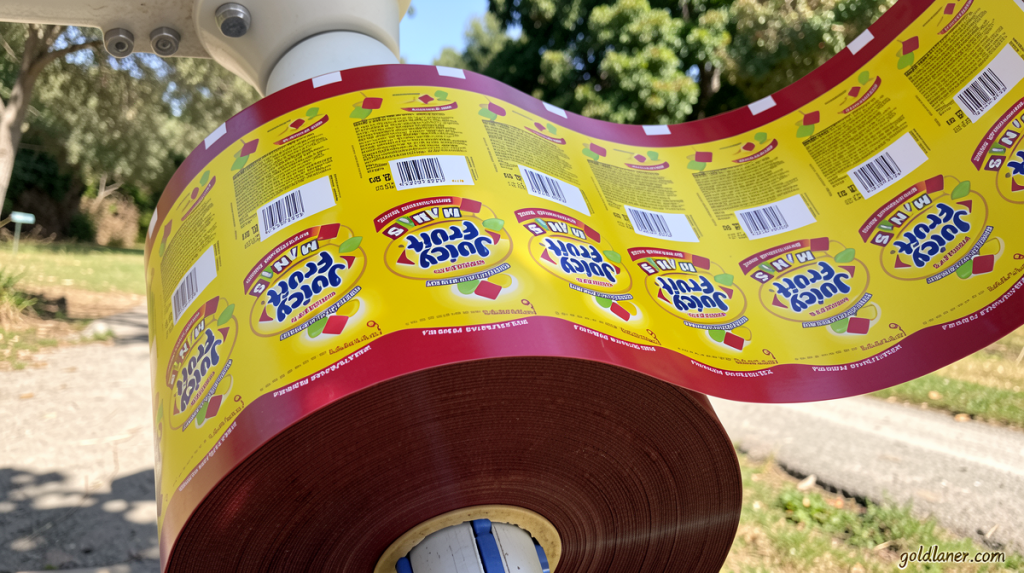
The barcode’s origin story is well known. On June 26, 1974, a clerk at a Marsh supermarket in Troy, Ohio, ran a pack of Wrigley’s Juicy Fruit gum through the first commercial scanner, inaugurating five decades of one-dimensional retail identification. For all that time, the technology’s function has remained narrow: tell a register which SKU is being purchased. Once the transaction completes, the code’s informational life ends. It carries no origin data, no allergen list, no expiration logic, no recall flag.
Two-dimensional symbologies change that calculus. A cashier scans them at the register exactly as before, but a shopper with a smartphone can also point a camera at the symbol and be routed to a product page carrying allergen disclosures, coupon offers, recyclability guidance, and — most critically — the specific farm, facility, and packaging timestamp for that individual unit. Grocery chains can program their point-of-sale systems to suppress checkout of items nearing expiration or flagged as spoiled, removing a category of waste that currently costs large retailers hundreds of millions of dollars annually and, in extreme cases, billions.
Why Lot Traceability Matters More Than Ever
Under today’s architecture, bin and lot numbers — the identifiers that let regulators, manufacturers, and stores trace a contaminated batch back to a specific production run — are printed separately from the barcode, often in a string of characters that looks like it was stamped by a 1990s dot-matrix printer. When a recall is issued, a human being must locate that string on the packaging, decode it, and cross-reference it against a recall notice. In a typical big-box store stocking roughly 50,000 distinct items with dozens of units of each on shelf, that manual reconciliation is slow, fallible, and expensive.
“Human systems aren’t infallible,” said Frank Yiannas, who spent a decade as Walmart’s head of food safety before serving as FDA deputy commissioner of food policy and response. “It’ll no longer be a guesstimate. Precise recalls would add a lot of value to companies and to the customer.”
The waste problem is not merely a balance-sheet line item. Under the current system, an enormous volume of perfectly safe food is pulled from shelves and discarded because a store cannot quickly confirm which lots are implicated in a recall. That over-removal represents the best-case outcome. The worst case is the one that played out this summer: contaminated product reaches a consumer’s kitchen, and the consumer has no way to verify safety before opening the package.
What the New Symbol Actually Does
By writing bin and lot identifiers directly into the two-dimensional code, manufacturers can achieve three operational shifts. First, potentially dangerous units can be flagged before they ever reach a shelf, preventing distribution of a compromised batch. Second, if a recalled item does make it to the sales floor, store systems can block the scan, preventing purchase. Third, a consumer at home can scan the code on a product already in their pantry and receive an immediate safety determination.
“I don’t think they’re overselling the benefits of this,” Yiannas said of the industry’s push toward the new symbology.
GS1 maintains that the long-term gains for retailers, producers, and shoppers justify the upfront implementation costs, which include retooling label-printing lines and, in some cases, printing unique identifiers on-site at packaging facilities rather than relying on pre-printed stock shipped in bulk. The transition will not be instantaneous; supply chains that span continents and involve thousands of suppliers will require phased adoption, and the standards body expects a multi-year rollout rather than a single cutover date.
The Broader Implication
What makes the barcode upgrade more than a retail-convenience story is its position at the intersection of food safety, supply-chain transparency, and consumer agency. For fifty-two years, the barcode has been a dumb pointer — a product name in machine-readable form. The two-dimensional successor turns that pointer into a live data conduit, carrying the provenance, composition, and safety status of each individual unit. In a regulatory environment where outbreak response still depends on phone calls, faxed lot lists, and store employees squinting at tiny print, that shift from passive label to active information node represents one of the most practical, near-term improvements available to American food-safety infrastructure.
The question is no longer whether the technology works. It does. The question is how quickly the industry can rewire its packaging, logistics, and point-of-sale systems to put that capability to use before the next outbreak turns a preventable lot-level problem into a national tragedy.
Related Reading
Frequently Asked Questions
What is How the humble barcode could help?
How the humble barcode could help is the main topic of this guide. The article explains the context, practical details, and next steps readers should understand.
Why does How the humble barcode could help matter?
How the humble barcode could help matters because readers are looking for a useful answer, not just a short summary. Good content should match search intent and help them decide what to do next.