
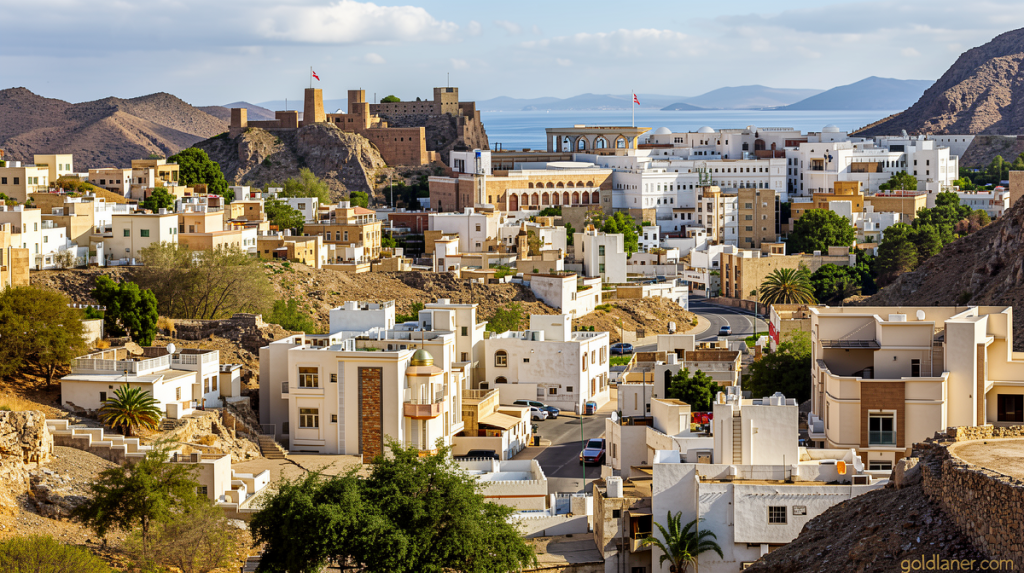
Strait of Hormuz Stalemate Deepens as Trump Repeats Threats Against Oman
Goldlaner.com – The short-lived Memorandum of Understanding that was meant to open a path toward full peace negotiations between Washington and Tehran expired on Monday, leaving both capitals locked in a standoff over three intertwined issues: who controls transit through the Strait of Hormuz, what happens to billions of dollars in frozen Iranian assets, and the trajectory of Iran’s nuclear program. The June agreement had pledged a “final deal in maximum 60 days,” yet the ceasefire it underpinned was quickly eroded by repeated violations. Iran objected to the routing choices made by commercial vessels passing through the strait and moved to target ships, escalating tensions at one of the world’s most critical maritime chokepoints.
Into that already volatile environment, President Donald Trump injected a fresh dose of alarm by renewing a threat first voiced in May: that the United States would “blow up” Oman if it continued its back-channel talks with the Islamic Republic. The warning, delivered on Monday, landed with particular force because Trump himself had signed a document explicitly authorizing Muscat to “conduct dialogue” with Tehran on defining the future administration and maritime services governing the strait. In other words, the president appeared to be punishing a country for doing exactly what he had formally permitted.
Oman’s Delicate Position Between Two Powers
Muscat has spent the duration of the current conflict positioning itself as a neutral operator. Even as Iran launched large salvos of missiles and drones at neighboring Arab states — and occasionally toward Omani territory — the Sultanate kept its diplomatic channels with Tehran open. Throughout the fighting, Oman sustained conversations with Iran over vessels transiting the Strait of Hormuz, a waterway that runs directly through Omani waters. The country also permitted ships to reroute through its own sea lanes to avoid the corridors that the Islamic Revolutionary Guard Corps had precariously designated as safe passages.
That independent posture is precisely what makes Oman valuable as a mediator, and precisely what appears to irritate Washington. Hasan Alhasan, a senior fellow at the International Institute for Strategic Studies, framed the contradiction plainly:
“(Trump’s) frustration broadly stems from the fact that Muscat pursues an independent policy toward Iran that does not always align with US preferences. Ironically, however, this is precisely what enables Muscat to play the mediating role that Washington often relies upon to facilitate contact with Tehran.”
Alhasan noted that Qatar, another Gulf state with a track record of brokering arrangements with Iran, had coordinated its mediation efforts closely with Washington. Oman, by contrast, has kept its talks with Tehran at arm’s length from American direction — a distinction that may explain why the White House views Muscat’s autonomy with suspicion rather than appreciation.
Former Ambassador Calls Threats Puzzling
Marc J. Sievers, who served as the United States ambassador to Oman, described his reaction to the renewed warning as one of genuine bewilderment. He suggested the president may not have intended his words to be read as a literal operational order.
“Perhaps Trump didn’t mean to be taken literally but more the matter of getting the Omani attention, which I’m sure he did. It’s hard to think of Admiral Cooper planning bombing raids on Oman.”
His remark pointed to Adm. Brad Cooper, the current chief of US Central Command, implying that no one in the operational chain of command would be preparing strikes on a long-standing Gulf partner. Sievers added that the earlier May threat had already “upset” Oman, but that Muscat “ought to see risk” in the repetition of such language.
“This is the second time that President Trump has issued (a) threat. … There is obviously something behind it that you would think the Omanis would want to pay attention to.”
The President’s Own Words
In an interview with Fox News correspondent Trey Yingst, Trump was more explicit than his aides might prefer:
“If Oman gets in the way, we’ll bomb the shit out of them.”
The bluntness of that phrasing — directed at a country that has hosted American diplomatic missions for decades and that, by its own account, helped secure the release of detained American citizens in Tehran — struck many observers as disproportionate to the diplomatic context.
Silence in Government, Noise on Social Media
Across Oman and the wider Gulf, official channels remained conspicuously quiet. No government in the region issued a formal condemnation or public rebuke of the president’s remarks. The Omani Foreign Ministry did not respond to requests for comment. Yet the silence at the state level contrasted sharply with the activity on social platforms.
Zakaria Al-Muharrmi, an Omani commentator active on X, invoked the country’s diplomatic record:
“America’s wise leaders know that Oman is the one that freed many detained American citizens in Tehran, and that it is the one that convinced the Houthis to stop shelling American warships, and that it is the key to the solution in the Strait of Hormuz crisis.”
He went further, suggesting that Trump’s “rude language” could prompt Muscat to freeze its efforts to help Republicans avoid “rising fuel bills” and an “anticipated loss in the midterm elections.” Another commentator, Abdullah Adawi, argued that the president chose “escalation and threats” against a US ally simply because Oman “stuck to its position and its independent decision.”
Abdulkhaleq Abdullah, a political scientist based in neighboring United Arab Emirates, took a harder line, declaring the threats “completely rejected” and insisting they must be condemned by Gulf Arab states in the “strongest terms.”
What Comes Next
With the June memorandum now lapsed and no visible mechanism to revive it, the question facing both Washington and Tehran is whether the stalemate over Hormuz management, frozen funds, and nuclear constraints will harden into a longer confrontation. Oman’s willingness to keep talking to Iran — without American sign-off — remains the single most important variable in whether a diplomatic off-ramp still exists. Whether Trump’s repeated threats are meant to pressure Muscat into aligning its mediation with US preferences, or whether they signal a broader impatience with Gulf partners who operate independently, will shape the next phase of a crisis that has already cost lives, disrupted shipping, and strained alliances across the region.
Related Reading
Frequently Asked Questions
What is Trump s threats anger Omanis leave?
Trump s threats anger Omanis leave is the main topic of this guide. The article explains the context, practical details, and next steps readers should understand.
Why does Trump s threats anger Omanis leave matter?
Trump s threats anger Omanis leave matters because readers are looking for a useful answer, not just a short summary. Good content should match search intent and help them decide what to do next.