
Jesus vs. Odysseus: The debate about ‘The Odyssey’ that’s been overlooked
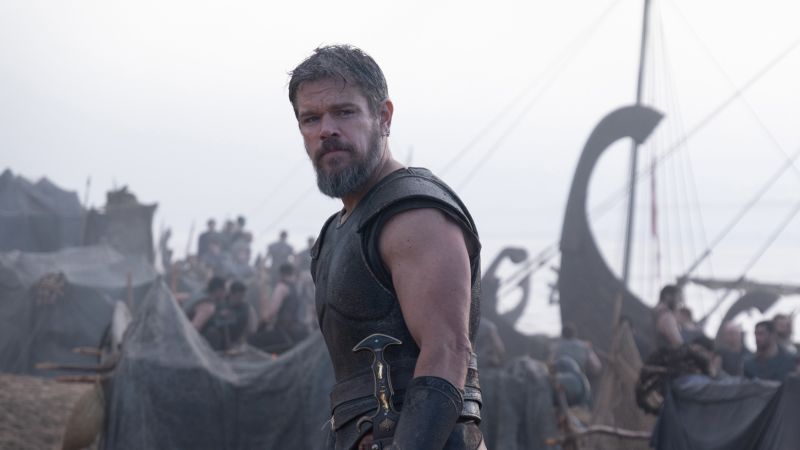
Goldlaner.com – If you love “The Odyssey” and wish you could see a spinoff of this summer’s most popular movie, Dennis MacDonald has some good news for you. A remake of Homer’s epic poem has already been written. Open a Bible and you can see how Homer, the blind poet and author of the ancient epic poem, has also shaped some of the most popular stories about Jesus in major sections of the New Testament, he says.
Christopher Nolan’s blockbuster has kicked off debates about geopolitics, a dark-skinned woman as Helen of Troy and a trans actor playing a Greek warrior. But MacDonald, a biblical scholar, is at the center of an overlooked debate about Homer’s work that has been simmering for years. MacDonald and a small group of other Bible experts claim the DNA of Homer’s epic poems is scattered throughout the New Testament.
Classic biblical stories such as Jesus walking on water and encountering a demonic man living among the tombs, and Paul being mistaken for a God after being shipwrecked, were inspired by The Odyssey and Homer’s The Iliad, they say. The writers of these biblical tales weren’t plagiarizing Homer, MacDonald says. He believes they were using mimesis, a common literary device of their time, to inject Jesus “with narrative steroids to let him compete with the mythological heroes of the Greeks and Romans.” The poem is nearly 3,000 years old, emerging centuries before the New Testament was canonized.
They wanted to show that Jesus was the “ultimate superhero,” MacDonald says. “The purpose of many of these stories is to show that Jesus is better than the likes of Achilles, the likes of Odysseus, the likes of Hermes, and so on,” MacDonald tells CNN, citing famous figures from Greek mythology. “Not only is Jesus better than Homeric heroes, he’s smarter and more compassionate.” MacDonald’s views contradict how many biblical scholars have traditionally viewed the creation of the New Testament.
While some scholars say Homer’s influence can be gleaned in some passages, most experts believe the primary sources for the New Testament’s epistles still come from Jewish scriptures and oral traditions — gathered from eyewitness accounts of Jesus’ healings and parables and passed from one generation to the next. Still, MacDonald’s claims matter in part because of two opposing movements. There’s a national push to mandate the teaching of Bible in public schools and the posting of the Ten Commandments in public places.
For some Christians in the US, the Bible is the result of divine inspiration — something they say is essential to understanding what it means to be an American. But there’s also a growing public awareness driven by scholars that the New Testament was formed by what one expert calls “God’s ghostwriters.” These scholars argue biblical stories were shaped by enslaved people who composed the New Testament, the writers of “lost gospels” that never made the biblical canon, and even the crosscurrents of Stoic and Platonic philosophy that circulated in the ancient world. The clash between these two movements revolves around questions people have been asking for centuries: Who composed the Bible?
Was it God, or humans? Or maybe both? The scholars who claim Homer influenced the Bible aren’t fringe figures.
They have some history on their side. It would be difficult for the first writers of the New Testament to escape Homer’s influence, some scholars say. Homer’s epics were, according to biblical scholar Margaret M.
Mitchell, the “theological textbook and cultural standard in the Greco-Roman world.” Roman children memorized Homer in school. Enslaved people recited his poetry at posh parties thrown by their masters. Politicians quoted Homer, and homes were decorated with frescoes depicting Odysseus and other Homeric characters.
Homer in his time was like what Shakespeare is for us today — inescapable even for those who haven’t read him, one scholar says. “I will say to my students: Regardless of where you went to school, or how much schooling you’ve had, usually you’ve been exposed to Shakespeare one way or another,” says Robyn Faith Walsh, a scholar of early Christianity at the University of Miami. “And even if you haven’t read Shakespeare.
You’ve been exposed to some of those plot points,” she tells CNN, citing the 1999 movie “10 Things I Hate About You,” based on Shakespeare’s “The Taming of the Shrew.” Walsh says MacDonald’s perspective on the New Testament is not unique among biblical scholars. “The idea of Jesus as something of a hero-type figure is not far off — anybody in the ancient world who was educated enough to write literature would have read Homer,” she says. But some scholars differ with MacDonald about the extent of Homer’s influence on the New Testament.
MacDonald says you can see Homer’s influence in three New Testament books: the Gospel of Mark, the Gospel of Luke and the Book of Acts. But while Walsh says it’s not unreasonable to believe Homer had some influence on characterizations of Jesus, she doesn’t embrace the full scope and detail of MacDonald’s comparisons. Another scholar, Robert Rabel, accuses MacDonald of engaging in “analytic overkill” and making “farfetched comparisons.” Early Christian authors wouldn’t take the risk of linking Jesus to Odysseus, a character whose cunning, cruelty and deceitfulness were well known in the world of the first Christian church, says Mitchell, a professor of early Christianity at the University of Chicago Divinity School.
“Homeric lore was everywhere in the ancient world, and early Christ-believers were hardly sealed off from that pervasive influence …” Mitchell tells CNN. “But the thesis that major parts of the New Testament depend upon literary borrowing, imitation and transvaluation of Homer is grossly overstated.” If you’ve read The Odyssey or watched the movie, you can be the judge. Open the New Testament and consider the evidence.
Walsh cites one clear link between Homer and the stories of Jesus. The Odyssey and the Gospels share a plot device in which both Odysseus and Jesus behave like undercover agents. They concealed their identity from even their closest loved ones.
In the The Odyssey, Odysseus tells Cyclops, the monster he encounters in a cave, that his name is “nobody.” When he returns home to Ithaca, he disguises himself as a beggar and hides his identity from his wife, Penelope, and his most loyal servant, Eumaeus. Throughout the Gospels, Jesus initially conceals his identity as the Messiah from even his closest disciples. This concealment is called the “messianic secret.” Even as Jesus performs miracles, he asks his disciples not to tell anyone, Walsh says.
The heroes of both stories shielded their identity as a strategic decision to help them accomplish their mission: Odysseus to exact revenge on his wife’s suitors, and Jesus to fulfill his mission, which would entail his sacrificial death, Walsh says. A reader of the Gospel of Mark, for example, would recognize Homer’s echoes in Jesus’ efforts to hide his identity, Walsh says. “That’s exactly how Odysseus is presented throughout Homer,” she says.
“He doesn’t reveal who he is until he’s ready to reveal who he is, and that’s what the hero does. That is a huge example that the writer of the Gospel of Mark read Homer. He read The Odyssey and saw that the hero reveals himself, when he’s ready.” MacDonald points to another famous New Testament passage involving Paul, one of the founders of the early church.
In a passage from the Book of Acts, Paul is shipwrecked while sailing for Rome. He survives by landing on an island where its inhabitants mistake him for a God after he survived being bitten by a viper. In The Odyssey, a bedraggled Odysseus is shipwrecked and washes ashore where he encounters a princess by the name of Nausicaa.
After Odysseus bathes to wash off the salt and dirt from the shipwreck, the princess wonders aloud if he is a God. “In both cases, you have the person who comes out of a shipwreck to be interpreted as a deity,” MacDonald says. MacDonald also points to other plot similarities between Homer’s poem and the New Testament.
In The Odyssey, Odysseus falls into a deep sleep on the deck of his ship when an emergency arises at sea. That episode inspires a Gospel story where Jesus is asleep on a cushion in the stern of the boat during a furious storm. In another passage, Jesus walks on water.
That story mimics the god Hermes, who flies over water in The Odyssey. And in one of the most touching scenes in the Gospel, Jesus is anointed with oil by a woman in Mark 13-14. That’s similar to the story of Odysseus’ anointing by an old woman in Odyssey 19, MacDonald says.
There’s another comparison between Homer and the Bible that demonstrates parallels between Jesus and Odysseus while asserting Jesus’ superiority, MacDonald says. It involves horror stories. In one chilling scene, Jesus encounters a demon-possessed man who lives in the caves, or tombs.
When Jesus asks the man his name, he says “My name is Legion for we are many.” The man is so physically strong that chains cannot contain him. It’s one of the few scenes in the Bible where Jesus struggles to heal someone. But Jesus eventually heals the man and casts the demons into a herd of pigs, which tumble over a cliff and drown.
Odysseus encounters two monsters, with different results. These scenes appear in both the epic poem and the film. He encounters Cyclops in a cave, and Circe, a powerful sorceress who lures Odysseus’ men to disaster.
Odysseus blinds the Cyclops and escapes Circe with the help of a magic herb, but not before losing some of his men. “Mark wanted his readers to note that Jesus was a better and more powerful hero than Homer’s. Whereas Odysseus blinded a monster, Jesus made a monster sane,” MacDonald writes in his book, “Mythologizing Jesus.” “Jesus is a hero of compassion.” MacDonald, whose father was a fundamentalist preacher, says he has been blackballed by some colleagues over his claims.
He jokes that some of his critics suffer from “Homerphobia”— an excessive reaction to the notion that Homer exerts a heavy influence on portions of the New Testament. He says it’s dangerous to claim the New Testament is the result of divine inspiration. “Once one claims revelations from God, arrogance and worse – social competition – are likely to ensue,” he says.
“The New Testament Gospels are sophisticated and creative writings by early Christian intellectuals who shaped Jesus and his teachings to meet the human challenges of their ancient readers.” But what happens when you tell someone that the New Testament is a literary creation? There are people whose faith is built on an infallible Bible and who say their lives have been transformed by the belief that “all scripture is God-breathed.” Walsh, the University of Miami professor, has another perspective. She says it’s important for people to remember that everything we know about the past comes through humans, and that people often struggle to interpret events and make meaning from profound experiences.
“Rather than undermining faith, some readers find that acknowledging those human fingerprints makes the texts more interesting and, in some ways, more relatable,” she says. The debate over Homer’s epic poems is nothing new. According to historians, people in the ancient world argued over where Odysseus’ journeys took him and whether his wife, Penelope, was faithful.
Seneca, the Roman philosopher, argued that people kept getting the message of Homer’s epic poems wrong. It’s been said that “The Odyssey’s” popularity proves that people are willing to go the movies again. It also proves something else.
We don’t wear togas anymore or sail “wine-dark” seas filled with monsters, but human nature remains the same. Homer, the enigmatic poet, still provokes and inspires us all.
Related Reading
Frequently Asked Questions
What is Jesus vs Odysseus?
Jesus vs Odysseus is the main topic of this guide. The article explains the context, practical details, and next steps readers should understand.
Why does Jesus vs Odysseus matter?
Jesus vs Odysseus matters because readers are looking for a useful answer, not just a short summary. Good content should match search intent and help them decide what to do next.
