
Reluctant Witness Sets Off Sparks in Second Day of Tupac Shakur Murder Trial
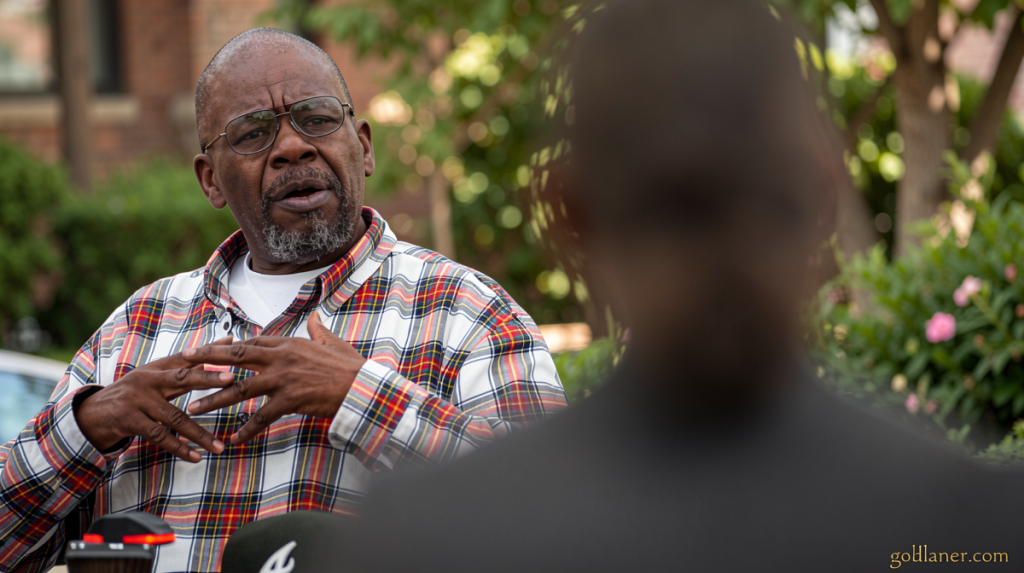
Goldlaner.com – The courtroom in Las Vegas turned electric on Tuesday as a grizzled former gang enforcer, summoned under compulsion and visibly eager to leave, delivered some of the most volatile testimony yet in the ongoing prosecution of Duane “Keffe D” Davis over the 1996 killing of rapper Tupac Shakur. James McDonald, a 61-year-old grandfather who once ran security operations for Death Row Records mogul Marion “Suge” Knight, made no secret of his displeasure at being pinned to the witness box. Asked by prosecutor Binu Palal whether he had volunteered to appear, McDonald flatly replied, “Not at all.” The exchange set the tone for a session in which the former Mob Piru Bloods member repeatedly clashed with both sides of the bench, offered blunt observations about decades of street warfare in Los Angeles, and ultimately roared at defense counsel that he was not going to help send Davis to prison.
A Hostile Witness Under Compulsion
McDonald’s presence in the courtroom was anything but voluntary. He arrived pursuant to a court summons and framed his own role in terms that left little ambiguity about his disposition toward the proceedings.
“You better treat me as a hostile witness,” he told the court early in his examination.
That self-identification shaped every answer that followed. When Palal probed for specifics about who was present at Club 662 — Knight’s Las Vegas nightclub and the intended destination for Shakur and his entourage that fateful evening — McDonald deflected, glanced toward the judge as though hoping for a recess, and told Davis directly, “Talk to your lawyer, man.” He added, with characteristic bluntness, “This dude is trippin’.” Defense attorney Michael Sanft drew the sharpest outburst when he pressed for further detail on gang movements that night. McDonald fired back, “I’m not finna send him to prison. You are!”
Decades of Crips-Bloods Violence in Plain Language
Despite his combative posture, McDonald proved a candid witness on the broader ecosystem of street conflict that prosecutors say provided the motive for Shakur’s shooting. He described the perpetual tension between Crips and Bloods neighborhoods across Los Angeles as a constant, not an exception.
“Any time you’re dealing with the gang life, we’re going to have violence at any given time,” McDonald said. “I can say that on both sides, when each neighborhood met each other, there was a lot of tension, I’ll say that.”
When Palal asked whether he recalled specific instances of disputes escalating into gunfire, McDonald pushed back: “Are you serious? Don’t ask me that right here.” The exchange underscored how deeply personal the subject remains, even for a man who says he has retired from the life.
The Night of the Shooting and the Road to Club 662
McDonald’s testimony placed him at the operational center of that night’s events. He was coordinating security at Club 662 when Shakur and his companion were shot roughly a mile from the venue. Investigators have concluded that Davis obtained the firearm used to kill Shakur and occupied the vehicle from which the shots were fired. Prosecutors frame the killing as one link in a chain of retaliatory violence between Crips and Bloods, centered on Davis’ nephew, Orlando “Baby Lane” Anderson, who is believed to have pulled the trigger in a separate gang shooting two years after Shakur’s death and who himself was later killed.
McDonald’s own brother, Alton “Buntry” McDonald, was connected to the earlier attack on Anderson, a detail that deepens the personal stakes woven through the case. Asked whether his people understood the consequences of Shakur’s shooting immediately, McDonald said members of his crew left Las Vegas that very night, piling into cars and heading home because, in his words, “it was a situation.”
“Pac was shot. Retaliation is a ‘mug.’ Come on, man. Like, it was for real, for real.”
The Death Row–Bad Boy Feud as Catalyst
McDonald offered a clear-eyed account of how the commercial rivalry between Death Row, the dominant West Coast hip-hop label, and Sean “Puffy” Combs’ Bad Boy Records on the East Coast reignited what had settled into a relatively quiet period between the two street organizations. He explained that Bad Boy aligned with Davis’ side while Knight’s camp took the other, entangling label politics with old territorial grudges.
“It was peace, and when the two record companies got into it, Bad Boy went to Keffe D, and Suge came to us. So that intertwined everything, and yes, we had issues.”
That testimony gives jurors a concrete mechanism for understanding how a commercial spat between two record executives could translate into bullets aimed at a car in a Las Vegas parking lot.
Wright Takes the Stand: Security, Police Work, and Long Covid
Following McDonald’s heated session, the jury heard from Reggie Wright, Jr., who by that time served as the formal head of Death Row’s security apparatus while simultaneously holding a sworn police commission in Compton, California. Wright testified from an electric scooter, a necessity born of lingering effects from Long Covid. He described his role as distinct from McDonald’s, acknowledging that he knew McDonald belonged to the Bloods but explaining that his own duties within Knight’s organization operated on a different plane. His testimony was cut short in the available record, leaving the full scope of his account to subsequent trial days.
What the Testimony Means for the Case
The second day of trial has sharpened the prosecution’s narrative: that Shakur’s death was not an isolated act of random violence but the predictable outcome of a decades-long cycle of retaliation, re-energized by the commercial collision between two of hip-hop’s most powerful labels. McDonald’s reluctance to speak specifics does not diminish the weight of what he did confirm — the proximity of his own people to the earlier Anderson shooting, the immediate mobilization of gang members that night, and the structural logic of payback that governed the streets of Los Angeles in the mid-1990s. For jurors tasked with deciding whether Davis pulled a trigger or merely held a gun, that context may prove as consequential as any single piece of physical evidence.
Related Reading
Frequently Asked Questions
What is You better treat me as a hostile?
You better treat me as a hostile is the main topic of this guide. The article explains the context, practical details, and next steps readers should understand.
Why does You better treat me as a hostile matter?
You better treat me as a hostile matters because readers are looking for a useful answer, not just a short summary. Good content should match search intent and help them decide what to do next.