
Why is there fighting in Lebanon and does it threaten the Iran deal?
Why is There Fighting in Lebanon and Does It Threaten the Iran Deal?
Why is there fighting in Lebanon – The ongoing clashes between Israeli forces and Hezbollah in southern Lebanon have cast a shadow over the fragile agreement between the United States and Iran aimed at resolving their long-standing conflict. This memorandum of understanding, signed in early 2026, hinges on a ceasefire in Lebanon that would shield Iran’s key ally, Hezbollah, from Israeli attacks, provided the group refrains from targeting Israel. However, the recent escalation of hostilities has disrupted the planned negotiations, delaying discussions on critical issues such as Iran’s nuclear program and the sanctions regime. With the fighting intensifying and the prospects for peace uncertain, the situation has reignited concerns about the stability of the Iran deal and its broader implications for regional security.
The Roots of the Conflict
Hezbollah, a Shiite Islamist militant group backed by Iran, has been a formidable force in Lebanon since the 1980s. Over time, it has developed a vast paramilitary network, making it one of the most powerful non-state actors in the Middle East. The group’s primary objective has always been the destruction of Israel, a goal it has pursued through a combination of guerrilla warfare, rocket attacks, and strategic alliances. Israel, in turn, has launched multiple campaigns against Hezbollah, targeting its infrastructure and leadership to weaken its capabilities. The most notable of these occurred in 2006, when a cross-border raid by Hezbollah killed two Israeli soldiers, prompting a month-long military operation that devastated southern Lebanon and claimed hundreds of civilian lives.
The 2006 war, which Israel described as a “serious missed opportunity,” resulted in a ceasefire agreement but left Hezbollah intact. The group not only survived the conflict but also strengthened its position, launching retaliatory attacks from Lebanon into Israeli territory. This cycle of violence continued into 2023, when Hezbollah initiated rocket strikes on northern Israel after Israeli airstrikes targeted Iran in response to Hamas’ attack on southern Israel. The conflict escalated further in 2024, with Israel killing its long-time leader, Hassan Nasrallah, and approving a ceasefire deal that required it to withdraw from southern Lebanon. Yet, Israeli forces remained in the region, conducting daily strikes and accusing Hezbollah of violating the terms of the agreement.
A New Phase of Tension
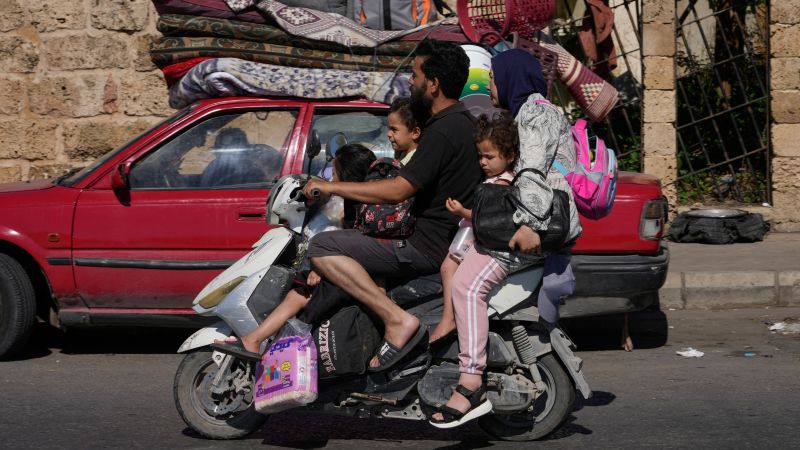
The recent resurgence of violence began in late February 2026, following the assassination of Iran’s supreme leader, Ayatollah Ali Khamenei, by Israeli and U.S. forces. This act triggered a new cycle of attacks, with Hezbollah responding by targeting northern Israel in early March. In retaliation, the Israeli military launched a series of airstrikes, reportedly striking Hezbollah positions in southern Lebanon. The operation led to the evacuation of thousands of residents from the region and the destruction of hundreds of homes, intensifying the humanitarian crisis. Over 3,900 lives have been lost in Lebanon since the military escalation, according to the country’s health ministry.
The 14-point memorandum of understanding, which outlines the terms of the US-Iran deal, emphasizes the importance of ending hostilities in Lebanon. The agreement states that the United States, Iran, and their allies must “declare the immediate and permanent termination of military operations on all fronts, including in Lebanon, and undertake from now on not to initiate any war or any military operation against each other.” It also mandates that the parties refrain from using force against one another and ensure Lebanon’s territorial integrity. Trump’s public endorsement of the deal added weight to its significance, as he tweeted, “we expect a complete Ceasefire on all fronts, including Lebanon, Hezbollah, and Israel.”
“With all due respect to the Americans, Israel must make it clear to the entire world that the blood of our sons and the security of our citizens are not up for sacrifice,” said Itamar Ben Gvir, Israel’s far-right National Security Minister, on Friday. This statement reflects the growing frustration within Israel’s government, which views the ceasefire deal as a constraint on its ability to neutralize Hezbollah’s threat. Prime Minister Benjamin Netanyahu has repeatedly asserted that Israel will not withdraw from Lebanon, stating on Thursday, “We will restore security to the north (of Israel),” and emphasizing that maintaining a security zone in the south is essential for safeguarding Israeli citizens.
The conflict has become a focal point for both Iran and Israel. For Iran, ending Israeli attacks on Hezbollah is a non-negotiable demand, as it seeks to protect its regional influence. A senior Iranian diplomat revealed that the country insisted on guarantees for a lasting ceasefire in Lebanon before resuming talks with the U.S. on broader issues. However, Israel’s insistence on retaining military presence in the south challenges these conditions, creating a deadlock in negotiations. The U.S. has struggled to balance its commitment to the agreement with the demands of its allies, raising questions about the viability of the deal in the face of ongoing hostilities.
The Struggle for Control and Influence
Hezbollah’s role in Lebanon extends beyond military operations; it is a political party with significant control over the country’s government. This dual role has made it a crucial player in the regional power dynamics, with Iran using its backing to project influence across the Middle East. The group’s arsenal of rockets, missiles, and drones, supplied by Iran, has enabled it to conduct strikes deep into Israeli territory, complicating efforts to establish a stable ceasefire. Meanwhile, Israel’s military campaigns have targeted Hezbollah’s infrastructure, weakening its ability to sustain prolonged conflict but also prompting retaliation.
The current situation underscores the fragility of the Iran deal. While the agreement aims to reduce tensions between the U.S. and Iran, its success depends on maintaining stability in Lebanon. The recent attacks by Hezbollah and Israel’s response have exposed the challenges of enforcing the ceasefire, with both sides accusing the other of breaking the terms. The health ministry’s report on the 3,900 casualties highlights the human toll of this stalemate, which could have far-reaching consequences for the negotiations. As the conflict continues, the question remains: can the Iran deal survive the persistent fighting in Lebanon, or will it be undermined by the very forces it seeks to pacify?
Analysts suggest that the breakdown of the ceasefire in Lebanon may force the U.S. and Iran to revisit their agreement, potentially leading to renewed tensions. The memorandum of understanding, which was initially seen as a breakthrough, now faces scrutiny as the situation in southern Lebanon deteriorates. For Iran, the loss of Hezbollah’s protection could embolden Israel to target its nuclear facilities, while for Israel, the inability to secure a permanent ceasefire threatens its strategic objectives in the region. The standoff between the two nations, mediated by the U.S., has become a high-stakes game where every strike and counterstrike brings the possibility of a larger conflict closer.
As the military escalation persists, the international community watches closely. The success of the Iran deal will hinge on the ability of all parties to commit to the ceasefire and address the underlying grievances that fuel the conflict. Until then, Lebanon remains a flashpoint, where the ambitions of Iran and the security needs of Israel collide, and the fragile peace of the agreement is put to the test.
