
US job openings were much higher than expected in May, shrugging off uncertainty from Iran war
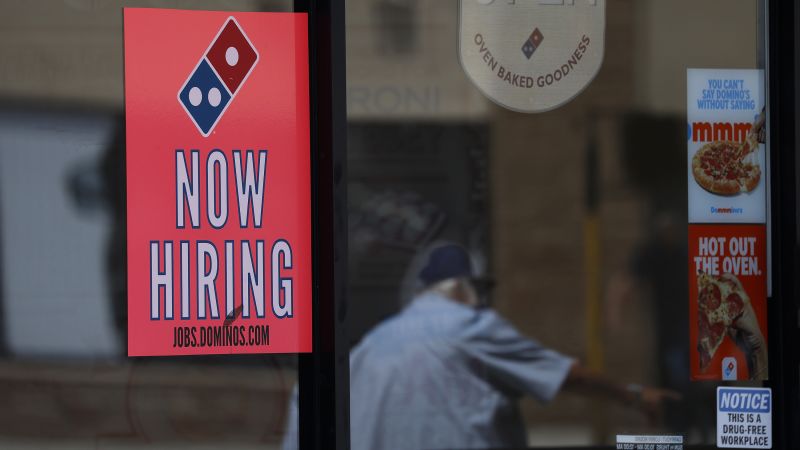
Job Market Shows Signs of Recovery as Job Openings Rise in May
US job openings were much higher – The U.S. labor market demonstrated unexpected resilience in May, with job openings increasing for the second consecutive month. According to the Bureau of Labor Statistics’ latest Job Openings and Labor Turnover Survey, the number of available positions climbed to nearly 7.6 million, up from 7.59 million in April. This marks a new two-year peak, indicating that the labor market may be shifting from stagnation to growth, despite ongoing uncertainties surrounding global events.
Expectations vs. Reality
Economists had anticipated a decline in job openings during May, projecting a nearly 10% drop to approximately 6.975 million. However, the data revealed a contrary trend, suggesting that the previous month’s surge in job postings might have been accurately reflective of labor demand rather than an overstatement. This development could signal a broader stabilization of the market, with potential for expansion in the near future.
“Companies are starting to recognize that AI can’t replace all aspects of work, and they’re beginning to invest in hiring again,” said Heather Long, chief economist at Navy Federal Credit Union. “This is a positive sign that the hiring recession might be coming to an end.”
Job openings expanded across multiple sectors in May, including leisure and hospitality, wholesale trade, construction, and manufacturing. Conversely, industries like healthcare, finance, and technology reported a decrease in postings. This divergence highlights a mixed picture, with some sectors rebounding while others remain sluggish.
Industry-Specific Trends
The May data underscores a “winners and losers” dynamic within the labor market. Blue-collar industries, such as construction and manufacturing, appear to be recovering, while tech and finance sectors continue to face challenges. The decline in job postings for these industries is attributed to the rapid adoption of artificial intelligence technologies, which have automated certain roles and reduced immediate hiring needs.
Long noted that this trend reflects a broader shift in hiring priorities. “The labor market is still cautious, but the expansion is real,” she explained. “Employers are starting to see value in adding workers, even as they navigate the complexities of AI integration.”
Stagnation and Correction
Over the past two years, the U.S. labor market has remained in a “low-hire, low-fire” phase. Following the post-pandemic surge in employment, growth slowed due to factors like a shrinking workforce and uncertainty about federal policy changes. However, May’s report suggests a correction to this pattern, with companies recalibrating their strategies and recognizing the continued need for human labor.
Noah Yosif, chief economist at the American Staffing Association, pointed to a smaller labor supply as a contributing factor to the recent trend. “The number of available workers has decreased, which means fewer separations are offsetting the rise in openings,” he wrote in a note. “This creates a situation where employment gains are not driven by new hires but by reduced job losses.”
Consumer Confidence and Market Perception
A separate report released Tuesday highlighted a more pessimistic outlook among consumers. The Conference Board’s Consumer Confidence Index rose slightly in June, partly due to lower gas prices. However, the survey revealed a notable softening in perceptions of the labor market, with 22.5% of respondents stating that jobs are “hard to get”—the highest level since January 2021. Dana Peterson, the Conference Board’s chief economist, noted that these concerns suggest lingering doubts about future employment trends.
“Consumers expect little change in the labor market over the next six months,” Peterson said in a release. “This indicates a cautious optimism, but there’s still apprehension about long-term stability.”
Despite this, the May JOLTS data suggests that the labor market is gradually gaining momentum. The rate of layoffs and voluntary quits remained stable, indicating that workers are not yet fully confident in the market’s direction. However, the balance between job openings and hiring activity remains delicate, with new hires declining for the third month in a row.
Employment Growth and Unemployment Rate
Positive developments in job openings align with broader employment trends. The economy added an estimated 172,000 jobs in May, continuing a three-month streak of gains exceeding 100,000. The unemployment rate held steady at 4.3%, signaling that the labor market is not only stable but also showing signs of gradual improvement.
Analysts anticipate a similarly strong performance in June, with the upcoming jobs report due Thursday—pushed back due to the July 4th holiday—expected to confirm these trends. While the data may not yet show dramatic changes, it offers a more optimistic outlook than previous months. “The employment growth is consistent, but the pace remains measured,” said Sneha Puri, economist at Indeed. “This suggests a sustainable recovery rather than a rapid rebound.”
Experts emphasize that the labor market’s resilience is tied to a combination of factors. On one hand, reduced job separations—driven by a smaller working-age population—have contributed to the rise in openings. On the other hand, companies are beginning to re-evaluate their hiring strategies, recognizing the persistent demand for workers even in the face of technological advancements.
As the U.S. economy continues to navigate post-pandemic adjustments and global uncertainties, the May data serves as a critical indicator of its trajectory. While challenges persist, the uptick in job openings and sustained employment gains provide evidence that the labor market is evolving from a state of stagnation to one of cautious expansion. This shift, though gradual, could pave the way for renewed hiring activity and greater economic stability in the months ahead.
Industry experts remain watchful, noting that the current environment requires careful analysis. “The correction to the correction is a sign that the market is finding its footing,” said Long. “But it’s not a full recovery yet—companies are still hesitant to commit to large-scale hiring.”
For job seekers, the news is encouraging. The increasing number of available positions suggests that opportunities are becoming more plentiful, even as hiring remains selective. This dynamic could create a more competitive yet balanced job market, where both employers and employees have the chance to adapt and thrive in the coming months.
