
Uganda’s military chief orders shutdown of two major media outlets
Uganda’s Military Chief Orders Closure of Two Major Media Outlets
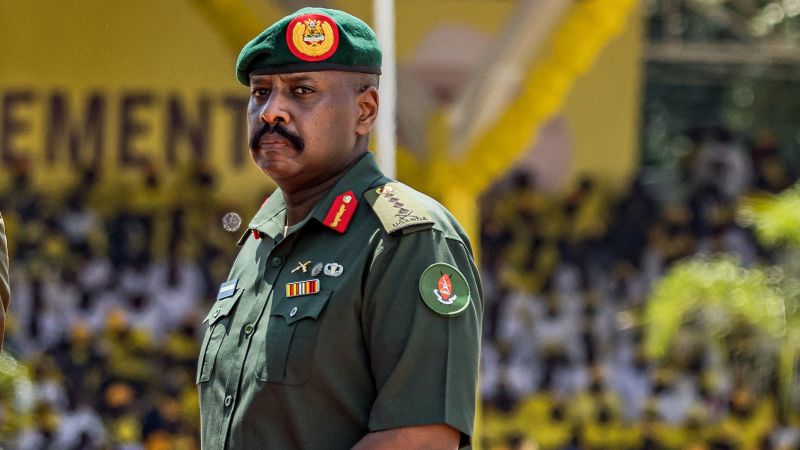
Uganda s military chief orders shutdown – In a striking move that has sparked immediate reactions, Uganda’s military chief, Muhoozi Kainerugaba, has announced the shutdown of two prominent media organizations. The decision, made on Sunday, reflects his firm stance against a free press, with the claim that these outlets must operate under his guidance. Kainerugaba, who is also the son of President Yoweri Museveni, has positioned himself as a key figure in the country’s political landscape, and this action underscores his growing influence.
The affected outlets, the Daily Monitor and NTV Uganda, are among the most respected in the nation. The Daily Monitor, Uganda’s largest independent daily newspaper, has long been a platform for critical reporting. NTV Uganda, a major private broadcaster, has similarly served as a significant voice in public discourse. Both entities are owned by Nation Media Group (NMG), a media conglomerate based in Kenya and listed on the Nairobi Stock Exchange. Their closure, according to Kainerugaba, is not just a temporary measure but a decisive step to align media operations with the values of the revolution.
“In Uganda, I do not believe in a free press! The press should be guided by cadres of the revolution,” Kainerugaba wrote in a series of posts on the X platform.
The order comes without specific reasons, leaving questions about the motivations behind the shutdown. However, the immediate aftermath has seen military personnel stationed at NMG’s headquarters in Kampala, the capital. Staff members have reported being restricted from entering or exiting the premises, creating an atmosphere of tension and control. This physical presence suggests a calculated effort to exert pressure on the media, possibly to suppress dissent or reshape narrative control.
The government’s response to the situation has been notably muted. Alan Kasujja, a government spokesperson, has yet to provide comments on the Reuters inquiry, while Susan Nsibirwa, NMG’s managing director in Uganda, has also remained silent. This lack of immediate clarification has fueled speculation about the extent of the government’s role in the decision and whether it was a direct order or an initiative taken by Kainerugaba independently.
Background on Kainerugaba’s Political Aspirations
Kainerugaba, a high-profile figure in Uganda’s military, has been widely regarded as a potential successor to his father, President Museveni. His father, who has led the country since 1986, has faced criticism for his prolonged rule, and Kainerugaba’s ascension has been seen as a move to consolidate power within the ruling party. His reputation for bold and controversial statements has made him a polarizing figure, with his social media posts often drawing attention for their direct and sometimes aggressive tone.
One of his most notable moments occurred in 2023 when he threatened to behead the opposition leader, Bobi Wine. The statement, shared on the X platform, was met with both support and condemnation, highlighting his role as a media provocateur. This pattern of behavior has raised concerns about the potential for media outlets to be used as tools for political messaging, rather than platforms for independent journalism.
Historically, Kainerugaba’s actions echo those of his father’s government. In 2013, President Museveni temporarily closed the Daily Monitor for 10 days over its coverage of succession issues within the ruling party. This precedent suggests that the closure of media organizations may be a recurring strategy to manage public perception and maintain control over information flow. The current move, however, marks a significant shift, as it is being carried out by a military leader rather than the presidency directly.
Analysts have pointed to the timing of the closure, which coincides with a period of heightened political activity. The decision may be aimed at silencing critical voices ahead of upcoming elections or to bolster the government’s narrative on national stability. By taking control of the media, Kainerugaba is not only asserting authority but also reinforcing his position as a central figure in Uganda’s political future.
Implications for Uganda’s Media Landscape
The shutdown of the Daily Monitor and NTV Uganda represents a major setback for independent journalism in the country. These outlets have historically provided diverse perspectives, often challenging government policies and highlighting social issues. Their closure could lead to a concentration of media ownership under more state-aligned interests, potentially limiting the range of opinions available to the public.
While the government has not officially endorsed the action, the alignment between Kainerugaba’s directive and past practices under Museveni’s leadership raises eyebrows. Critics argue that this move threatens the credibility of the media and undermines the principles of freedom of expression. Supporters, on the other hand, see it as a necessary step to ensure media adherence to national priorities and to prevent misinformation from spreading.
As the situation unfolds, the broader impact on Uganda’s media environment remains uncertain. The closure has already disrupted news cycles, with reports from NMG’s other TV and radio channels also going offline. This has created a vacuum in news coverage, leaving the public to rely on state-approved narratives. The question now is whether this is a temporary measure or the beginning of a sustained effort to reshape the media landscape in Uganda.
