
The last ‘little crappy ship’: What’s the future for the US Navy’s troubled LCS?
The Final LCS Commissioning: Assessing the Program’s Legacy and Future
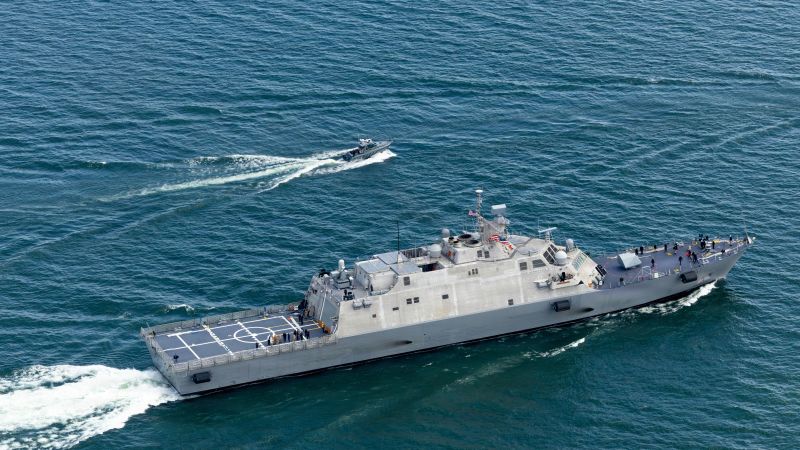
The last little crappy ship – Earlier this month, the US Navy officially launched the USS Cleveland, its 35th and final littoral combat ship (LCS). The ceremony took place at a dock in Ohio, where the vessel was named after the city it represents. Acting Secretary of the Navy Hung Cao shared the event on social media, highlighting the milestone with the phrase “Steel. Strength. Power.” Yet, for many critics, the occasion marked the culmination of a program often described with less enthusiasm. One analyst derisively referred to the LCS as “easy meat,” while another called it “an experiment that didn’t work.” The program’s financial burden has also drawn sharp scrutiny, with a 2023 report from ProPublica estimating the total cost could surpass $100 billion, far exceeding the initial $60 billion projection.
A Sea of Challenges and Controversies
Despite the Navy’s confidence in its LCS initiative, the ships have faced persistent issues since their debut in 2008. Mechanical failures, operational mishaps, and design flaws have plagued the fleet, leading to a reputation that extends beyond its acronym. Critics have popularized the term “little crappy ships” to underscore the program’s struggles, a label that reflects both its shortcomings and the frustration of those who saw it as a misstep in naval strategy.
“One of the worst boondoggles in the military’s long history of buying overpriced and underperforming weapons systems,” the ProPublica report said.
The LCS was designed as a versatile, smaller platform to operate in coastal zones, where larger warships like guided-missile destroyers might face limitations. According to a 2017 Navy report, the service sought to replace aging vessels with a fleet that could be built more quickly and affordably. However, the program’s rapid development and lack of clear mission focus have left it open to criticism. A 2014 analysis by then Undersecretary of the Navy Robert Work noted that “Admiral Clark first decided he needed a ship and only then turned to figuring out what the ship would do,” highlighting the program’s conceptual ambiguity.
Design and Operational Flexibility
The LCS program aimed to revolutionize naval operations by emphasizing adaptability. The ships were intended to be modular, capable of reconfiguration for tasks such as mine countermeasures, anti-submarine warfare, or surface combat. This design philosophy allowed them to switch roles swiftly, a key selling point for the Navy. However, the lack of a standardized design led to two distinct variants: the Freedom class, built by Austal USA, and the Independence class, developed by Lockheed Martin. Each has its own characteristics, with the Independence class being larger, measuring 422 feet in length and 104 feet in width, compared to the Freedom class’s 388 feet by 58 feet dimensions.
Neither variant relies on traditional propeller propulsion or rudders; instead, they utilize gas turbines to power high-speed water jets. This system enables the LCS to navigate shallow waters with greater agility, avoiding hazards like underwater cables that could entangle conventional ships. A former LCS commander once compared the vessels to “a military jet ski with a flight deck and a gun,” emphasizing their speed and maneuverability in littoral environments.
Geopolitical Role and Strategic Ambiguity
The LCS was envisioned as a critical asset in regions where the US and its allies face increasing maritime challenges. In the Persian Gulf, where tensions between the US, Israel, and Iran dominate headlines, and in the South China Sea, where freedom of navigation is under threat, the ships were meant to provide rapid response capabilities. Their smaller size and cost-effectiveness were touted as advantages for operating in contested coastal waters, where larger destroyers might be less practical.
Yet, the program’s success has been questioned. Early advocates called the LCS a “streetfighter,” praising its ability to engage small-boat swarms and conduct operations in austere conditions. However, these capabilities have been overshadowed by the ships’ reliability issues. The first monohulled LCS, the USS Freedom, entered service in 2008, followed by the first trimaran, the USS Independence, in 2010. Despite their intended versatility, the vessels have struggled to meet performance expectations, with frequent maintenance needs and operational delays.
The Navy’s fact sheet acknowledges the LCS’s role in shifting the approach to shipbuilding, emphasizing flexibility, speed, and cost-effective production. It credits the program for fostering a “highly efficient” process that allowed two designs to coexist, as builders Lockheed Martin and Austal USA competed to create the optimal solution. While this competition drove innovation, it also introduced complexities in logistics and supply chains, with critics arguing that the dual design complicates standardization and increases long-term costs.
The Road Ahead for LCS
As the USS Cleveland joins the fleet, the question remains: what comes next for the LCS? With the program now complete, the Navy must determine how to integrate these ships into its broader strategic framework. While they offer unique advantages for coastal operations, their high maintenance costs and limited firepower have raised doubts about their long-term viability. The ProPublica report, which called the LCS “one of the worst boondoggles,” suggests that the program may serve as a cautionary tale for future defense acquisitions.
Nevertheless, the LCS remains a symbol of the Navy’s efforts to modernize its fleet in an era of constrained budgets and evolving threats. Its ability to operate in shallow waters and adapt to changing missions could still be valuable in regions like the Indo-Pacific, where the US seeks to project power without overextending resources. The challenge for the Navy will be to refine the LCS’s capabilities, address its technical flaws, and ensure that its legacy is one of practical utility rather than enduring criticism.
As the last LCS is commissioned, the debate over its effectiveness continues. While some argue that the program’s flexibility and speed justified its risks, others remain unconvinced. The future of the LCS may hinge on its ability to prove its worth in real-world scenarios, balancing its strengths with the lessons learned from years of development and deployment. For now, the USS Cleveland stands as a testament to the program’s ambition, even as its detractors remain skeptical of its ultimate impact on US naval power.
