
The Americans losing homes to Israel’s war in Lebanon
Lebanon’s American Families Face Unprecedented Loss as War Continues
Goldlaner.com – For Maysa Moghnie, the destruction of her family’s ancestral home in southern Lebanon represents more than physical damage—it symbolizes the unraveling of generations of heritage. The American-Lebanese dual citizen, who now raises her children in Irvine, California, watched helplessly as an Israeli airstrike reduced her childhood compound to rubble on May 9.
The three-story stone structure in Burj Rahal village stood as a testament to her father’s lifelong dedication. Room by room, he had constructed what Moghnie describes as a “palatial family compound.” Video recordings from her twin sister’s engagement party two years prior capture the home at its peak—guests dancing beneath ornate stone-column balconies topped with slanted red-brick roofs, while a magnificent split staircase descended to a spacious terrace.
“All the memories we have are of him building this house,” Moghnie recalled.
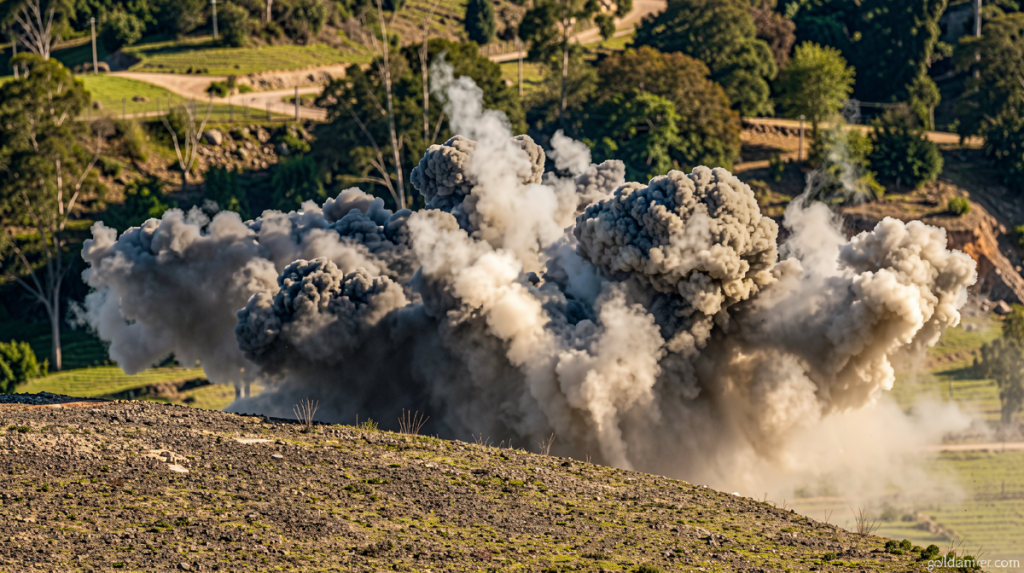
By chance, Moghnie’s family had vacated the premises just three days before the strike. Her mother, unable to endure the relentless drone patrols and aircraft sounds, had insisted they leave. When neighbors called to report the devastation, the family discovered that the projectile had torn through multiple floors, leaving a gaping crater blanketed in white dust.
A Growing Crisis for Lebanese-American Families
Moghnie is among numerous American citizens whose properties have been devastated during Israel’s ongoing military campaign against Hezbollah. According to a United Nations Development Programme assessment released in June, nearly 18,000 homes have been destroyed since hostilities intensified in March. That conflict erupted after Hezbollah launched rockets into Israel following coordinated American-Israeli strikes on Iranian targets.
Although a formal ceasefire took effect in April, Israeli forces continued advancing into Lebanese territory. While most American residents have departed southern Lebanon, those who remain do so for various reasons—some to protect businesses, others to work, and still others because of deep emotional ties to their homeland.
Moghnie’s mother-in-law remains in her home, which survived despite damaged walls and broken windows from nearby bombardments. Similarly, Anwar Ghaida, a 60-year-old American business owner in Hasbaya, has endured two separate strikes on his property—first in 2024, then again on March 25 of this year.
The Journalists’ Tragedy
Ghaida’s first encounter with aerial bombardment made international headlines. The strike killed three journalists sleeping in one of his rental bungalows, which he operates alongside a wedding venue. Ghaida believes the attack was intentional. The victims were reporting for Al Manar, a Hezbollah-affiliated news channel, and Al Mayadeen, a pro-Iranian network. They were part of a group of 18 journalists from various outlets who had been staying at his property during the intense fighting between September and November 2024.
“They hit the wedding venue, mainly the kitchen area but it was empty at the time,” Ghaida explained regarding the second attack.
The economic consequences proved severe. “My business is ruined financially,” he stated. “I could do weddings for 500 people, now all my kitchen equipment and furniture is gone.” Even before the March 25 strike, his operations had already declined. With conflict dominating headlines, “nobody was getting married,” and journalists became hesitant to book accommodations after seeing news of the bombing.
Rooted in History, Resilient in Spirit
Ghaida has two children living in the United States, but he refuses to abandon his homeland. “I have my brother here with his children, my mom, my sister… I’m not going to leave them,” he told CNN during a phone call from Hasbaya. At 60 years old, he doubts he could rebuild his life elsewhere.
Despite the ceasefire, Ghaida continues to hear Israeli drones overhead. “Last night was really bad,” he said. “You could hear shelling and big explosions in different towns.” This sentiment echoes throughout the Lebanese-American community, where many recall previous conflicts but agree that the current situation surpasses all others.
Some families survived the 2006 war. Others remember the Israeli occupation of southern Lebanon from 1982 to 2000. Their homes endured those periods of violence. Now, however, new Israeli tactics threaten to erase decades of family history in a matter of months.
Related Reading
Frequently Asked Questions
What is The Americans losing homes to Israel?
The Americans losing homes to Israel is the main topic of this guide. The article explains the context, practical details, and next steps readers should understand.
Why does The Americans losing homes to Israel matter?
The Americans losing homes to Israel matters because readers are looking for a useful answer, not just a short summary. Good content should match search intent and help them decide what to do next.
