
Sons of jailed Pakistani leader Imran Khan fear for his health
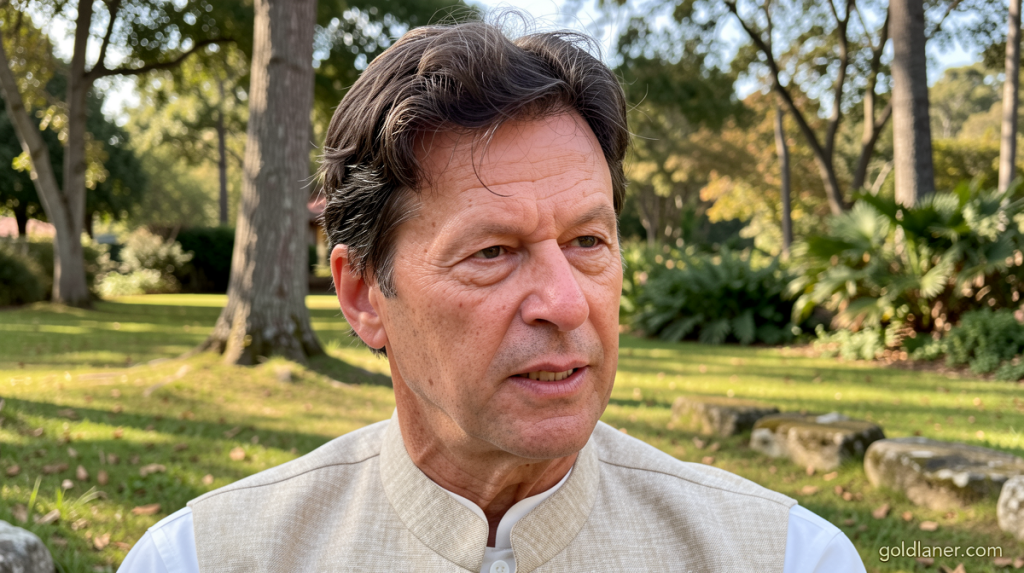
Family of Imprisoned Pakistani Leader Raises Concerns Over Health and Access
Goldlaner.com – As Pakistan navigates a turbulent political period, the sons of former prime minister Imran Khan have voiced growing anxiety about their father’s wellbeing while being systematically blocked from visiting him. Kasim and Sulaiman Isa Khan, who reside in London, stated that on the third anniversary of their father’s detention, they remain without meaningful updates regarding his condition or daily circumstances.
The brothers emphasized that for approximately seven months, no family members, medical professionals, or legal representatives have been permitted to visit Khan, who remains incarcerated following his conviction on multiple charges. Their concerns come amid widespread rallies organized by supporters of Khan’s Tehreek-e-Insaf party, with thousands of demonstrators taking to streets across Pakistan to call for the release of both the former leader and his wife, Bushra Bibi.
A Political Figure Under Siege
Khan, who served as Pakistan’s prime minister from 2018 until his removal through a parliamentary no-confidence vote in 2022, has been held in custody since his conviction in 2023. The charges against him include corruption and the disclosure of state secrets, allegations that Khan and his supporters maintain are politically motivated attempts to silence his opposition to Prime Minister Shehbaz Sharif’s administration.
Following his ouster from power, Khan mobilized substantial public support through large-scale demonstrations criticizing Sharif’s government. He accused the administration of engineering his political downfall through collaboration with Pakistan’s military establishment and the United States—claims that both the military and American officials have firmly rejected.
“We’re trying, we’d like to go, but nothing’s coming through,” Kasim told CNN from London. “There’s no reason we shouldn’t be accepted for a visa.”
The Sharif government responded to Khan’s growing influence with a comprehensive crackdown on his political movement, resulting in the arrest of numerous party leaders and a prohibition preventing Tehreek-e-Insaf from participating in the 2024 general elections.
Visa Disputes and Administrative Barriers
Kasim and Sulaiman have lived in the United Kingdom since their parents’ marriage to Jemima Goldsmith collapsed in 2004. From their London base, the brothers have been vocal about their father’s situation, asserting that Pakistani authorities increasingly complicate their ability to visit by extending visa processing times and introducing additional bureaucratic obstacles.
Pakistan’s Ministry of Information countered these assertions, noting that both sons possess National Identity Cards for Overseas Pakistanis—a document category that theoretically exempts holders from visa requirements. The ministry characterized the brothers’ complaints as “misleading and appear to convert an administrative process into an issue of political point-scoring.”
However, Kasim and Sulaiman maintain that their identity cards have expired and remain unrenewed, a point the ministry did not specifically address in its response.
International and Government Perspectives
“We’re trying, we’d like to go, but nothing’s coming through,” Kasim said. “There’s no reason we shouldn’t be accepted for a visa.”
Amnesty International issued a statement this week calling on Pakistani authorities to “unconditionally restore Imran Khan and Bushra Bibi Khan’s right to see their family and lawyers.” The human rights organization emphasized that the imprisoned couple “must be given access to adequate medical care and their solitary confinement, which is unlawful, should end immediately.”
The Pakistani government presented a detailed counter-narrative in its statement to CNN, categorically rejecting claims that Khan has experienced a seven-month communications blackout. Officials insisted that evidence demonstrates “repeated and substantial access (to the prisoner),” noting that Khan’s most recent telephone conversation with his son occurred on March 21, 2026.
Government representatives described Khan’s condition as “oriented and stable” without “any acute or unmanaged deterioration,” adding that he “continues to receive treatment, medication and follow-up care in accordance with medical advice, applicable prison rules and court directions.”
Living Conditions and Broader Implications
The government’s description of Khan’s accommodations painted a picture of relative comfort. The former prime minister reportedly resides in “an exclusive seven-cell compound designed for approximately 30 to 35 prisoners.” The facility features a 57 by 14 foot corridor, a 35 by 37 foot lawn, and includes a bed, mattress, four pillows, blankets, table, chair, sanitation facilities, and exercise equipment—arrangements that officials argued “bear no resemblance to the picture of isolation, neglect or punitive deprivation being presented publicly.”
Despite these assurances, human rights organizations remain skeptical. Amnesty International has characterized the mass arrests of Khan’s party members and supporters as “arbitrary,” with Kasim noting that many detainees “remain detained under anti-terrorism charges while 85 have been convicted by military courts.”
The ongoing situation reflects broader tensions within Pakistan’s democratic institutions, as the country grapples with the balance between security concerns and civil liberties. Khan’s continued imprisonment, alongside the restrictions placed on his family’s access, has become a symbol of the political challenges facing Pakistan as it seeks to navigate its complex relationship between civilian governance, military influence, and international partnerships.
As the brothers continue their efforts to visit their father, the outcome of their visa applications and the government’s willingness to facilitate family access will likely serve as indicators of Pakistan’s commitment to transparent governance and human rights protections during this critical period in the nation’s political evolution.
Related Reading
Frequently Asked Questions
What is Sons of jailed Pakistani leader Imran?
Sons of jailed Pakistani leader Imran is the main topic of this guide. The article explains the context, practical details, and next steps readers should understand.
Why does Sons of jailed Pakistani leader Imran matter?
Sons of jailed Pakistani leader Imran matters because readers are looking for a useful answer, not just a short summary. Good content should match search intent and help them decide what to do next.
