
Stranded houseboats and grounded cruise ships: Europe’s rivers are shrinking amid heat and drought
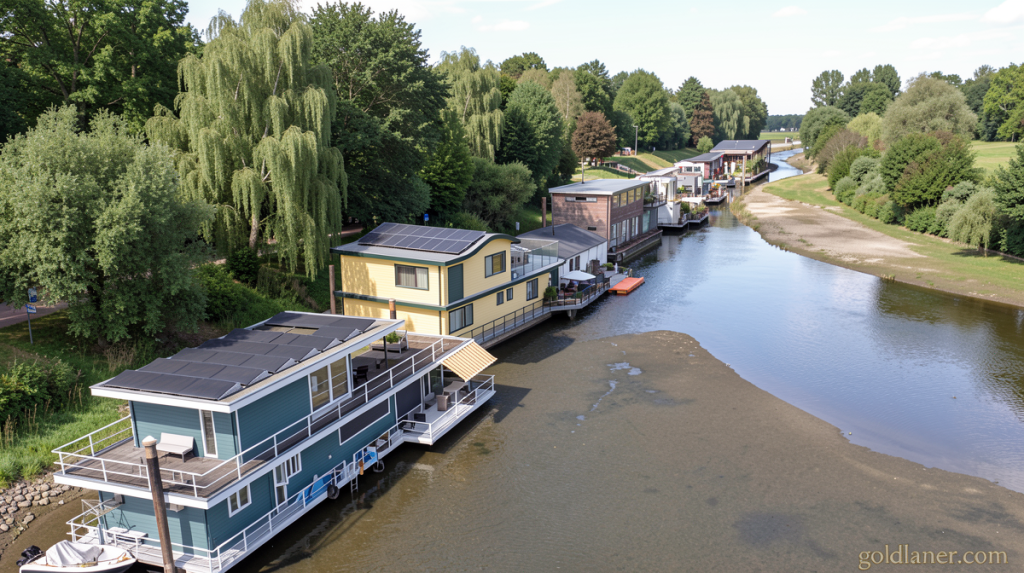
Stranded houseboats and grounded cruise ships signal Europe’s deepening water crisis
Goldlaner.com – Stranded houseboats and grounded cruise ships are now common sights across Europe as rivers shrink under relentless heat and drought. Houseboats lie perched on desiccated riverbeds while receding water levels have left wide stretches of newly exposed riverbank. The shipping sector is bracing for trouble as the low-lying Netherlands, accustomed to grappling with too much water, now struggles with too little. On Thursday, the country declared an official water shortage, raising its national drought response to Level 2.
Government measures to combat rising water demand
“Due to persistent drought, less water is entering our country via rain and rivers, while the demand for water is rising,” the Ministry of Infrastructure and Water Management said in a statement. Government bodies and water companies will now assess what is needed to cut use. Measures could include reducing groundwater pumping and operating river locks less frequently, to limit saltwater flowing in.
The ministry has stressed that drinking water will not be affected, although it advises people to use it “consciously.” “The situation is alarming, and I do not say that lightly,” said Hannah Cloke, Regius professor of meteorology and climate science at the University of Reading in the UK. “The calendar is what worries me most. The Netherlands has declared an actual water shortage in mid-July,” she added. There’s plenty of summer left to run, and the forecasts show little hope of relief for weeks.
Europe’s rivers face unprecedented strain
This story is playing out across many parts of Europe, the world’s fastest-warming continent. It is enduring a summer of rolling, brutal heat waves, drying up rivers and threatening water supplies. “This is not bad luck,” Cloke said. “The heat dries the soil, empties the rivers and drives up demand for water all at once. That is the fingerprint of a changing climate.”
The Netherlands’ water shortage may seem shocking. This is a wet country that has tamed the seas and adapted for flooding in a way that’s made it the envy of other nations. But increasingly it’s having to deal with the opposite extreme, too. “Droughts are the new floods,” said Jan Verkade, hydrometeorologist at Deltares, an independent water research institute in the Netherlands. The country is currently experiencing conditions that would not be expected until late summer, if at all.
There has been no significant rain in July, and temperatures are above average. The water in the Rhine and Meuse rivers is unusually warm at around 77 degrees Fahrenheit (25 Celsius), and there are reports of blue-green algae spreading and fish dying. There’s also the danger of waterways becoming saltier, as falling levels allow seawater to push further inland.
The Netherlands was last in Level 2 water shortage in August 2022 and hasn’t been in a Level 3 shortage, defined as a “water crisis,” since 2003. “If the temperature remains high and the precipitation is low, we cannot exclude the possibility of heading into a more serious water shortage,” said a spokesperson for the Ministry of Infrastructure and Water Management. The Netherlands has learned a lot from water shortages in 2018 and 2022, they added, but if the situation continues through September, “more serious choices might have to be made.” It will take persistent rain to push the country out of the current state of shortage.
“Rivers have long memories. They reflect months of missing rain, not just a hot fortnight. So, the deficit we see now cannot be fixed by a few showers,” Cloke said.
It’s not just the Netherlands that’s suffering. The Rhine, a vital artery for European trade, also runs through Germany. Water levels in parts of the river have fallen so low that cargo ships have had to reduce their load and spread it across multiple vessels, increasing costs.
In July, low water levels caused a river cruise ship to run aground on the Rhine in the city of Bonn. It took several hours for a freighter to pull the ship into deeper water. The Rhine’s water levels in Germany have risen over the past few days thanks to rain, but the danger isn’t over.
“We have come back from the brink, with an improvement compared to the lowest water levels earlier this week, but much more rain is still needed,” one commodity trader told Reuters. In Hungary last week, near record lows on the Danube River left cruise ships stranded off Budapest, denting the country’s tourism sector. Meanwhile in Romania over the weekend, the Danube plunged to its lowest level in 30 years, according to Reuters, disrupting shipping and leading to restrictions on irrigation.
As the human-driven climate crisis continues, Europe can expect more heat, drought and water shortages. “Summers like this are becoming part of the ordinary range, and they will keep getting worse for as long as we burn fossil fuels. That is the plain physics of it,” Cloke said.
