
Scientists accidentally discover sea cucumber with ‘tissue immortality’
Scientists accidentally discover sea cucumber with ‘tissue immortality’
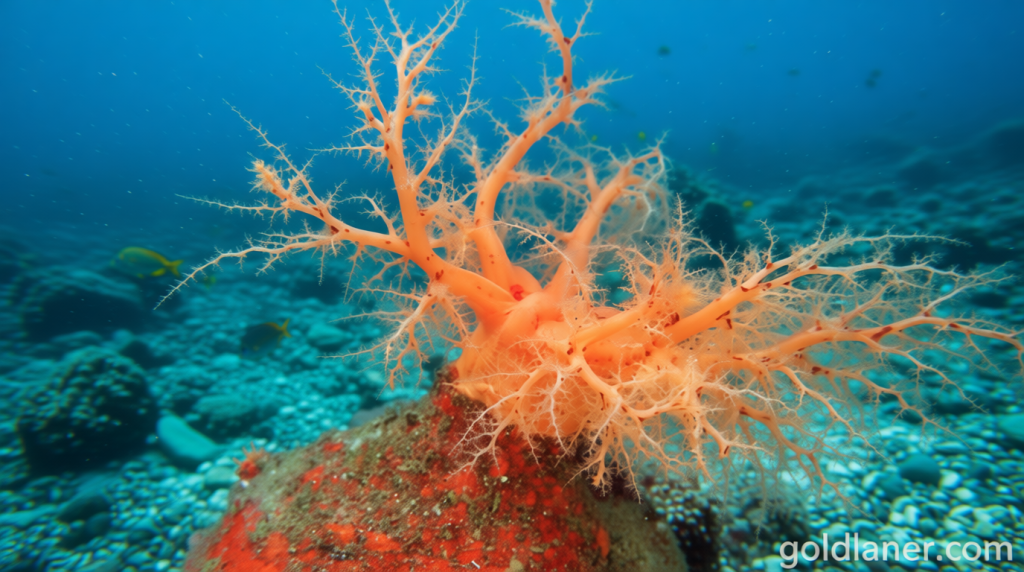
Scientists accidentally discover sea cucumber – When it comes to the definition of life, a groundbreaking study on a peculiar marine organism has challenged conventional understanding. Researchers investigating the regenerative abilities of Psolus fabricii, a species of sea cucumber found in the North Atlantic, stumbled upon an unexpected phenomenon: severed body parts of the creature did not simply wither away but instead persisted in a state of continuous survival. This discovery, published Wednesday in the journal Science Advances, has sparked new questions about the boundaries of biological vitality.
The Accidental Discovery
The revelation emerged during routine experiments in which scientists gently removed fragments from the sea cucumber’s feet, main body, and tentacles. These pieces, placed in untreated seawater, defied expectations by maintaining their cellular functions for extended periods. Sara Jobson, the lead author of the study and a doctoral student in ocean sciences at Memorial University in Newfoundland and Labrador, described the findings as “a complete surprise.” The tissue samples, she noted, exhibited signs of self-repair and nutrient absorption, even without the presence of a mouth or digestive system.
Jobson explained that the initial observation occurred when a researcher inadvertently detached some tube feet from a sea cucumber during a lab experiment. These remnants clung to the glass surface of the aquarium, remaining viable for days, weeks, and even months. “It was like watching parts of the animal stay alive on their own,” she said. “They didn’t just decay—they grew a little and continued moving, as if they were still connected to the main organism.” This behavior contrasted sharply with typical regeneration processes, where tissue fragments usually die or develop into new individuals.
A New Perspective on Biological Survival
The study’s findings have raised intriguing questions about the nature of life. Unlike other organisms that rely on the entire body to sustain cellular activity, these sea cucumber fragments appeared to function independently. Jobson’s team observed that the severed tissues retained their ability to heal wounds, produce new cells, and respond to stimuli—traits usually associated with living organisms. “They’re not forming new creatures, but they’re somehow maintaining their own life,” Jobson remarked. “It’s like they’ve become self-sufficient entities.”
“We lovingly call these tissue explants ‘our zombies,’ because they seem to ride the line between dead and alive,” Jobson said. “They’re not regrowing into a whole new organism—as far as we can tell, they seem to be their own entity that’s maintaining cellular function, but not a reproducing individual. Why would these small tissue chunks maintain the ability to heal and survive without any reproductive purpose? What’s the evolutionary driver that allows that to happen?”
The phenomenon also defies the usual assumption that tissue loss leads to death. While many sea cucumber species can regenerate lost parts, the severed fragments in this case did not develop into complete organisms. Instead, they lingered in a state of partial activity, surviving for over three years. “As far as we can tell, there weren’t any signs of death, degradation, or necrosis,” Jobson added. “It seemed to be able to go on forever. We just had to cut ourselves off at some point and put the study out there.”
The survival of these tissues in natural seawater—often described as “incredibly unclean” due to its abundance of bacteria and microorganisms—adds to the mystery. Despite this, the fragments thrived, absorbing amino acids from their environment without the need for a mouth or gut. This capability suggests a level of autonomy that blurs the line between tissue and organism. “It’s like the fragments have their own life cycle,” said Veronica Hinman, director of the Whitney Laboratory for Marine Bioscience at the University of Florida, who was not involved in the study. “This work tests assumptions about what it means to be ‘alive’ and how this depends on the whole organism, rather than on the local self-organizing properties of tissues themselves.”
Evolutionary Implications
The discovery has significant implications for understanding regeneration, wound healing, and aging. Jobson and her team speculate that this trait could be an evolutionary adaptation unique to Psolus fabricii. “This species is known for its remarkable regenerative capacity,” Jobson explained. “But no one had ever considered the possibility that the tissues themselves might possess a form of immortality.”
Comparisons to other regenerative organisms, such as lizards that shed tails to evade predators, highlight the uniqueness of the sea cucumber’s behavior. In those cases, the detached parts typically do not survive long without the rest of the body. However, the sea cucumber fragments in this study displayed a different pattern. “It’s as if the tail of a lizard not only healed itself but also wandered off and lived on its own,” Jobson said. “This raises questions about the fundamental nature of life and how it can exist outside the context of a whole organism.”
Further research is needed to determine whether this tissue immortality is a rare occurrence or a common trait among sea cucumbers. Jobson emphasized that the study was conducted under controlled conditions, yet the results remained consistent even in natural seawater. “The fact that these fragments survived for such a long time without being in a sterile environment is remarkable,” she noted. “It suggests that their survival mechanism is robust and perhaps even adaptive.”
Scientists are now exploring how this could be applied to human medicine. If tissue fragments can maintain cellular activity independently, it might lead to breakthroughs in regenerative therapies, organ preservation, and even the study of aging. “This opens up new avenues for understanding how cells can sustain themselves without the support of the entire body,” Hinman said. “It’s a fascinating example of how biology can operate in unexpected ways.”
The accidental nature of the discovery underscores the value of curiosity-driven research. Jobson and her colleagues had no prior expectation that severed tissues would persist in such a manner. “We work right on the coast, and we’re able to keep live animals in our lab,” she said. “But sometimes, the creatures attach themselves so strongly to their environment that removing them leaves behind fragments. We noticed these parts were still alive after months, and that’s when the idea of tissue immortality began to take shape.”
While the study is still in its early stages, it has already redefined how researchers view the relationship between tissue and organism. “This isn’t just about regeneration,” Hinman added. “It’s about the possibility of tissue autonomy and the broader definition of life. If a piece of tissue can survive and function on its own, what does that mean for our understanding of biological processes?”
