
Passenger used suspected fake boarding pass to sneak onto United flight, forcing plane back to gate, authorities say
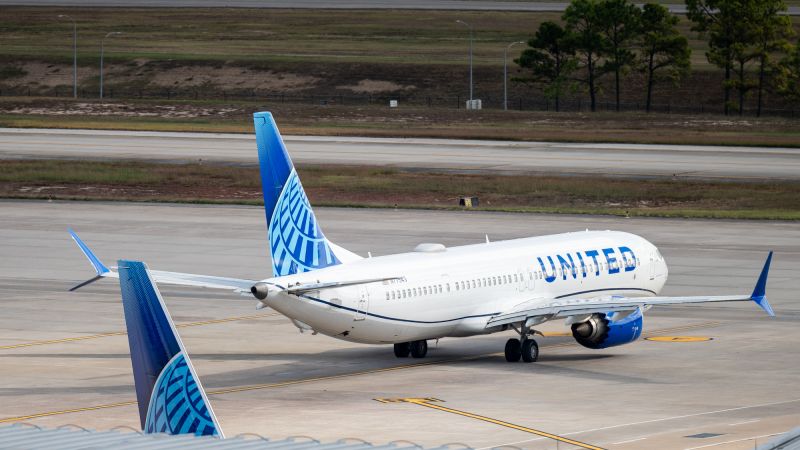
Unauthorized Passenger Sneaks Onto United Flight, Forces Aircraft to Return to Gate
Man Allegedly Used Fake Boarding Pass to Board Plane in Houston, Sparks Security Investigation
Passenger used suspected fake boarding pass – Last month, a 25-year-old man was discovered hiding in the lavatory of a United Airlines aircraft after slipping past TSA security and gate agents, according to Texas authorities. The incident, which occurred at George Bush Intercontinental Airport in Houston, involved the man using what appeared to be a counterfeit boarding pass to gain access to the plane. United Airlines confirmed the event, stating that the passenger’s unauthorized presence led to the flight being diverted back to the gate before departure.
Authorities allege that Abdulrahman Oriyomi, the suspect, managed to bypass standard security protocols and board the flight without proper documentation. The man was charged with felony impairing or interrupting the operation of a critical infrastructure facility following the incident. Court records reveal that Oriyomi was booked into Harris County jail on Friday after being apprehended, though his attorney has yet to comment on the case.
Oriyomi’s actions began when he approached the airport’s security checkpoint at approximately 5:45 a.m. on May 18, as captured by surveillance footage. According to the complaint, he appeared to be “staring at his phone” and delayed engaging with a TSA agent. This behavior, combined with “several moments and possible difficulty with his boarding pass,” allowed him to evade scrutiny at the first booth. He was then escorted to a second TSA station, where his photo was taken and he was permitted to proceed into the terminal, the documents state.
Later that morning, Oriyomi joined the queue at gate E16, preparing to board a flight to Los Angeles. However, he was turned away after repeatedly scanning his boarding pass without success. The complaint notes that he “appeared to have a disagreement with United staff for several minutes,” which may have further obscured his intentions. Minutes later, he approached gate D4, where he “awkwardly paces and stands in the area” before entering the boarding process.
At 9:08 a.m., Oriyomi was seen lining up to board flight 469, which was scheduled to depart Houston at 9:45 a.m. and arrive in Los Angeles by 11:28 a.m. The complaint describes how he intentionally waited for United employees to be preoccupied with other passengers. “(Oriyomi) pretends he is going to show his boarding pass, walks past the United employees, then proceeds down the jetway while the two other United employees are still distracted,” the report states. This tactical maneuver allowed him to board the aircraft without being detected.
Once aboard, Oriyomi attempted to occupy an empty aisle seat. A woman seated nearby reported that he seemed uncertain whether it was his seat, prompting him to stand up and head toward the restroom. After 15 minutes, other passengers were already occupying the area he had vacated, according to police. When the plane began to taxi away, the passenger alerted flight attendants to his presence. The crew knocked on the restroom door, found Oriyomi, and instructed him to return to his seat. A short time later, they discovered him again in another lavatory, leading to the decision to divert the flight.
“The individual in question presented a valid boarding pass at George Bush Intercontinental Airport,” stated a TSA spokesperson. “The individual did go through standard screening and did not possess any prohibited items.”
Despite the TSA’s assertion of the boarding pass’s validity, the incident raised questions about the effectiveness of security checks. United Airlines, which referred the case to the Houston Police Department, said Oriyomi was found in the restroom and the plane was redirected. The authorities at the scene included the Houston Police Department, the FBI, city airport services, and the TSA. After passengers deboarded, the Explosive Detection K-9 Unit conducted a thorough search of the aircraft, uncovering no evidence of explosives.
Investigators have now focused on Oriyomi’s actions leading up to the boarding. They allege he intentionally delayed his interactions with security personnel, creating an opportunity to bypass checks. The man’s attempts to board the plane were not limited to the initial checkpoint; he also managed to evade gate agents, who were not aware of his unauthorized status until he was discovered on the aircraft. This sequence of events highlights a potential vulnerability in the security process, where multiple checkpoints may not always align in real time.
The complaint further details how Oriyomi’s presence on the plane was only revealed after he attempted to claim a seat. When he tried to find an open seat, he found the aircraft full, prompting him to request the “jump seat” for passengers. The flight attendants checked the manifest, which did not list a Mr. Lopez, and realized he was an unauthorized individual. This realization led to the plane’s return to the gate, where Oriyomi was removed and taken into custody.
The incident has sparked discussions about how security measures can be circumvented. Houston Airports, when questioned by CNN, noted that all security screening procedures are carried out by federal and local authorities. This means that while TSA handles the initial checks, gate agents and airline staff also play a critical role in verifying passenger credentials. Oriyomi’s case suggests that gaps may exist in the coordination between these entities.
CNN has sought comments from Oriyomi’s attorney and the Houston Police Department to gain more insight into his motives and the circumstances of the incident. The police have not yet provided additional details, but the FBI’s involvement indicates a broader investigation into the man’s actions. United Airlines has since reiterated that their employees followed standard procedures, which were ultimately compromised by Oriyomi’s deliberate tactics.
The case serves as a reminder of the importance of seamless communication between airport security and airline operations. With multiple checkpoints and staff members involved, a single point of oversight can lead to significant disruptions. Oriyomi’s ability to bypass both TSA and United gate agents underscores the need for heightened vigilance, especially during high-traffic periods or when staff are distracted by other passengers.
Authorities have not disclosed whether Oriyomi’s fake boarding pass was specifically designed for this flight or if it was a broader attempt to access air travel. The complaint also mentions that his presence on the plane was not discovered until the aircraft was airborne, raising questions about the efficiency of onboard screening procedures. As the investigation continues, the incident may lead to renewed scrutiny of how airlines and security agencies handle passenger verification processes.
