
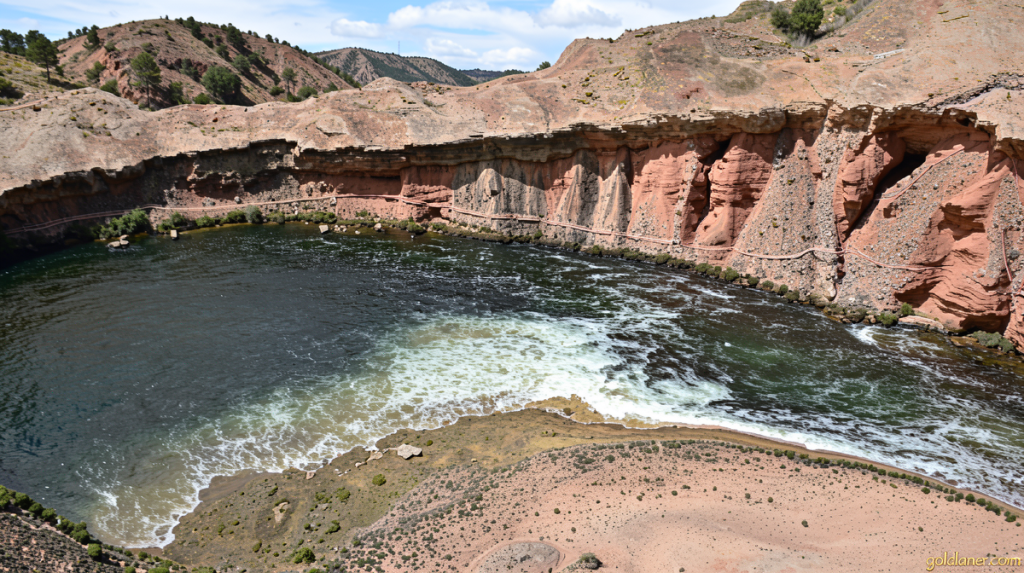
Nevada sues Trump administration over Colorado River cuts
Goldlaner.com – Nevada sues the Trump administration in federal district court, seeking to block sweeping reductions to its Colorado River water allocation. Filed Monday by the state, the Colorado River Commission of Nevada, and the Southern Nevada Water Authority, the complaint challenges operating guidelines published Friday by the Department of Interior that mandate roughly 20 percent delivery cuts to Arizona, California, and Nevada over the next two years. State officials describe the framework as fundamentally flawed and argue it unfairly concentrates a river-wide shortage on just three lower-basin states.
The Federal Mandate and Its Limits
The Interior Department’s guidelines arrived after multi-year negotiations among all seven Colorado River states collapsed without a voluntary rationing agreement. Washington stepped in with unilateral rules — but those rules apply exclusively to the lower basin. Colorado, Utah, New Mexico, and Wyoming face no federally imposed reductions, a structural asymmetry rooted in the legal principle that upper-basin states cannot be compelled to curtail withdrawals by federal authorities. The guidelines also carry an escalation clause: if river conditions deteriorate further, deeper cuts could follow.
The stakes are enormous. The Colorado sustains more than five million acres of irrigated farmland, drives hydroelectric generation, and delivers drinking water to roughly 40 million people across the Southwest. Decades of climate-driven drought layered on top of chronic over-allocation have pushed the system toward collapse. Both principal storage reservoirs — Lake Mead in Nevada and Lake Powell straddling Utah and Arizona — slid to record-low levels within the past several weeks, sharpening the urgency behind the Interior Department’s intervention.
Nevada’s Core Argument: Shared Burden or Shared Shortage
At the heart of the dispute is a question that has animated every round of water negotiations since the drought intensified. Upper-basin states contend that diminished inflows already reduce their available supply, so additional savings should fall on the lower basin, whose agricultural and municipal demands are more water-intensive. Lower-basin states counter that the shortage is river-wide and that no subset of states should absorb the entire deficit.
Governor Joe Lombardo, a Republican, pressed the point in a statement accompanying the filing:
“The Department of the Interior can’t roll Nevada and solve the entire Colorado River shortage on the backs of the Lower Basin states … the solution needs to involve everybody. Until that happens, we are prepared to fight for as long as it takes.”
He added that Southern Nevada could lose more than 70 percent of its already meager Colorado River allocation while upper-basin states are not required to contribute a drop. John Entsminger, general manager of the Southern Nevada Water Authority and the state’s principal negotiator on Colorado River matters, told reporters the cuts would cripple basic water-service delivery: “You’re just not going to be able to provide the level of water service necessary to maintain those essential services that the community requires.” He echoed the complaint’s language, calling a plan that shifts the entire burden onto fewer than half the basin’s states “fundamentally flawed.”
Litigation Ahead and the Question of a Stay
Jason Robison, a law professor at the University of Wyoming, characterized the filing as “certainly not a bolt from the blue,” noting that other lower-basin states and Tribal Nations may follow with their own suits. He warned that Nevada’s claims “are certain to be fought over tooth and nail at every level of the federal judiciary,” a process that could stretch across multiple years and carry substantial costs for all parties. One of the most immediate questions is whether a court will issue an injunction halting the planned cuts while the case proceeds. Rhett Larson, a water-law professor at Arizona State University, assesses that prospect as unlikely, reasoning that crafting an alternative management framework on short notice would introduce its own uncertainties and that courts are reluctant to second-guess technical agency judgments in real time.
Frequently Asked Questions
What exactly did Nevada sue the Trump administration to stop? Nevada’s complaint challenges the Interior Department’s operating guidelines mandating approximately 20 percent reductions in Colorado River deliveries to Arizona, California, and Nevada over a two-year period, along with any deeper cuts triggered by worsening conditions.
Why don’t upper-basin states face the same cuts? Under existing law, federal authorities cannot compel Colorado, Utah, New Mexico, or Wyoming to reduce withdrawals. The Interior Department’s guidelines therefore apply only to the lower basin, which is the structural asymmetry Nevada’s lawsuit targets.
How many people depend on the Colorado River? Approximately 40 million people across the Southwest receive drinking water from the river system, which also irrigates more than five million acres of farmland and powers hydroelectric facilities.
What happens if Nevada loses? The mandated delivery reductions would take effect as scheduled, and Southern Nevada could face losses exceeding 70 percent of its Colorado River allocation. The state has signaled it will appeal through every available level of the federal judiciary.