
Netanyahu says he directed Israeli military to take over 70% of Gaza
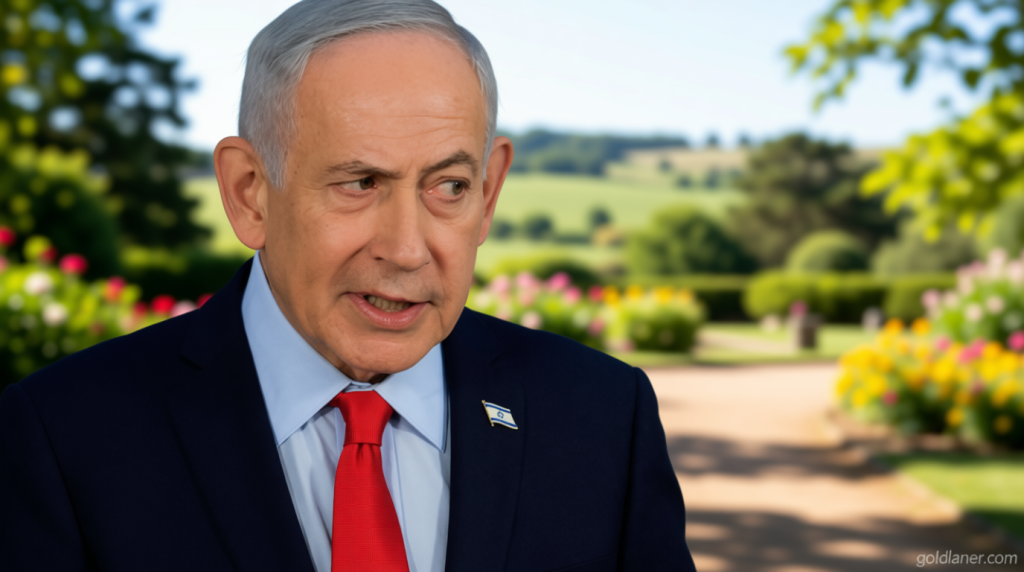
Netanyahu Says Israeli Military to Expand Control Over 70% of Gaza
Netanyahu says he directed Israeli military – Israeli Prime Minister Benjamin Netanyahu announced on Thursday that his administration has instructed the military to increase its territorial dominance in Gaza, targeting 70% of the Strip’s land. The statement was made during a speech at a gathering in the occupied West Bank, where he emphasized Israel’s growing influence over Hamas. “We are now occupying 60% of the Gaza Strip’s territory,” Netanyahu stated, “having previously held 50%. Our strategy is to steadily advance toward 70%.” While the audience urged him to pursue full control, Netanyahu’s approach appears methodical, aiming to solidify military presence incrementally.
According to recent data, the Israel Defense Forces (IDF) had already secured approximately 64% of Gaza by late April, as revealed in maps shared with international aid organizations. This expansion has raised concerns about the displacement of Palestinians, with an estimated 2 million residents potentially confined to a diminishing portion of the enclave. The territory’s fragmentation, exacerbated by ongoing hostilities, has left many families in a state of uncertainty, according to reports from humanitarian groups.
Escalation Amid Ceasefire Tensions
The current territorial shifts come as Israel and Hamas remain at odds over the October 2025 ceasefire agreement. Under this pact, Israeli forces were meant to retreat to a demarcation line called the “yellow line,” which would have left them controlling roughly 53% of Gaza. However, Netanyahu’s directive suggests a move to expand beyond that boundary, which Hamas has criticized as a breach of the agreement’s terms.
“The adjustment of the yellow line represents a clear and continuous erosion of the ceasefire,” said Hamas, accusing Israel of altering the demarcation to “undermine the peace accord and establish new realities through force.” The group’s statement highlighted the risk of entrenching military control, which could hinder future stability in the region. Mladenov, the Bulgarian diplomat overseeing the ceasefire’s implementation, warned that without progress, the yellow line might transform into a permanent barrier, dividing Gaza from the rest of the territory.
Mladenov also acknowledged the ongoing humanitarian crisis, noting that “civilian casualties persist” and “families endure constant fear of airstrikes.” Despite the ceasefire, Israel has continued its military operations, citing Hamas’ violations of the terms. The country claims Hamas has been rearming and rebuilding its forces, prompting Israeli strikes that have killed over 850 Palestinians since the agreement took effect. These attacks have sparked international criticism, with some accusing Israel of using the ceasefire as a pretext for further aggression.
Leadership Targeted in Recent Strikes
Adding to the tension, Israel recently eliminated two key Hamas figures. First, Izz al-Din al-Haddad, the leader of Hamas’ military wing, was assassinated earlier this month. A subsequent strike on Tuesday killed his successor, according to Israeli Defense Minister Israel Katz, who tweeted, “We pledged to eradicate all those responsible for the October 7 massacre. That is precisely what will happen: They are all destined for execution, no matter where they are.”
Katz’s remarks underscore Israel’s determination to hold Hamas accountable for attacks during the October 7 conflict. The ongoing targeting of Hamas leadership has intensified the group’s resolve to resist, with Mladenov pointing out that Hamas has yet to fully disarm. “The ceasefire hinges on Hamas decommissioning its weapons,” he noted, “and the lack of progress threatens the agreement’s viability.” The international security force intended to oversee the ceasefire remains unformed, with no clear timeline for deployment despite some countries expressing support.
Netanyahu’s plan to capture 70% of Gaza territory reflects a broader strategy to secure strategic positions while pressuring Hamas into submission. The military’s control over more land has allowed Israel to exert influence over critical infrastructure, such as border crossings and key supply routes. This expansion, however, has drawn condemnation from Palestinian officials and international observers, who argue it undermines the ceasefire’s goal of restoring calm.
Implications for Gaza’s Future
With the yellow line already under scrutiny, the prospect of Israel permanently seizing more land raises the stakes for Gaza’s sovereignty. The territory, already battered by years of conflict, faces the risk of becoming a patchwork of Israeli-controlled zones and Palestinian areas. Mladenov warned that such a division could lead to “a permanent separation of Gaza,” effectively altering the region’s political landscape.
Despite the ceasefire’s intent to reduce hostilities, the situation remains fragile. Israel’s repeated strikes have not only caused civilian casualties but also eroded trust in the agreement. Hamas, meanwhile, has accused Israel of creating a “fait accompli” by expanding its military footprint, which could make it impossible to renegotiate terms. “The yellow line is no longer a temporary boundary,” the group stated, “but a permanent division that forces Palestinians into a smaller, more vulnerable space.”
As the conflict continues, the international community watches closely. While some nations have expressed willingness to contribute to the security force, others remain hesitant, citing regional stability concerns. The lack of consensus has left the ceasefire in limbo, with Israel gradually increasing its control over Gaza. This approach, while strategic, risks deepening the division between the enclave and the rest of the territory, setting the stage for prolonged military occupation.
Netanyahu’s directive to occupy 70% of Gaza signals a shift in the conflict’s dynamics. The plan may not only solidify Israeli dominance but also reshape the political and social fabric of the Strip. With Hamas refusing to disarm and the security force delayed, the future of Gaza remains uncertain, hinging on whether the ceasefire can be upheld or if the conflict will spiral further. The international community’s role in mediating the situation is critical, as the stakes for both sides have never been higher.
