
Kevin Warsh confirmed as Fed chair, succeeding Jerome Powell
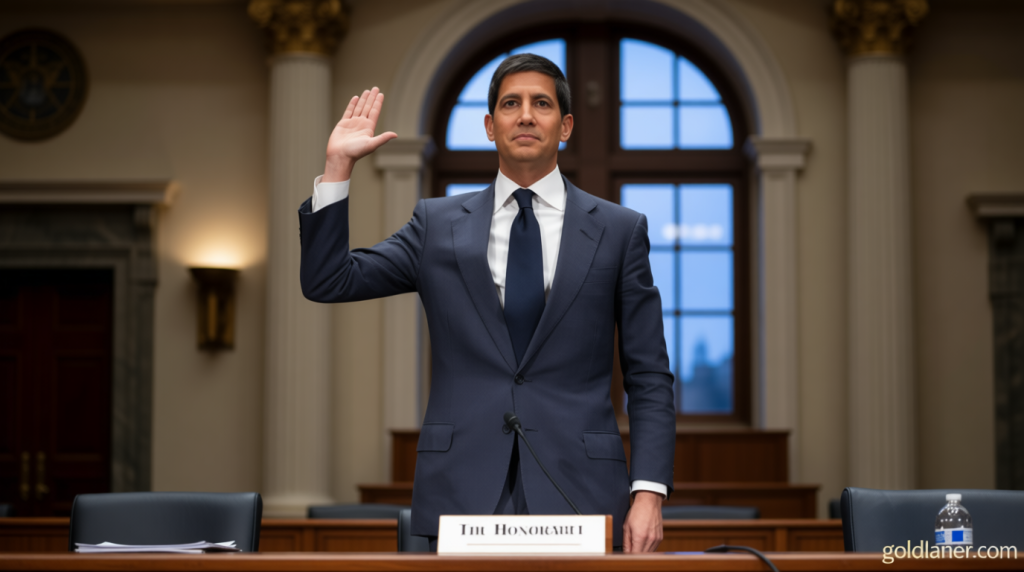
Kevin Warsh Confirmed as Federal Reserve Chair, Marking a New Era of Policy Leadership
Kevin Warsh confirmed as Fed chair – On Wednesday, Kevin Warsh secured a narrow Senate approval to become the 17th chair of the Federal Reserve, succeeding Jerome Powell after an eight-year tenure. The confirmation process, which concluded with a 54-45 vote, highlighted deep partisan divides, with the majority of the vote splitting along party lines. Only Democratic Senator John Fetterman of Pennsylvania broke ranks to support Warsh’s nomination, underscoring the contentious nature of the decision. This marks the most politically charged vote in the history of Fed chair appointments, reflecting growing unease among Democrats over Trump’s confrontational approach toward the central bank.
A Shift in Central Banking Priorities
Warsh’s selection signals a potential recalibration of the Fed’s role, as he is perceived as more aligned with President Donald Trump’s economic priorities. Trump has consistently advocated for rate cuts to stimulate growth, a stance that Warsh has echoed in his public remarks. However, the incoming chair faces a complex economic landscape, with inflation pressures intensifying due to escalating geopolitical tensions between the U.S. and Iran. Recent data reveals inflation surged to a three-year peak in April, according to the latest Consumer Price Index, outpacing wage growth and challenging the Fed’s traditional focus on price stability.
The energy market has emerged as a key wildcard in this scenario, complicating efforts to achieve swift rate cuts. Investors now anticipate the Fed maintaining its benchmark lending rate unchanged for the remainder of the year—or even raising it if inflation worsens. This outlook is likely to unsettle Trump, who previously joked about suing Warsh if he didn’t prioritize rate reductions. Despite this, Warsh’s influence remains limited, as the Fed chair holds only one vote on the Federal Open Market Committee (FOMC), which determines rate adjustments. The committee’s majority will dictate the broader policy direction, even as Warsh shapes the agenda during each meeting.
The Politics of Confirmation
Warsh’s nomination came amid a prolonged confirmation battle, with a key Republican, North Carolina Senator Thom Tillis, initially delaying the process. Tillis demanded the Justice Department halt an ongoing investigation into Powell, citing testimony the former chair provided regarding cost overruns for the renovation of the Fed’s headquarters in Washington, D.C. The probe, led by DC US Attorney Jeanine Pirro, raised concerns that the Trump administration sought to erode the Fed’s independence, potentially enabling political interference in monetary policy decisions.
“The investigation is a consequence of broader threats and ongoing pressure by the administration,” Powell stated in a video statement, criticizing the probe as a politically motivated effort. This sentiment was echoed by many within the Democratic Party, who viewed the confirmation process as a test of the Fed’s autonomy in the face of Trump’s demands.
While Republicans generally welcomed Warsh’s leadership, the confirmation underscored a divide between the president’s goals and the Fed’s traditional mandate. Powell’s eight-year tenure was defined by navigating economic downturns, including the pandemic-induced crisis and the inflationary pressures of the late 2020s. His clashes with the White House, particularly over maintaining the Fed’s independence, became a focal point of the confirmation debate.
Policy Reforms and Structural Changes
Warsh’s leadership is expected to bring several transformative changes to the Federal Reserve. Among his proposals are reducing the size of the Fed’s $6.7 trillion balance sheet, which has expanded significantly during periods of quantitative easing. This strategy, he argues, would allow the central bank to refocus on its core tool—interest rates—rather than relying on expansive asset purchases to stabilize markets.
Additionally, Warsh has hinted at streamlining the Fed’s operations by cutting back on policy meetings from eight to as few as four per year. He also plans to host fewer news conferences, limit the scope of communication about rate decisions, and shrink the Washington-based workforce. These moves aim to reduce bureaucratic overhead and enhance the Fed’s efficiency, though they may face resistance from those advocating for transparency.
JPMorgan analysts suggest that Warsh’s proposed changes fall within his authority as chair, provided they align with the FOMC’s consensus. However, the most formidable challenge he may encounter lies in the balance sheet reduction. For years, Warsh has argued that the Fed’s current approach to quantitative easing—purchasing trillions in assets like Treasury bonds and mortgage-backed securities—undermines its independence by effectively backstopping government spending. His vision is to accelerate the unwinding of these holdings to restore the Fed’s traditional role as an independent arbiter of monetary policy.
Implications for the Global Economy
The transition to Warsh’s leadership could reshape the Fed’s approach to managing inflation and economic growth. His emphasis on rate cuts aligns with Trump’s demand for lower borrowing costs, yet his policy decisions will need to balance short-term stimulus with long-term stability. With inflation at a three-year high, the central bank’s ability to act decisively will be critical, even as it navigates political pressures from the White House.
Despite his alignment with Trump, Warsh’s tenure may not be as partisan as some fear. His ability to collaborate with the Treasury Department on balance sheet adjustments could ease tensions between the Fed and the executive branch. However, the DOJ’s earlier investigation into Powell highlights the administration’s readiness to challenge the Fed’s autonomy, a concern that remains relevant as Warsh assumes the role.
As the new chair prepares to take the helm, the question of how his policies will unfold—and whether they will prioritize political goals over economic fundamentals—will dominate discussions in Washington. While the Fed’s independence is a cornerstone of its credibility, the Warsh era may see it tested in new ways, particularly as the U.S.-Iran conflict continues to fuel inflationary pressures. The central bank’s next steps will not only shape domestic economic outcomes but also influence global markets, which have grown increasingly sensitive to U.S. monetary policy in recent years.
