
Jury to return Friday for further instruction after reaching a standstill in Palisades Fire arson trial
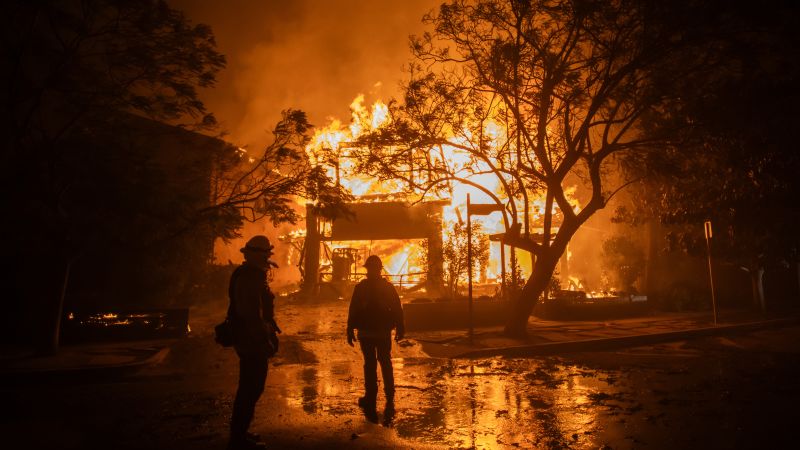
Jury Returns Friday for Further Instructions in Palisades Fire Trial
Jury to return Friday for further – The jury in the Palisades Fire arson trial will reconvene on Friday to receive additional guidance, following a deadlock in their deliberations. After a tense 14-hour session in downtown Los Angeles, the jurors submitted a note indicating they could not reach a unanimous verdict on the three federal charges against Jonathan Rinderknecht, the 30-year-old defendant. The court has planned to send the jury back for further instructions, as Judge Anne Hwang prepares to address how to resolve the impasse. This development leaves the case in suspense, with both sides eager to ensure a fair and decisive outcome.
Jury Deadlock and Court’s Next Move
On Thursday, the jurors initially suggested they had reached a verdict, only to clarify that they were “at a standstill” due to divided opinions. The second note, emphasizing the word “cannot” in underlined text, highlighted their inability to agree. This prompted the prosecution and defense to collaborate on the court’s decision to grant the jury extra time to reassess their positions. The judge’s plan to send them back for further instructions underscores the complexity of the case and the need to align the jury’s understanding of the evidence.
With the verdict unresolved, the court has scheduled a continuation of proceedings for Friday at 9 a.m. PT. The term “hung jury” was used by defense attorney Steve Haney to describe the situation, indicating that the jurors’ opinions were evenly split. The judge’s focus is on clarifying the legal standards for the charges, aiming to guide the jury toward a consistent decision. This step is critical as the case hinges on proving Rinderknecht’s intent to commit arson.
Prosecution’s Case and Evidence
The prosecution has presented a compelling case over six days of testimony, arguing that Rinderknecht was the sole individual responsible for igniting the Palisades Fire. They relied on testimony from an arson investigator who stated the fire began underground and was reignited by strong winds on January 7, 2025. This incident resulted in a dozen fatalities and widespread destruction in the Pacific Palisades neighborhood. Prosecutors also highlighted Rinderknecht’s emotional state, citing his frustration with wealth inequality and his connection to Luigi Mangione, as a motive for the arson.
“Rinderknecht’s actions on New Year’s Eve were driven by anger and a desire to challenge the status quo,” said a prosecutor during the trial. “His repeated calls to 911 from the Hidden Buddha clearing suggest a deliberate plan to cause harm.”
The case centers on whether Rinderknecht had the intent to set the fire intentionally. Prosecutors claim his behavior, including ranting about capitalism, indicates premeditation. However, the defense argues that the evidence is inconclusive, leaving room for alternative explanations such as accidental ignition or external factors.
Defense Arguments and Evidence
The defense team has contested the prosecution’s narrative, asserting that the available evidence does not definitively link Rinderknecht to the fire’s origin. They called nine witnesses, including a former arson investigator and a fire consultant, who testified that the fire could have been caused by fireworks during New Year’s celebrations. These witnesses emphasized that the blazes were likely the result of spontaneous combustion rather than a targeted act.
“There is no direct proof that Rinderknecht lit the fire himself,” defense attorney Steve Haney stated. “His calls to 911, while significant, do not establish a clear connection to the incident.”
The defense also pointed out the absence of eyewitness accounts directly implicating Rinderknecht in the act. They argued that the prosecution had overreached by attributing the fire’s cause to the defendant, despite the ambiguity in the evidence. The court’s decision to provide further instructions is seen as a compromise, allowing the jury to revisit the case with a clearer framework for deliberation.
Implications of the Deadlock
The jury’s deadlock raises questions about the trial’s progress and the potential for a mistrial. If the verdict remains unresolved, the judge may declare a mistrial, forcing the prosecution to retry Rinderknecht or seek a different resolution. This outcome could delay justice for the victims and prolong the legal process. However, the court’s plan to send the jury back for further instructions offers a chance to resolve the matter without abandoning the case entirely.
As the trial moves forward, the focus will remain on the jury’s ability to evaluate the evidence and determine the defendant’s guilt. The stakes are high, with the Palisades Fire’s devastating impact on the community fueling public interest in the proceedings. The final verdict, expected after the Friday session, will decide whether Rinderknecht is found guilty of arson or cleared of the charges. The jury’s return for further instructions marks a pivotal moment in the case.
