
Israeli offensive emboldens Hezbollah as it claims mantle of Lebanon’s defender
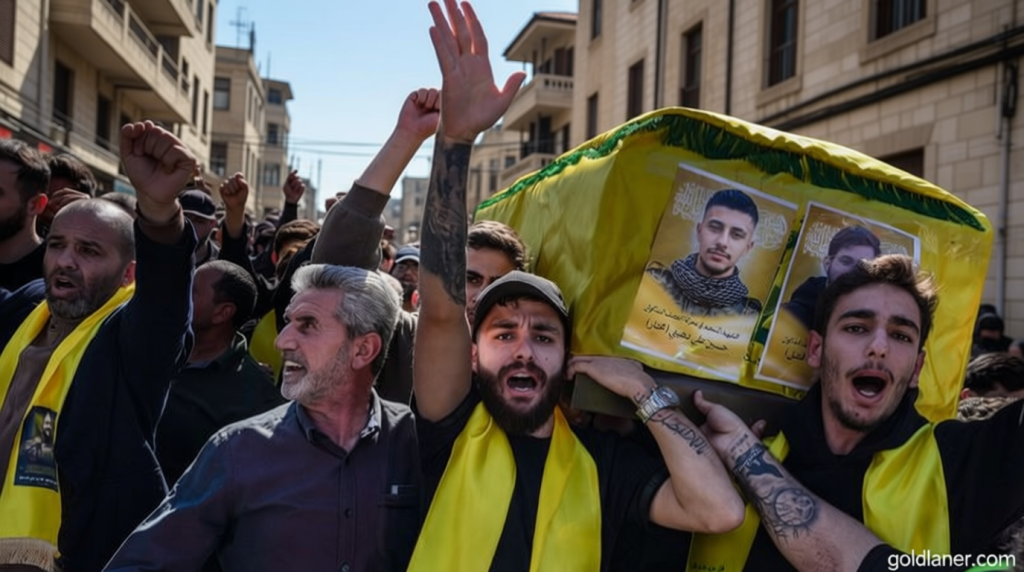
Israeli Offensive Sparks Hezbollah’s Revival Amid Claims of National Defense
Israeli offensive emboldens Hezbollah as it claims – Once regarded as a fading force, Hezbollah has reemerged as a central player in Lebanon’s ongoing crisis. The group’s recent resurgence, fueled by Israeli military actions, has shifted its role from a potential adversary to a symbol of resistance. Analysts now argue that the group has not only regained strength but also secured a renewed sense of purpose, positioning itself as the guardian of Lebanon’s sovereignty. This transformation follows a series of pivotal events that once seemed to signal its decline, including the fall of Syrian President Bashar al-Assad, the death of its longtime leader Hassan Nasrallah, and years of diplomatic efforts between Israel and Lebanon.
After the ousting of Assad in 2024, Hezbollah lost a critical ally. The Syrian leader had long supported the group by channeling weapons and supplies through the country’s border regions. With Assad’s removal, the group faced isolation and logistical challenges. Israel, meanwhile, intensified its operations, targeting Hezbollah’s infrastructure and leadership. The assassination of Nasrallah in 2024 marked a turning point, leaving the group in a weakened state. Despite these setbacks, Lebanon and Israel initiated direct talks brokered by the U.S. for the first time in decades, with the Lebanese government aiming to fully disarm Hezbollah. However, the recent escalation in hostilities has upended this fragile arrangement.
The trigger for Hezbollah’s comeback was the U.S.-Israel decision to strike Iran, which reignited tensions in the region. On March 2, as the conflict with Iran intensified, Hezbollah launched rockets into northern Israel, asserting its presence as a key actor. “When the Israeli-American war restarted the fight against Iran, we felt this was the right moment to act,” said Ibrahim Al Moussawi, a member of Lebanon’s parliament and Hezbollah representative. The group’s actions were not merely defensive but a calculated move to reassert its influence. “Hezbollah is taking a lot of hits, but morale remains high,” explained Nicholas Blanford, an Atlantic Council analyst in Beirut. “They’re prepared for a long struggle, and the Israeli offensive has given them renewed motivation.”
Hezbollah’s Adaptation Tactics
Though Israeli strikes have reduced Hezbollah’s capacity to fire rockets, the group has adapted its strategy. Instead of relying solely on traditional artillery, Hezbollah now employs explosive drones guided via fiber optic cables to bypass Israeli defenses in the southern Beqaa Valley, its operational heartland. These drones have been used to target missile defense systems and Israeli military units, demonstrating the group’s technological evolution. Since the fragile ceasefire in mid-April, Hezbollah has claimed the lives of 15 Israeli soldiers, underscoring its ability to strike with precision despite the relentless attacks.
The latest ceasefire agreement, finalized in Washington on Wednesday, requires Hezbollah to halt all hostilities, withdraw from the southern border, and eventually disarm. Yet, both Israel and Hezbollah have shown a willingness to breach these terms. Israel has continued its military campaign, accusing Hezbollah of failing to comply with previous agreements. The group, in turn, has used the conflict as a pretext to justify its actions. “The government didn’t do its job,” Al Moussawi said, highlighting Hezbollah’s claim that it must now defend the Lebanese people from Israeli aggression. This narrative has allowed the group to rally public support, despite the civilian toll of the war.
Lebanon’s southern regions have become a battleground, with over a million citizens displaced and more than 3,000 reported deaths. Israeli forces have extended their occupation into areas previously under Hezbollah control, including the central Beqaa Valley. The group, however, has not retreated. “They want to take our land,” said a Hezbollah fighter in a remote Beqaa Valley field, describing the Israeli offensive as a plan to secure territorial gains. “God willing, we won’t let them do that.” The fighter, who spoke with CNN after returning from the front lines, emphasized the group’s resolve to protect Lebanese communities, even as Israeli attacks intensify.
Resistance and Loyalty in the Shadows
Hezbollah’s ability to maintain a loyal following among Lebanese Shia Muslims has proven vital to its survival. While Western media often highlights the group’s militant activities, many young Lebanese Shia identify more with Hezbollah’s ideological mission than with the government’s efforts. This loyalty has enabled the group to sustain operations despite the loss of key leaders and the destruction of infrastructure. “Whenever a leader is killed, there’s a new one,” said a Hezbollah fighter, noting that the group’s strength lies in its capacity to regenerate. “We become stronger and remain steadfast.”
Even as Israel occupies parts of southern Lebanon, Hezbollah continues to operate in the Beqaa Valley. An arms smuggler in the region, speaking on condition of anonymity, described the challenges of moving weapons after Assad’s fall. “Syrian authorities claim to seize arms heading to Lebanon, but the flow is still active,” he said. “Hezbollah has always been resilient, and this war has only deepened that resolve.” The smuggler’s words reflect the group’s persistence, even as its traditional allies in Syria weaken. Meanwhile, Hezbollah’s frontline fighters rarely engage with Western media, but their determination is evident in their actions.
The renewed conflict has also exposed fractures within Lebanon’s government. While officials have signed ceasefire agreements, they have struggled to enforce them. Hezbollah’s ability to respond to Israeli strikes with precision has made it a formidable force, even as it claims the mantle of defending the Lebanese populace. “It’s not something we like to do,” Al Moussawi admitted, but he framed the group’s role as a necessity. “We’re forced to act because the government has failed to protect its people.” This sentiment resonates with many in the community, who view Hezbollah as a bulwark against Israeli expansionism.
As the war enters its third month, the balance of power in the region remains in flux. Hezbollah’s resurgence challenges Israel’s narrative of dominance, while Lebanon’s government grapples with its own limitations. The group’s strategic use of drones, coupled with its deep roots among Shia communities, has allowed it to weather the offensive. Analysts suggest that Hezbollah’s leadership, though damaged, continues to wield influence through its ability to unite disparate factions under a shared cause. The future of Lebanon’s stability may now hinge on whether Hezbollah can maintain its momentum or whether Israel’s relentless strikes will eventually wear it down.
For now, the group remains a potent symbol of resistance. Its fighters, stationed in the Beqaa Valley, continue to push back against Israeli forces, even as the conflict escalates. The once-anticipated end of Hezbollah’s influence appears distant, and its ability to adapt and inspire loyalty ensures its place at the center of Lebanon’s turmoil. The country’s people, caught between Israeli attacks and Hezbollah’s defense, now face a reality where the group’s role is more than just military—it is a political and social force that has redefined the conflict’s stakes.
