
Iran strikes vessel, pausing UN efforts to evacuate ships from Hormuz
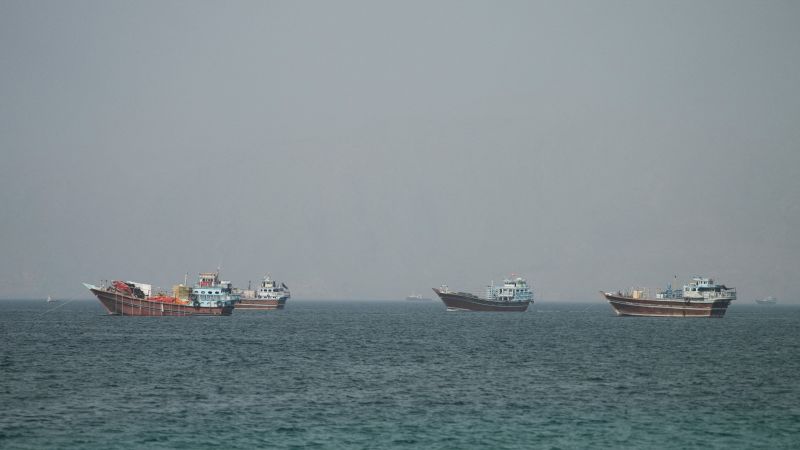
Iran Strikes Vessel, Halting UN Evacuation Mission in Hormuz
Iran strikes vessel pausing UN efforts – On Thursday, an attack by Iranian forces disrupted the evacuation efforts of the United Nations’ International Maritime Organization (IMO) in the Strait of Hormuz. The incident targeted a cargo vessel, damaging its bridge and forcing a temporary pause in operations to rescue over 11,000 seafarers stranded in the Persian Gulf since the conflict began in late February. The attack, which occurred on the starboard side of the ship, underscored Iran’s ability to assert control over the critical waterway despite a recent agreement with the United States aimed at easing tensions.
Iranian Drone Strike and Immediate Response
A US official confirmed to CNN that the vessel was struck by an Iranian drone, though no further specifics were released. The attack took place just hours after Iran’s Revolutionary Guards issued a warning that ships would only be permitted safe passage through the strait if they followed routes approved by Tehran. This statement challenged the Trump administration’s assertion that the waterway had been reopened for unrestricted traffic. The IMO, which had initiated the evacuation mission days earlier, suspended operations to reassess the situation and ensure the safety of maritime crews.
“I have always reiterated that the safety of the seafarers remains paramount,” said IMO Secretary-General Arsenio Dominguez. “Therefore, to ensure a coordinated approach and navigational safety, the evacuation plan will be paused until further clarity is obtained.”
The incident marked the first disruption since the US and Iran finalized their memorandum of understanding last week. The agreement, which included a 60-day commitment to keep the Strait of Hormuz toll-free, had already prompted the US to lift its blockade on Iranian ports. However, the attack reignited concerns about Iran’s leverage over the waterway, a strategic chokepoint for global oil shipments.
Evacuation Efforts and Strategic Implications
The IMO’s evacuation mission began recently, following the signing of the agreement between Washington and Tehran. The organization had been working to relocate hundreds of ships and their crews, but the strike forced a halt. According to the United Kingdom Maritime Trade Operations, the damaged vessel was not operating under the IMO’s framework, highlighting the risk that even with the agreement, Iran could still interfere with maritime activity.
The attack coincided with rising global oil prices, as tensions in the region increased. After the strike, Brent crude – the international benchmark for oil – closed up 2% at $74 per barrel, reversing a recent decline that had followed the agreement’s announcement. The incident also came during a critical moment for Secretary of State Marco Rubio, who was seeking to convince Gulf nations of the deal’s benefits despite lingering doubts about its long-term viability.
Iran’s Control and the Role of the Revolutionary Guards
Iran views the Strait of Hormuz as a vital asset in its negotiations with the US. The Islamic Revolutionary Guards Corps (IRGC) had emphasized that safe passage would depend on Iranian oversight, a stance that contradicted the administration’s claims of open access. The Persian Gulf Seaways Management Organization, a new Iranian agency tasked with regulating the strait, reiterated this position, stating that “the consequences of traveling on unauthorized routes will be the responsibility of the owner, operator, and commander of the vessel.”
MarineTraffic data revealed that ship movements in the strait had reached their highest level since the war began, with 70 crossings recorded on Wednesday alone. Most of these vessels utilized the Oman coast route, which the IMO had previously designated as a safe path. However, Iran’s threat to enforce control over this route raised questions about the practicality of the agreement. “You can call it a toll, you can call it a fee, whatever you want to call it. It’s a game of semantics,” Rubio remarked during a meeting in Bahrain, addressing concerns that Iran might impose charges on commercial traffic.
The Peace Deal’s Mixed Legacy
While the agreement has seen some positive outcomes, such as the US lifting its blockade on Iranian ports, its effectiveness remains uncertain. The memo outlines 14 points, including the reopening of the strait without tolls and Iran’s formal role in overseeing commercial traffic alongside Oman. This arrangement grants Tehran a significant influence over the region’s shipping lanes, a concession that has drawn criticism from some Gulf allies.
Earlier this week, Oman’s foreign minister reaffirmed the country’s commitment to international law and toll-free passage, following discussions with Iran’s parliamentary speaker. However, Iran’s position that the strait is not entirely international waters complicates the agreement’s implementation. The attack on Thursday may serve as a reminder that Iran retains the ability to disrupt the waterway, even as it negotiates a peace deal.
Despite the setback, the agreement has already had a measurable impact on oil markets. Global prices had dropped to their lowest level since the conflict began, but the strike triggered a slight upward shift. Analysts suggest that Iran’s actions are a calculated move to demonstrate its strategic importance in the region. “The reality of it is that no country on Earth has a right to charge for the use of international waterways,” Rubio stated, emphasizing the need for the deal to safeguard free passage for all.
The IMO’s decision to pause evacuations reflects the delicate balance between diplomacy and security. While the organization prioritizes the safety of seafarers, the incident highlights the challenges of maintaining stability in the face of geopolitical tensions. As the situation unfolds, the effectiveness of the US-Iran agreement will hinge on whether both sides can uphold their commitments and prevent further disruptions to the vital shipping corridor.
Broader Implications for Regional Stability
The attack on Thursday has reignited debates about the strategic significance of the Strait of Hormuz. Control over the waterway is crucial for global oil trade, with approximately 20% of the world’s seaborne crude oil passing through it daily. Iran’s ability to strike vessels and restrict movement underscores its leverage in negotiations, even as the US seeks to normalize relations.
Maritime experts note that the incident could have lasting effects on shipping routes. The IMO’s suspension of operations has created uncertainty for vessels already in the region, prompting calls for increased vigilance and contingency planning. “This is a reminder that the peace deal is not a guarantee of calm,” said one analyst. “Iran’s actions demonstrate that it can still impose its will on the strait, even with the agreement in place.”
As the UN and other international bodies monitor the situation, the focus remains on ensuring the safety of maritime traffic. The attack has not only delayed the evacuation mission but also highlighted the fragility of the current arrangement. While the US and Iran have made progress in reducing hostilities, the incident serves as a stark reminder of the challenges ahead. The IMO’s commitment to the mission, however, remains strong, with Dominguez reiterating that the organization will continue its efforts once conditions stabilize.
The future of the strait’s governance will likely depend on the outcomes of ongoing talks between the US and Iran. For now, the pause in evacuations underscores the need for vigilance and the importance of maintaining a unified front in the face of Iran’s strategic ambitions. As global markets adjust to the new dynamics, the success of the agreement will be measured not just by its terms, but by its ability to prevent further disruptions to the lifeline of international trade.
