
Iran’s allied militias prove their value in Tehran’s widening war
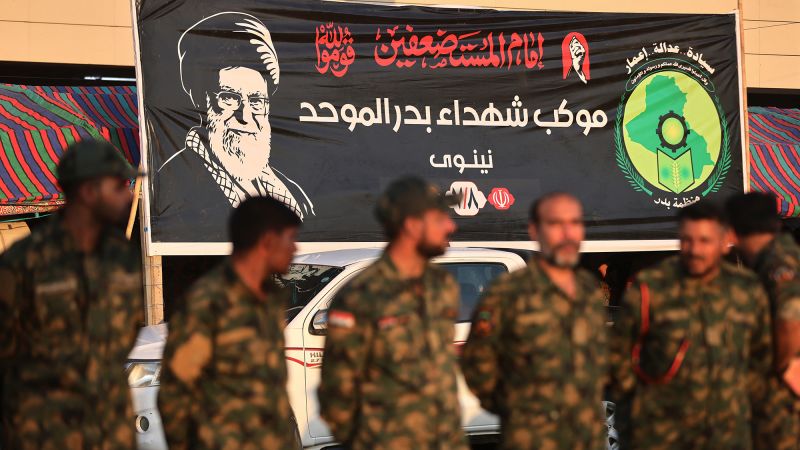
Regional Militias Reclaim Strategic Importance for Tehran Amid Escalating Conflict
Goldlaner.com – Across the Middle East, armed factions aligned with Iran are demonstrating renewed strength after a challenging period. This resurgence is strengthening Tehran’s position within its ongoing confrontation involving both the United States and Israel. According to specialists, these organizations have historically served as a crucial shield, preventing direct military strikes against the Islamic Republic. The so-called “Axis of Resistance” – a coalition of regional forces opposed to Israel and Western powers, supported by Tehran – suffered considerable damage following Israel’s extensive military operations in response to the 2023 Hamas assault and subsequent regional consequences.
A Strategic Pivot Back to Forward Defense
It was during this vulnerable phase that direct hostilities between Israel, the United States, and Iran broke out. Nevertheless, several groups connected to Tehran are now actively creating additional pressure points against their adversaries. By establishing new battlefronts, these organizations are complicating the broader conflict and potentially disrupting international economic stability. Trita Parsi, who serves as executive vice president of the Quincy Institute for Responsible Statecraft, explained to CNN: “The Axis (of Resistance) worked very well for more than two decades, helping ensure there was no attack on Iran while these groups extended their influence within their own territories.” He continued, noting that “Once they were weakened, Iran paid the price by having both the US and Israel attack it.”
Parsi emphasized that Tehran’s response involved maintaining rather than abandoning its forward defense approach. The city has consistently implemented a pan-revolutionary framework, spreading principles established during the 1979 revolution to adjacent nations and regions. This includes Lebanon, Yemen, Iraq, Syria, and Gaza. Following the Hamas offensive in 2023, Israel initiated a targeted elimination campaign against multiple Iranian partners. Among those eliminated were Yahya Sinwar, instrumental in organizing the October 7 raid, and Hassan Nasrallah, a Hezbollah commander wielding substantial regional authority. Israel also intensified operations against Iraqi militias backed by Iran and engaged in exchanges with Yemen’s Houthi movement. Notably, Israel targeted Iranian leadership directly, resulting in the death of former Supreme Leader Ayatollah Ali Khamenei, hoping to precipitate governmental transformation – an objective that has remained unachieved.
Evolution Rather Than Decline
Three years into this comprehensive conflict, Tehran’s regional partners once again show significant activity. They have adapted to modified battlefield conditions, substantially enhancing Iran’s strategic position according to analysts. Danny Citrinowicz, previously leading the Iran division within Israeli military intelligence, stated to CNN: “The Axis of Resistance is ‘still alive.’ It is not disappearing, but it is changing.” While these allies continue supporting Tehran’s objectives, they maintain independent political drivers as well.
Ali Ahmadi, a researcher affiliated with both the Geneva Centre for Security Policy and Middle East Institute Switzerland, noted to CNN that “Iran’s relationship with these groups is more complex and multifaceted than the common media practice of referring to them as ‘proxies’ suggests.” He elaborated that “These groups each have their own identity and interests but also (are) interwoven with Iran because (they have) deeply shared interests that are both ideological and geopolitical.” According to Ahmadi, dependency levels vary, with Yemen’s Houthi rebels currently exhibiting the greatest autonomy.
Houthis Open New Front Against Saudi Arabia
Recently, Yemen’s Houthi movement has expanded the Iran-related conflict by confronting Saudi Arabia, an essential American partner. Earlier this month, the organization alleged that Saudi forces attacked the airport in Sanaa, the Houthi-controlled capital, attempting to block a flight carrying a prominent Houthi delegation returning from Ayatollah Ali Khamenei’s funeral in Iran. Yemen’s Saudi-supported administration claimed responsibility for the strike. This flight represented an effort by the rebels to overcome longstanding limitations on Sanaa’s aviation connections by restarting direct service with Tehran for the first time since a Saudi-led coalition intervened in Yemen’s civil war in 2015.
Over the weekend, Houthi forces launched missiles targeting two Saudi petroleum facilities situated along the Red Sea shoreline. Satellite imagery and geolocated footage indicate substantial destruction at one installation located in Jazan, close to the Yemeni border. These missile operations came after Houthi assaults on two Saudi vessels navigating the Red Sea, following the group’s declaration of a blockade against Saudi maritime traffic passing through the Bab al-Mandeb strait. This development exemplified “the increasingly coordinated use of the Axis of Resistance to transform periods of confrontation into opportunities to consolidate gains, reshape facts on the ground, and strengthen Iran’s regional leverage,” according to researchers Nadwa Al-Dawsari and Arman Mah.
Related Reading
Frequently Asked Questions
What is Iran s allied militias prove their?
Iran s allied militias prove their is the main topic of this guide. The article explains the context, practical details, and next steps readers should understand.
Why does Iran s allied militias prove their matter?
Iran s allied militias prove their matters because readers are looking for a useful answer, not just a short summary. Good content should match search intent and help them decide what to do next.
