
India’s viral youth movement has moved from memes to the streets. Their leader tells CNN why
India’s Viral Youth Movement Has Moved from Memes to the Streets. Their Leader Tells CNN Why
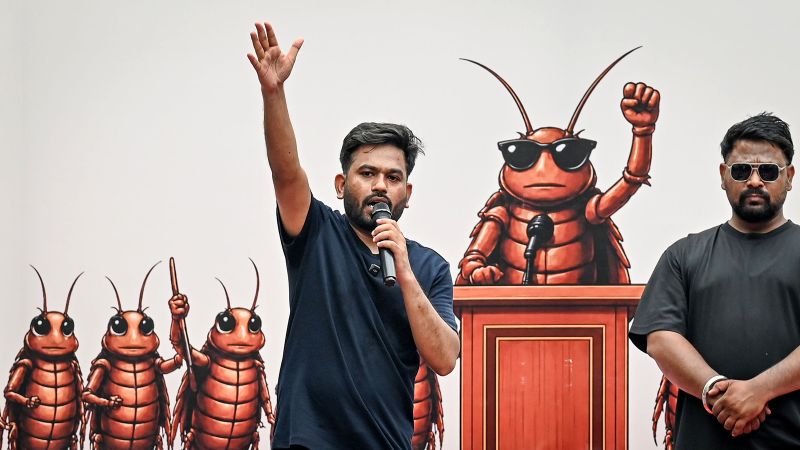
India s viral youth movement has moved – What began as a digital joke has evolved into a tangible movement across India. The Cockroach Janta Party, a satirical group founded by Abhijeet Dipke, has transformed its online presence into physical demonstrations, with protesters gathering in New Delhi to demand accountability from the education ministry. This shift marks a significant moment for a generation frustrated by systemic issues in the country’s academic framework. Dipke, a 30-year-old graduate of Boston University, has been stationed in the heart of the capital for several days, rallying thousands who refuse to disperse until Dharmendra Pradhan, the education minister, resigns.
Dipke’s movement has become a symbol of youth dissent, leveraging social media to spark outrage over exam leaks, unemployment, and the high cost of education. “We are here for the long haul, no matter how many days it takes,” he stated in a recent interview with CNN, emphasizing the movement’s resolve. “We are going to be here until Dharmendra Pradhan resigns.” The protests, which have drawn attention from national media, began after a major scandal involving the national exam system, which has long been criticized for its corruption and unfairness.
The Birth of a Satirical Movement
The Cockroach Janta Party, a parody of Prime Minister Narendra Modi’s ruling Bharatiya Janata Party, emerged only a month ago. Its name was inspired by a remark from India’s chief justice, who described the country’s unemployed youth as “cockroaches” in a metaphorical sense. This comment, which initially sparked online memes, has now taken on a more serious tone as the group transitions from digital satire to real-world activism. The party’s headquarters, a makeshift camp in New Delhi’s Jantar Mantar monument, has become a hub for demonstrators who gather daily to express their grievances.
Dipke’s presence at the protest site has galvanized supporters, many of whom have joined him in demanding reforms. The protests began on Saturday, with thousands converging on the monument to voice their frustrations. Since then, the group has encouraged participants to bring symbolic props each day, creating a dynamic and engaging atmosphere. While some have carried traditional steel platters and spoons to mimic Modi’s call for rattle utensils during the pandemic, others have used diapers to write demands for Pradhan’s resignation, a gesture Dipke described as a “satirical swipe” at the government’s inability to prevent exam leaks.
A System Under Scrutiny
India’s education system, a critical pathway to opportunity, has become a focal point for public anger. Millions of students compete annually for limited university placements, with minor score differences often deciding their futures. The system, plagued by controversies such as paper leaks and technical failures, has placed immense pressure on families investing heavily in their children’s success. Last month, over two million students who took the country’s largest medical entrance exam were told their results would be invalidated after allegations of leakage surfaced.
Adding to the crisis, reports of student suicides have emerged in recent weeks, linked to the relentless demands of the exam regime. Dipke and his supporters have taken to the streets to honor these victims, lighting candles to commemorate their loss. “We just wanted to pay tribute to the students who lost their lives because the system has failed them,” he said, highlighting the human cost of the education ministry’s missteps. The protests now serve as a platform for both mourning and demanding change, uniting a diverse group of activists under a shared cause.
As the movement gains momentum, its leaders are facing criticism from authorities. Pradhan, who has dismissed the Cockroach Janta Party as the “B-team of terror groups,” has drawn sharp responses from Dipke. “Instead of taking moral responsibility, he is labeling us as terrorists. I don’t think there could be anything more sad than this,” Dipke remarked, underscoring the tension between the government and the protesters. Despite the rhetoric, the group insists its goal is justice, not violence, for students who have been disproportionately affected by the system’s flaws.
From Online Humor to Political Action
The transition from memes to mass protests reflects a broader shift in how youth in India are mobilizing against systemic inequities. Initially, the Cockroach Janta Party’s name and imagery were used to mock the government, but the recent scandals have given it a more urgent purpose. The group’s creative use of symbols—such as the thalis and diapers—has not only kept the protests engaging but also highlighted the absurdity of the current situation. “There is not even a government exam in India which does not leak,” Dipke said, pointing to the widespread nature of the problem.
Authorities have responded with heavy security measures, particularly around venues for the medical exam’s re-sit on Sunday. Military aircraft were deployed to transport test papers, reflecting the gravity of the situation. Meanwhile, the ongoing protests in New Delhi have maintained a steady influx of volunteers, ensuring the camp remains active and visible. The mix of peaceful demonstrations and symbolic acts has kept the movement from escalating into violence, even as tensions rise.
Dipke’s journey to India earlier this month underscores the global reach of the movement. Having studied in the United States, he brings a perspective shaped by international educational standards, which he contrasts with the challenges faced by Indian students. His leadership has been instrumental in organizing the protests, combining digital savvy with grassroots mobilization. “We are not just here to protest—we are here to demand a better future for our generation,” he said, as he addressed crowds carrying the Indian flag and copies of the constitution.
While the protests continue to draw attention, they also reflect a growing sense of disillusionment among India’s youth. The education ministry’s handling of the exam system has become a lightning rod for frustration, with students and parents alike questioning the integrity of the process. As the movement gains traction, it is clear that the demands of the protesters are no longer just about a single scandal but about a deeper systemic failure that has left many feeling trapped and unheard.
Dipke’s group has become a voice for a generation that feels the weight of an unyielding system. Their protests, which blend humor with serious calls for reform, have captured the imagination of millions. “We are not just a joke—we are a movement,” he said, as he stood among the crowd at the Jantar Mantar monument. The sustained presence of the protesters in New Delhi signals that their fight is far from over, with the hope that their efforts will lead to meaningful change in the country’s educational landscape.
The Road Ahead
As the protests continue, the Cockroach Janta Party is preparing for the next phase of its campaign. Dipke has already begun planning for future demonstrations, emphasizing the need for long-term solutions. “This is just the beginning,” he said, while offering roses to police officers to maintain a peaceful environment. The movement’s unique blend of satire and activism has created a powerful narrative, one that resonates with the frustrations of a generation seeking justice and transparency.
The education ministry, under pressure from both the public and media, has been forced to acknowledge the growing discontent. CNN has reached out to the ministry to discuss the concerns raised by Dipke, signaling the potential for wider political engagement. For now, the protesters remain steadfast, their message clear: the system must be held accountable, and the stakes for the future of India’s youth have never been higher.
India’s youth-driven protests highlight a complex interplay of digital culture and real-world activism. What started as a humorous meme has grown into a powerful movement, demanding not only the resignation of a minister but also a reevaluation of the entire exam system. Dipke’s leadership has been key to this transformation, turning a viral idea into a rallying cry for change. As the movement expands, its impact on Indian politics and society is expected to grow, with the hope that it will inspire more than just temporary demonstrations.
