
From ‘ghost sharks’ to ‘death ball’ sponges: Scientists find more than 1,100 wild and unusual ocean species
From ‘ghost sharks’ to ‘death ball’ sponges: Scientists find more than 1,100 wild and unusual ocean species
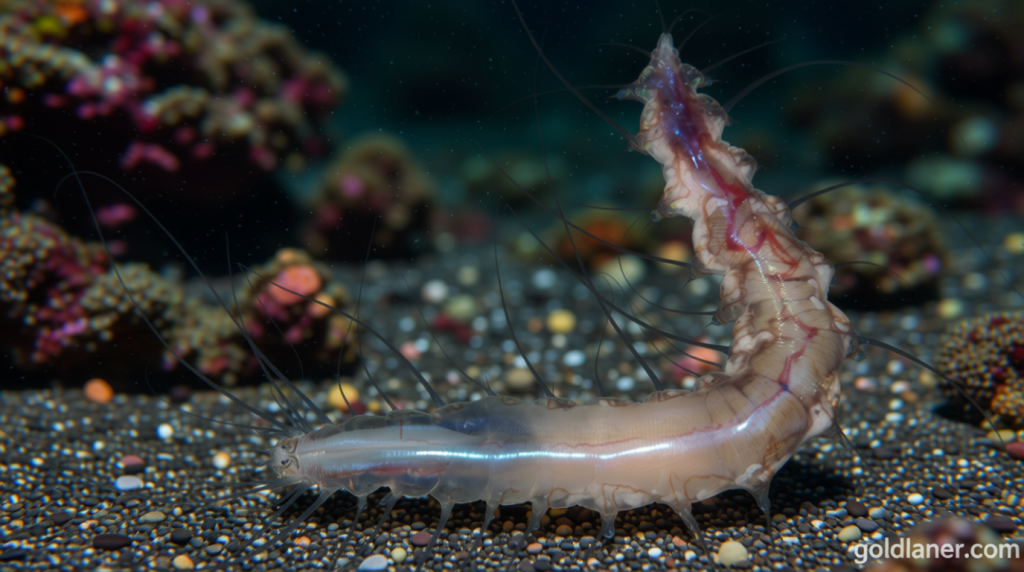
From ghost sharks to death ball – Recent explorations of the world’s oceans have revealed an astonishing array of life forms, including a peculiar worm that resides within a “glass castle,” a mysterious “ghost shark,” and a carnivorous “death ball” sponge. These three examples represent the latest additions to a staggering total of 1,121 species identified in the past year by the Ocean Census, a global initiative aimed at cataloging marine biodiversity. The announcement, released on Tuesday, highlights the organization’s growing success in uncovering life in some of the most remote and uncharted regions of the planet’s waters.
A Breakthrough in Marine Exploration
Established three years ago by Japan’s Nippon Foundation and Nekton, the UK-based ocean exploration institute, the Ocean Census has expanded its reach significantly. This year’s findings mark a 54% rise in the number of species identified annually, a milestone attributed to the collaborative efforts of over 1,000 researchers spanning 85 countries. The organization’s work underscores the ocean’s vast untapped potential as a reservoir of biodiversity, particularly in the deep sea, where life has long been considered scarce.
Despite decades of exploration, the deep ocean remains one of Earth’s most mysterious ecosystems. Once thought to be inhospitable due to extreme pressure and darkness, it is now revealed as a thriving habitat teeming with life. Recent discoveries have challenged old assumptions, exposing entire communities of organisms that defy expectations. From translucent creatures to organisms with unique survival mechanisms, the ocean continues to surprise scientists with its hidden complexity.
Unearthing the Unseen: Key Findings
One of the most remarkable discoveries involved a bristle polychaete worm living symbiotically within a glass sponge. This sponge, known for its delicate, crystalline structure made of silica, forms a natural habitat for the worm, which resides inside its translucent mesh-like skeleton. The partnership between the two species is mutually beneficial: the worm protects itself by inhabiting the sponge’s stable framework, while simultaneously cleaning its surface of harmful debris. This relationship exemplifies the intricate interactions that sustain deep-sea ecosystems.
In the waters off Japan, researchers documented a new species of polychaete worm thriving in depths of approximately 2,600 feet. Meanwhile, in the deep trenches of Australia, a “ghost shark” chimaera was identified. These ancient fish, which diverged from sharks and rays nearly 400 million years ago, have remained elusive until now. Their discovery highlights the ocean’s capacity to harbor life that has evolved in isolation, adapting to extreme conditions over millennia.
Further south, in the Timor-Leste region, scientists encountered a ribbon worm no larger than an inch, distinguished by its vibrant orange stripes. These markings serve as a visual cue to its potent chemical defenses, which have sparked interest in medical research. The toxins produced by these worms are currently under investigation for their potential in treating neurological disorders such as Alzheimer’s and schizophrenia. This underscores the ocean’s role not only as a habitat but also as a source of untapped therapeutic resources.
At depths approaching 12,000 feet in the North Trench of the South Sandwich Islands, a carnivorous “death ball” sponge was discovered. This sponge, covered in microscopic velcro-like hooks, actively captures crustaceans drifting with ocean currents. Once ensnared, the prey is drawn into the sponge’s body, where it is digested. The sponge’s predatory nature and unique morphology challenge conventional notions of deep-sea life, revealing adaptations that enable survival in environments where sunlight is nonexistent and food sources are scarce.
Challenges and Urgency in Conservation
As these discoveries unfold, scientists warn that many species may vanish before they are formally documented. Climate change, driven by rising ocean temperatures, and human activities, such as industrial pollution and agricultural runoff, are accelerating the degradation of marine habitats. Additionally, the growing interest in deep-sea mineral extraction poses another threat, with potential consequences for ecosystems that remain poorly understood. “We are in a race against time to understand and protect ocean life,” said Michelle Taylor, head of science at Ocean Census. “The urgency is clear: if we don’t act now, we risk losing species before they even enter scientific records.”
The process of formalizing a species discovery is time-consuming, often requiring 13.5 years on average between initial identification and official classification. To address this, the Ocean Census has introduced a new category of status—“discovered”—which allows for immediate recognition in its marine species database. This innovation streamlines the documentation process, ensuring that newly identified organisms are promptly accessible to researchers and policymakers. “By validating a species as soon as possible, we can share findings with the scientific community and create awareness for conservation efforts,” explained an Ocean Census spokesperson. “This immediate visibility is critical in shaping policies that safeguard these unique forms of life.”
From Discovery to Protection: The Role of Formal Documentation
However, the “discovered” status is just one step in the journey toward full scientific recognition. Tammy Horton, a research scientist at the UK’s National Oceanography Centre, emphasized the importance of the formal description process. “The official record of a species is what gives it legitimacy in science and policy,” she said. “Without this, the species lacks a defined identity, making it impossible to advocate for its preservation.”
“Sometimes a species believed to be new to science turns out not to be after a detailed examination. But that is not very common,” Horton added. “The formal process ensures that every discovery is thoroughly validated, providing the foundation for future research and conservation strategies.”
This meticulous process involves taxonomic analysis, genetic testing, and comparative studies to confirm a species’ novelty. While the “discovered” status accelerates initial recognition, it is the final step of formal description that solidifies a species’ place in the scientific canon. For instance, the glass sponge and its resident worm may take years to fully characterize, as researchers analyze their ecological roles and genetic makeup.
Despite the challenges, the Ocean Census remains optimistic about the potential for continued breakthroughs. “The key is that scientists are finding new species at every depth of the ocean, from the sunlit surface to the crushing pressures of the abyss,” said Horton. “This diversity is a testament to the resilience of marine life and the importance of our work.”
Catalyzing Action: The Future of Ocean Conservation
With over 1,100 species added to the list in a single year, the Ocean Census aims to use these findings as a catalyst for global action. The organization is urging increased investment in marine exploration, arguing that these discoveries have profound ecological, scientific, and economic value. “Every new species brings us closer to understanding the ocean’s role in Earth’s systems,” Taylor noted. “But to protect it, we must act swiftly and decisively.”
As the deep sea continues to yield its secrets, the implications for conservation and resource management grow ever more significant. These findings not only enrich our knowledge of marine biodiversity but also highlight the need for urgent measures to mitigate the threats facing these ecosystems. From the fragile balance of symbiotic relationships to the potential medical applications of deep-sea organisms, the ocean’s discoveries are reshaping our perspective on life’s adaptability and the importance of preserving its depths.
Looking ahead, the Ocean Census envisions a future where the pace of discovery accelerates, supported by greater collaboration and funding. “We spend billions searching for species, but we must also prioritize the protection of what we find,” said a spokesperson. “These 1,121 species are not just scientific milestones—they are the first steps in ensuring the survival of countless more that remain hidden beneath the waves.”
