
Fidel Castro’s daughter has no love for the Cuban regime but warns against underestimating it
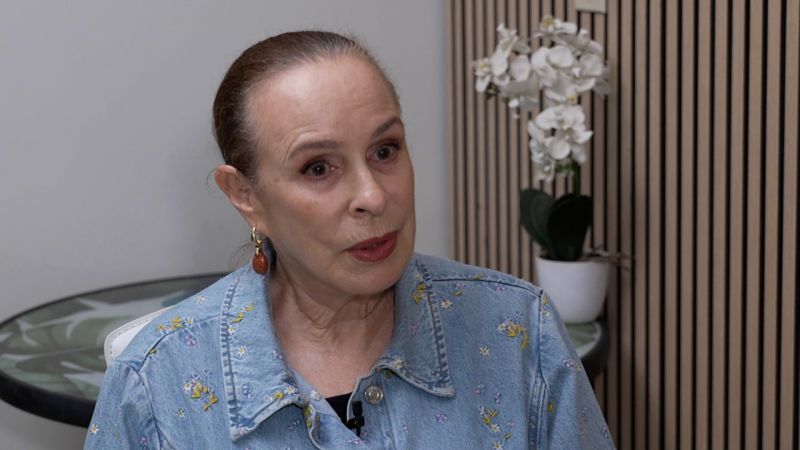
Fidel Castro’s daughter has no love for the Cuban regime but warns against underestimating it
Early Memories and Family Ties
Fidel Castro s daughter has no love – Alina Fernández, the daughter of Fidel Castro, recalls her earliest memories as being deeply intertwined with her father’s long speeches on television. Growing up in Havana, she and her peers would often gather around the set, waiting for the screen to display something other than Castro’s political addresses. “We’d kneel before the TV, hoping his speeches would end so we could finally watch our cartoons,” she explained in a CNN interview. These early interactions shaped her perception of Castro as a figure of immense authority, though the reality of his presence in their lives was far more complex.
“My generation used to pray in front of the TV for him to finish, so we would be able to watch our cartoons,” Fernández said. “That’s the way I grew up.”
As a child, she was unaware that the man who visited their home nightly was her father. The visits, which occurred in the evenings, were a source of fascination for her, but they were also a reminder of her mother’s past. It wasn’t until she turned ten that the truth about her parentage was revealed. At that point, she understood the significance of the man who had been a frequent guest, yet the knowledge didn’t shake her as much as she expected. “It wasn’t a big surprise,” she reflected. “He was an assiduous visitor.”
Exile and Political Disillusionment
Despite her connection to Castro, Fernández has long been critical of the Cuban government. She left the island in 1993, driven by the desire to protect her daughter from the harsh realities of life under the regime. “I realized that my daughter might not grow up in a safe environment if she remained in Cuba,” she said. Her decision was rooted in a personal disillusionment that began in the late 1980s, when she started openly opposing the government’s policies. “I was subjecting my daughter to the same things that were done to me,” she added, highlighting the generational impact of Castro’s rule.
“Fidel Castro was an absent figure in my life, and my mother, for being very revolutionary, and I, for being very counterrevolutionary,” Fernández noted.
Her mother, who had been Castro’s former mistress, viewed him as a revolutionary hero, while Fernández saw him as a symbol of oppression. The contrast between their perspectives deepened her resolve to distance herself from the regime. She described her mother’s enduring love for Castro as something she found hard to comprehend, especially given the emotional toll of his absence. “She lasted in love for as long as she lived, which for me is very difficult to understand,” she said, reflecting on the years of separation that defined her childhood.
Warnings Against US Military Action
Now living in Miami, Fernández remains vigilant about the Cuban government’s capabilities. She has expressed concerns that the Trump administration may be underestimating the resilience of the regime, particularly as the US pushes for regime change. “We’ve been under invasion for the last 67 years, or the state of an invasion,” she told CNN. “I’m sure they are prepared. I don’t know how they are going to respond.” Her apprehension is shared by Cuban President Miguel Díaz-Canel, who has warned that any US military assault on Cuba would lead to a “bloodbath.” Fernández agrees, emphasizing the risk to civilians in such conflicts.
“This is not the first time (Cubans have been) told that an invasion is coming immediately,” she said. “We’ve been under invasion for the last 67 years, or the state of an invasion.”
She argues that the recent surge in US military rhetoric is more a product of Secretary of State Marco Rubio’s influence than President Donald Trump’s personal agenda. “I believe it owes far more to the presence of Marco Rubio in the government than to President Donald Trump himself,” Fernández stated. This perspective underscores her belief that the political tensions are driven by broader ideological shifts rather than immediate military intent.
The Weight of Family and Legacy
Despite her criticism of the Cuban government, Fernández does not feel entirely disconnected from her heritage. She described her home in Miami as a modest duplex adorned with vibrant wallpaper and colorful folk art, a space that has become her sanctuary among fellow exiles. “I feel like every other Cuban,” she said, “like a woman, an exile, also a victim.” Yet, she admitted that the title of “Fidel Castro’s daughter” still carries a unique burden. “I don’t even really feel like Fidel Castro’s daughter,” she confessed, acknowledging the irony of her position within the political narrative.
“It may be ironic, but I have found Miami, among the anti-Castro milieu, to be the ‘only comfortable place’ I have ever known,” Fernández said.
Fernández’s story also reveals the complexities of family loyalty. She recalled that the revelation of her parentage was met with mixed emotions, including a sense of betrayal. “It wasn’t a big surprise,” she said, “but the knowledge that everyone else already knew came with a feeling of being lied to.” This moment marked a turning point in her relationship with her mother, who had always been a devoted supporter of Castro’s revolution. Fernández, however, questions the depth of her mother’s affection for her father, suggesting that her mother’s love was perhaps more passionate than Castro’s was reciprocated.
Reflections on a Nation and a Legacy
While Fernández has distanced herself from Castro’s political legacy, she acknowledges the enduring strength of the Cuban government. “I could see from a very young age that the glory and the speeches did not match reality,” she said, a sentiment that has only grown stronger over time. Her observations highlight the gap between the idealized image of Castro and the lived experiences of those who endured his rule. Even as she critiques the regime, she recognizes its ability to adapt and resist external pressures, making it a formidable opponent.
Though she no longer identifies with Castro’s vision, Fernández’s journey from Havana to Miami illustrates the personal and political stakes of Cuba’s history. Her story is one of resilience, betrayal, and a deep understanding of the sacrifices made by both sides of the conflict. As she continues to speak out, her voice serves as a reminder that the Cuban revolution’s legacy is not just a matter of politics, but also of human connection and the enduring impact of power. Her perspective, shaped by both the warmth of her mother’s love and the bitterness of her own disillusionment, offers a nuanced view of a nation and a family torn apart by ideology.
