
FAA investigating air safety incident involving Trump’s Marine One helicopter
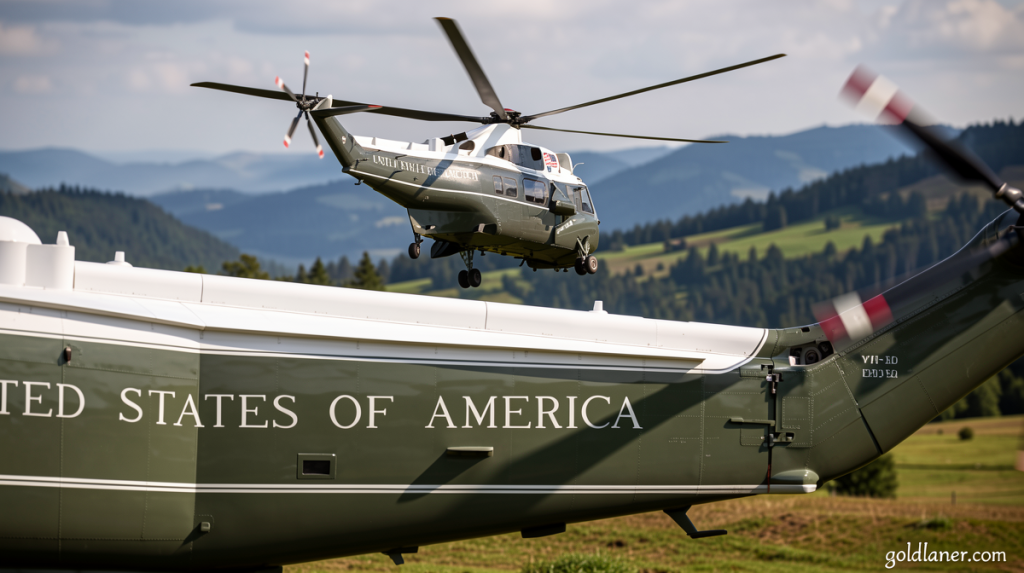
FAA Investigates Air Safety Incident with Marine One at Reagan Airport
Goldlaner.com – Federal aviation authorities are currently FAA investigating air safety incident involving President Donald Trump’s Marine One helicopter and a commercial aircraft near Ronald Reagan Washington National Airport. The event unfolded on Tuesday afternoon, though officials clarified it was not a dangerous close call between the two planes.
What Happened During the Incident
Marine One departed from the Ellipse, situated just south of the White House, during afternoon hours. Air traffic control recordings show the helicopter’s pilots communicated with Reagan National tower several times before lifting off. At 2:31 p.m., a pilot announced, “Tower, do you copy. Marine One, three minutes to lift,” but the controller’s reply was initially unclear.
“The FAA is investigating a safety incident involving Marine One but it didn’t appear to be a dangerous close call and the aircraft weren’t apparently converging,” the FAA stated.
The tower controller eventually responded that the transmission was “broken and unreadable.” Shortly afterward, the controller confirmed whether Marine One was proceeding as briefed and issued a warning about a regional jet already taking off. The helicopter’s pilots acknowledged seeing the commercial aircraft and held their position briefly before continuing their departure.
Commercial Aircraft Details
The other aircraft involved was an Envoy Air commercial plane, specifically flight 3742, an E170 regional jet heading to Pensacola, Florida. Tracking data from Flightradar24 indicates the commercial aircraft passed within 1.5 miles of the Ellipse. The flight departed at 2:34 p.m., approximately one minute after Marine One lifted off from the White House grounds around 2:33 p.m.
Envoy Air operates as a wholly owned subsidiary of American Airlines. Both aircraft ultimately landed without incident. The commercial jet continued toward its Florida destination, while Marine One proceeded to Joint Base Andrews in Maryland, where President Trump would board Air Force One for a flight to Los Angeles.
Context: 2024 Collision and New Rules
The airspace around Reagan National Airport has faced increased scrutiny following a tragic collision last year involving a US Army Blackhawk helicopter and an American Airlines regional jet. That accident resulted in the deaths of all 67 people aboard both aircraft. In response, the FAA investigating air safety incident protocols led to stringent restrictions on helicopter operations in the vicinity of the airport.
Despite these heightened safety measures, commercial flights at Reagan National were not suspended during Tuesday’s incident. Under the policy established after the fatal collision, commercial operations are required to halt when helicopters are operating in the immediate area, but this requirement was not triggered in this instance.
White House Statement
White House officials emphasized that President Trump remained safe throughout the event. White House spokesperson Kush Desai provided a statement to the Wall Street Journal, noting that “Marine One flights are piloted by some of the best aviators in the world, and at no point was the President in harm’s way.”
The incident has drawn attention to the complex logistics of presidential air travel, particularly given the President’s extensive aviation background. Marine One’s departure from the Ellipse required careful coordination with the busy Reagan National Airport, which handles significant commercial traffic daily.
Broader Aviation Safety Implications
This event highlights the ongoing challenges of managing airspace in one of the nation’s busiest airport corridors. The proximity of the White House to Reagan National creates unique operational requirements, especially when presidential aircraft are in motion. The FAA investigating air safety incident will likely examine communication protocols, separation distances, and whether existing restrictions adequately address potential hazards.
CNN has contacted Envoy Air, American Airlines, the Federal Aviation Administration, and the White House to request additional commentary on the incident. As the investigation proceeds, aviation experts and policymakers may consider whether further adjustments to airspace management are necessary to prevent similar occurrences.
The incident serves as a reminder of the complexities inherent in coordinating military and commercial aviation in shared airspace, particularly in high-profile situations involving national leadership. While Tuesday’s event did not escalate into a serious emergency, it underscores the importance of continued vigilance in presidential air operations.
Frequently Asked Questions
What exactly happened with Marine One?
Marine One experienced a communication issue with Reagan National Airport tower during takeoff while a commercial regional jet was departing simultaneously. The FAA is investigating whether this constitutes a safety incident.
Was President Trump in danger?
No. White House officials confirmed that President Trump was never in harm’s way. The aircraft were not converging, and the incident was not considered a dangerous close call.
Why is Reagan National Airport significant for presidential flights?
Reagan National is located near the White House and has strict helicopter operation rules following the 2024 collision. Commercial flights must sometimes halt when helicopters operate in the immediate area.
Where was Marine One heading?
Marine One proceeded to Joint Base Andrews in Maryland, where President Trump would board Air Force One for a flight to Los Angeles.
