
Russia’s Parliamentary Election Opens With Little Visible Competition
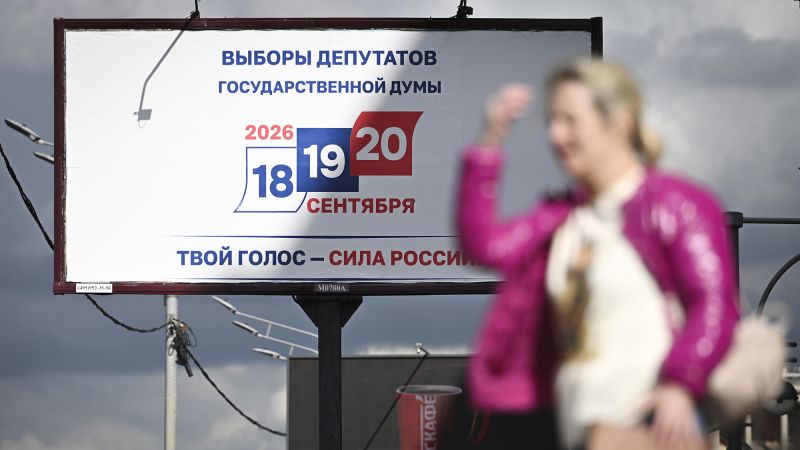
Goldlaner.com – Empty podiums prizes for e voting define the unusual atmosphere around Russia’s three-day parliamentary election, which begins Friday as the war in Ukraine enters its fifth year. The result is widely expected to preserve the dominance of the pro-Kremlin United Russia party after political opposition inside the country has been silenced, constrained or pushed abroad.
Voters are choosing all 450 deputies in the State Duma, Russia’s lower house of parliament. Voting is also taking place in Russian-controlled parts of Ukraine, including Crimea and areas of Donetsk, Luhansk, Kherson and Zaporizhzhia.
The ballot retains the appearance of a conventional election, with registered candidates, polling stations, televised debates and multiple parties. Critics say those formal elements mask a political environment in which meaningful competition has been steadily narrowed and President Vladimir Putin’s influence remains decisive.
Vacant debate podiums highlight a subdued campaign
In Ryazan, about 122 miles southeast of Moscow, a local television debate offered a striking example of the campaign’s low visibility. Six registered candidates had been invited to take part, but none arrived. Three empty podiums stood on each side of Russia-1 presenter Elizaveta Dorokhina before the broadcast moved on to advertising.
“The candidates have not shown up at our studio, so I’ll say goodbye for now,” Dorokhina told viewers.
The moment reflected the contradiction at the center of Empty podiums prizes for e voting: election procedures are on display, but the political contest is limited. United Russia has dominated domestic politics for more than two decades and is expected to keep its majority in the Duma.
Anti-war voices are excluded
Yabloko, Russia’s only registered party openly opposed to the war, was initially allowed to participate before the Supreme Court barred it last month. Its removal further reduced the options for voters seeking candidates who oppose the invasion or favor a shift in policy.
Grigory Yavlinsky, a Yabloko co-founder and prominent liberal politician, said the party had drawn support for its call for a ceasefire in Ukraine. He said the apparent interest had unsettled the Kremlin.
Political analyst Andrei Kolesnikov said elections do not determine the direction of government policy in Russia’s current system. Kolesnikov, a Moscow-based columnist for The New Times and Novaya Gazeta, has been designated a “foreign agent” by Russian authorities.
“The Russian political system is a rigid, personalistic regime with institutions that are imitational,” Kolesnikov said.
“Elections have no impact whatsoever on the nature of policy, which is predetermined. Their main purpose is to demonstrate to the public the ‘majority effect’: everyone is ‘for’ Putin’s policies, and those who oppose them are outcasts and enemies,” he added.
War strains shape the backdrop to voting
The election comes during a period of mounting pressure on daily life. Internet controls, restrictions on civil society and punishment for dissent have intensified since the full-scale invasion began. Ukrainian long-range drone operations have also brought the consequences of the war more directly into Russia.
Ukraine has used strikes far from the front line in an effort to pressure Moscow toward negotiations. The attacks have caused deaths and injuries, though on a far smaller scale than the destruction inflicted across Ukraine. They have also disrupted infrastructure important to households and the wartime economy.
Strikes on oil refineries have contributed to fuel shortages and lines of vehicles in major cities. Attacks affecting some of Russia’s largest online retailers have added strain to an economy already burdened by years of war.
Against that backdrop, Empty podiums prizes for e voting is about more than campaign spectacle. For many voters, concerns include personal security, living costs, access to goods and the prospect of an end to the war.
FAQ: Russia’s Parliamentary Election
What are Russians voting for?
Voters are electing all 450 members of the State Duma, the lower chamber of Russia’s parliament.
Where is the vote being held?
Voting is taking place across Russia and in Russian-controlled parts of Ukraine, including Crimea and areas of Donetsk, Luhansk, Kherson and Zaporizhzhia.
Why is the election drawing criticism?
Critics point to the exclusion of anti-war opposition, severe restrictions on dissent and the expected continued dominance of United Russia as evidence that voters have limited meaningful political choice.
How does the war affect the campaign?
The war has intensified political controls and placed economic pressure on households, while Ukrainian drone strikes have disrupted infrastructure and made the conflict more tangible for people inside Russia.