
Deadly twin quakes are a gut punch to a Venezuelan economy already on its knees
Seismic Crisis Deepens Venezuela’s Economic Struggle
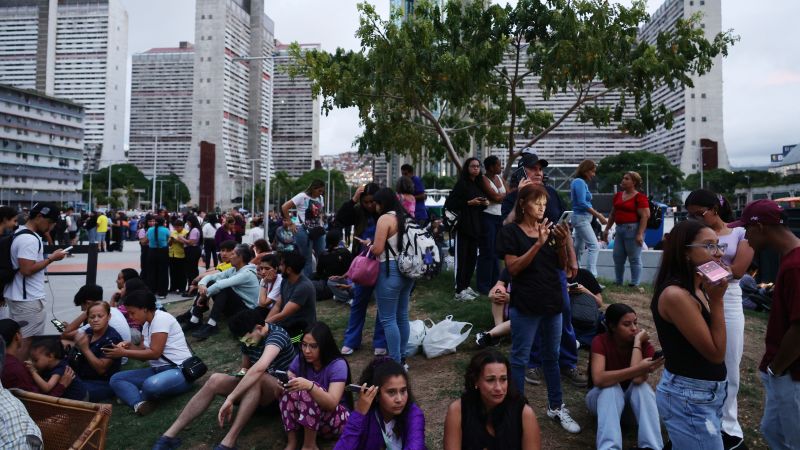
Deadly twin quakes are a gut punch – Venezuela’s most powerful earthquake in over a century struck during a period of extreme economic hardship, delivering a devastating blow to a nation already grappling with systemic collapse. The tremors, which caused widespread destruction and over 30 deaths, have compounded the challenges of a country whose GDP has plummeted by nearly 80% since 2013. Long-standing issues such as U.S.-imposed sanctions, hyperinflation, and mismanagement of the oil sector, despite Venezuela’s status as the world’s largest oil reserves holder, have left the economy in tatters. Now, natural disasters are testing the limits of a fragile recovery, threatening to push the nation further into crisis.
The Economic Woes of Venezuela
For years, Venezuela’s economy has been a victim of external pressures and internal inefficiencies. Sanctions from the United States, targeting the country’s oil exports and financial institutions, have severely restricted access to international markets. Combined with government corruption and a failing currency, these measures have driven inflation to unsustainable levels, eroding purchasing power and destabilizing everyday life. Despite efforts to attract foreign investment, oil production remains below its peak, leaving the country’s primary revenue source struggling to meet domestic needs.
Acting President Delcy Rodríguez, who assumed power after the capture of former leader Nicolás Maduro in January, has taken cautious steps to liberalize the economy. Her administration has sought to rebuild trust with foreign oil firms and Washington, aiming to ease the burden of sanctions. Yet, economic recovery has been slow, with inflation persisting and wages remaining stagnant. In 2025, nearly 8 million Venezuelans—about a third of the population—required humanitarian aid, according to the United Nations. Basic necessities like fuel, medicine, and food are in short supply, with citizens often facing long lines at pharmacies and gas stations.
Humanitarian Impact and Infrastructure Strain
The recent earthquakes have exposed the vulnerabilities of Venezuela’s infrastructure, which has deteriorated over decades of underinvestment. Hospitals, power grids, and water systems—critical for emergency response—are poorly maintained, struggling to handle the crisis. Dr. Lucy Jones, a seismologist at Caltech, warned that the quakes could ignite secondary disasters, such as fires from ruptured gas lines or electrical failures, further escalating economic losses. Early USGS models suggest damages could range from $10 billion to $100 billion, with the higher estimate matching the size of the country’s entire economy.
Even before the quakes, Venezuela’s supply chain was stretched thin. The government’s attempts to stabilize the economy have met with limited success, leaving many without access to essential goods. The humanitarian emergency now worsens these conditions, as relief efforts race to meet the needs of an already exhausted population. With limited resources, the government faces a daunting challenge in addressing both immediate casualties and long-term recovery, while also negotiating its return to the global economy.
Political Responses and Regional Repercussions
President Donald Trump, who once claimed the U.S. would “run” Venezuela after removing Maduro through military force, has since positioned himself as a key player in the nation’s revival. His administration has emphasized a pragmatic partnership with Rodríguez, despite ongoing tensions with the Maduro regime. However, the earthquakes have raised questions about the depth of U.S. commitment. Just a day before the quakes, Trump praised Venezuela’s progress at a Pennsylvania rally, declaring the country “doing great.”
Rodríguez, in a televised address, vowed to mobilize both public and private healthcare resources to aid the injured. “We have activated the country’s entire health network—especially in the most affected areas—to treat the wounded during this critical time,” she stated. The leader also announced the formation of a high-level task force to coordinate rescue operations, signaling a shift toward emergency-driven governance. Yet, the government’s ability to provide sustained support remains uncertain, as economic constraints limit its capacity to fund reconstruction and medical care.
“Today, there is only one message: maximum unity, maximum solidarity, and maximum action,” said a post on Maduro’s official Telegram channel, reflecting the ousted leader’s call for national resilience. Though imprisoned in New York on drug-trafficking and weapons charges, Maduro’s rhetoric underscores the political stakes of the crisis, with his wife Cilia Flores de Maduro also endorsing the message.
Opposition figures, like María Corina Machado—a Nobel Peace Prize recipient in exile—have expressed deep concern. “My heart, my infinite embrace, and my prayers are with every Venezuelan home in these hours of anguish,” Machado wrote on X, highlighting the emotional toll of the disaster. Her comments echo the sentiments of a populace weary from years of economic devastation, where basic survival has become a daily struggle.
The dual shocks of the earthquakes and ongoing political instability have created a perfect storm for Venezuela. While the country’s oil sector requires billions in investment to regain its former strength, the quakes have disrupted production and distribution networks, deepening the crisis. With infrastructure unable to withstand the scale of the disaster, the path to recovery remains uncertain. As the death toll rises and economic losses mount, the international community watches closely, questioning whether Venezuela can emerge from this twin crisis unscathed.
Amid the chaos, the government’s response has been a mix of resolve and strain. Rodríguez’s administration is racing to balance relief efforts with economic reforms, but the challenge is immense. The quakes have not only caused physical destruction but also shaken public confidence, forcing a reevaluation of Venezuela’s trajectory. As the nation’s leaders grapple with the aftermath, the question remains: can the country’s battered economy withstand another test of its resilience?
