
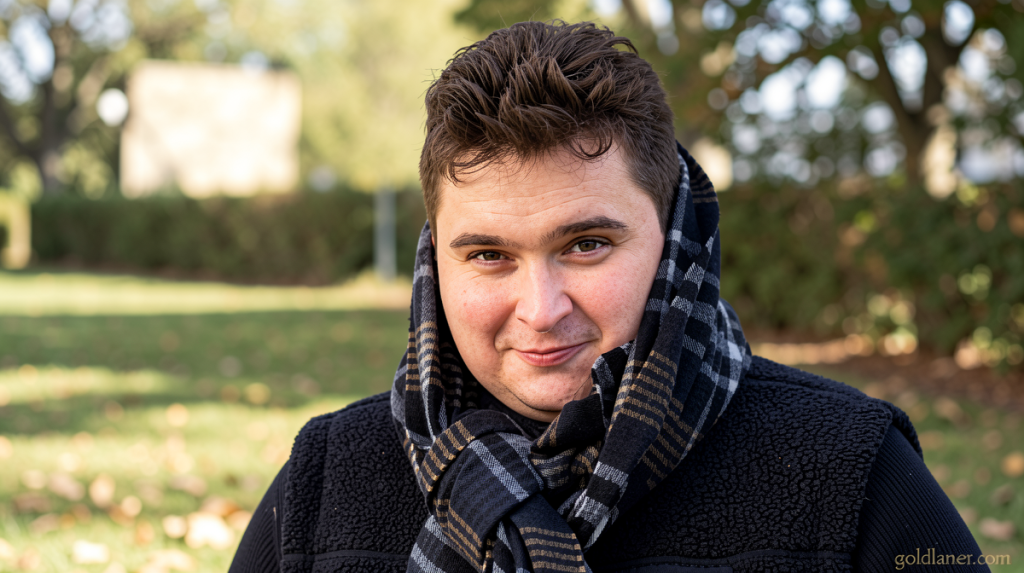
A Car Salesman’s Quiet Path to the Belgian Royal Family
Goldlaner.com – For most of his adult life, Clément Vandenkerckhove has spent his days selling automobiles in Belgium. At 26, his daily routine bore no resemblance to anything associated with European royalty. Yet within the past year, a quiet administrative act in a small-town municipal office transformed his legal standing forever: he is now formally recognized as a prince, the acknowledged son of Prince Laurent, the younger brother of King Philippe.
The revelation, which surfaced publicly this week, traces back to a DNA test that confirmed what his mother had long known. The paternity was subsequently registered with Belgium’s civil registry, completing a process that had been underway for several months. The formal acknowledgment took place at a deliberately understated town hall ceremony roughly six months ago — no fanfare, no televised procession, simply a bureaucratic signature that carried extraordinary weight.
The Mother’s Decade-Long Secret
Vandenkerckhove’s mother, a Belgian singer known professionally as Wendy Van Wanten but born Iris Vandenkerckhove, carried the truth of his parentage alone for sixteen years. She and Prince Laurent had been involved in the 1990s, a relationship that began after an unplanned meeting at a fashion show in Paris. The romance did not endure, and speculation has persisted that Laurent’s own father — the former king, now 92 — viewed the liaison unfavorably.
It was not until her son reached his sixteenth birthday, approximately a decade ago, that she finally disclosed who his father was. The disclosure prompted a documentary that aired last September on Belgian television network VTM, in which Vandenkerckhove recounted the moment of revelation. Four years after learning the truth, he reached out to Prince Laurent to share what his mother had told him. Laurent agreed to undergo genetic testing.
“We went to the hospital together and I remember him saying, ‘I’ll go first so you’re feeling at ease,'” Vandenkerckhove recalled in the VTM documentary.
Once the results confirmed paternity, the two men began what Vandenkerckhove described as “open and honest conversations,” building a relationship from scratch after more than two decades of separation.
What the Title Actually Grants — and What It Does Not
The civil-registry registration carries concrete legal consequences. Vandenkerckhove now holds equal inheritance rights to Prince Laurent’s private estate alongside his half-siblings: Princess Louise, 20, and Prince Nicolas, 20, and Prince Aymeric, 19 — all children Laurent shares with Princess Claire, whom he married in 2003.
What the new title does not confer, however, is equally important. He will receive no royal allowance. He is not expected to assume any official state duties. And he holds no claim whatsoever to the Belgian throne. In practical terms, the designation reshapes his position within the family’s private affairs while leaving the constitutional order of the monarchy entirely untouched.
A Name He May Keep
Belgian royal convention would permit Vandenkerckhove to adopt the family name Saxe-Coburg, the dynastic surname carried by the Belgian royal house. Yet he has signaled publicly that he may decline the option.
“I am proud of the name Vandenkerckhove,” he told the Flemish daily Het Nieuwsblad. “If I were to sacrifice that family name, it would be a betrayal of everything my mother has done for me.”
The decision underscores a tension common to late-recognized royal children: the pull of dynastic identity against the loyalty owed to the family that actually raised them. For Vandenkerckhove, the name his mother carried through sixteen years of single parenthood appears to outweigh any dynastic prestige.
A Pattern of Royal Secrets Surfacing
The Vandenkerckhove case is not an isolated episode in Belgian royal history. Prince Laurent’s own father, the former king, waged a prolonged paternity dispute before finally acknowledging in 2020 that he had fathered a daughter during an extramarital affair. Delphine Boël, now 58, ultimately prevailed in her legal challenge and was granted the title of princess. She has since adopted the name Delphine de Saxe-Coburg, formally integrating herself into the family’s dynastic nomenclature.
Two generations of the same royal household, therefore, have produced children whose parentage was concealed for years before being confirmed through either court proceedings or genetic analysis. The Belgian monarchy, long characterized by its relative informality compared with other European houses, continues to navigate the modern expectation that royal families account for every member — even those who spent their formative years entirely outside the palace walls.
For Vandenkerckhove, the practical effect of the past year has been less about titles and more about relationship. A man who learned his father’s identity at sixteen, waited four more years before making contact, and then walked into a hospital corridor alongside a 63-year-old prince for a blood sample, now carries a surname that appears on civil-registry documents as a member of one of Europe’s oldest royal dynasties. He still sells cars. But the paperwork, at least, has caught up with the truth.
Related Reading
Frequently Asked Questions
What is Belgian car salesman becomes prince after?
Belgian car salesman becomes prince after is the main topic of this guide. The article explains the context, practical details, and next steps readers should understand.
Why does Belgian car salesman becomes prince after matter?
Belgian car salesman becomes prince after matters because readers are looking for a useful answer, not just a short summary. Good content should match search intent and help them decide what to do next.