
A violent volcanic eruption may have revealed a new weapon to tackle a potent planet-heating gas
Volcanic Eruption May Unveil Methane-Neutralizing Mechanism
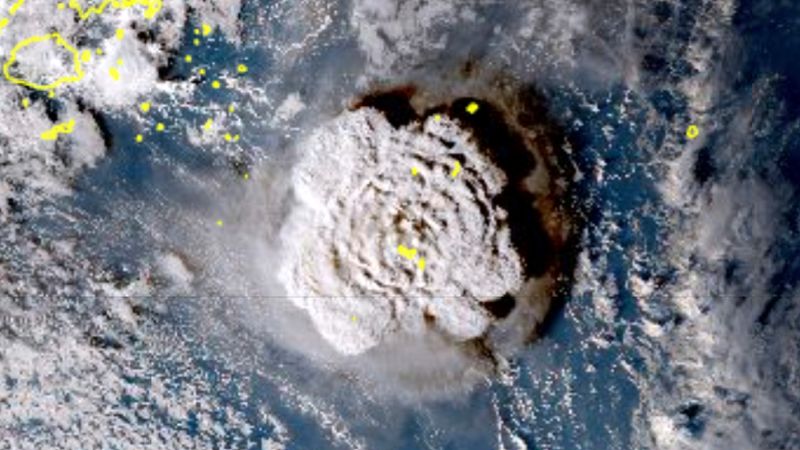
A violent volcanic eruption may have provided a breakthrough in the battle against methane, a potent greenhouse gas. In January 2022, the explosive underwater eruption of the Hunga Tonga-Hunga Ha’apai volcano in the South Pacific generated a plume of ash, steam, and gases that ascended to nearly 40 miles into the atmosphere. This event, among the most powerful in recent history, not only triggered tsunamis and a global sonic boom but also sparked scientific curiosity about its role in neutralizing atmospheric pollutants. A new study published in Nature Communications suggests this eruption may have revealed a natural process to combat methane, challenging conventional understanding of how greenhouse gases are removed from the atmosphere.
Unexpected Atmospheric Reactions
The eruption’s aftermath was strikingly unusual. Researchers observed that the volcano’s emissions seemed to self-correct, with a chemical process rapidly breaking down methane. This phenomenon, described as “unexpected” by the study’s authors, involved iron-based particles interacting with sunlight to generate chlorine atoms. These atoms, in turn, catalyzed the decomposition of methane, offering a potential pathway for reducing its concentration. The discovery could redefine strategies for mitigating climate change by leveraging natural atmospheric chemistry.
Scientists analyzed the event using satellite data and found a massive cloud of formaldehyde, an indicator of methane breakdown. Maarten van Herpen, a physicist at Acacia Impact Innovation, noted, “We detected formaldehyde in amounts that shouldn’t exist under normal conditions.” The presence of this gas suggests that the volcanic plume may have activated a chemical reaction similar to one seen in Saharan dust interactions with the Atlantic Ocean. This process, once thought limited to specific regions, now appears to have broader implications for global methane management.
Volcanic Activity as a Climate Tool
The Hunga Tonga-Hunga Ha’apai eruption may have demonstrated how natural disasters can influence atmospheric processes. The plume, carrying vast quantities of salty water vapor, reached the stratosphere, creating conditions ripe for the iron-sunlight reaction. Researchers estimate the plume’s volume equaled 58,000 Olympic-sized swimming pools, highlighting the scale of the event. Such a volume likely ensured sufficient iron particles to initiate the breakdown of methane, potentially offering a model for human-engineered geoengineering solutions.
Van Herpen explained, “The eruption may have emitted methane, yet its plume actively dismantled these emissions.” By tracking the formaldehyde cloud for 10 days, scientists determined that the methane destruction rate exceeded expectations. The study calculates that the eruption produced approximately 330,000 tons of methane, with around 900 tons being neutralized daily through this process. This efficiency underscores the potential of volcanic events as a tool for combating climate change, though further research is needed to validate scalability.
Challenges and Future Applications
While the findings are promising, experts caution against overestimating their immediate impact. Pete Edwards, an atmospheric chemist at the University of York, emphasized, “Using formaldehyde observations alone to deduce a chemical mechanism is innovative, but it doesn’t fully resolve atmospheric complexities.” The eruption’s unique conditions—such as the extreme altitude of the plume—complicate direct comparisons to terrestrial processes. However, the study’s authors argue that this volcanic-driven reaction could be replicated by introducing iron particles into the atmosphere over oceans, mimicking the natural process observed during the event.
Edwards also pointed out that the methane-neutralizing effect may be specific to the eruption’s environment. The interplay of volcanic ash, seawater vapor, and sunlight created an ideal scenario for the reaction, which might not occur under similar conditions elsewhere. Still, the discovery raises intriguing possibilities for future climate interventions, offering a potential mechanism to target methane emissions at their source. As scientists refine these insights, the volcanic event may become a pivotal case study in climate action strategies.
