
A total solar eclipse will occur this summer. Everything you need to know
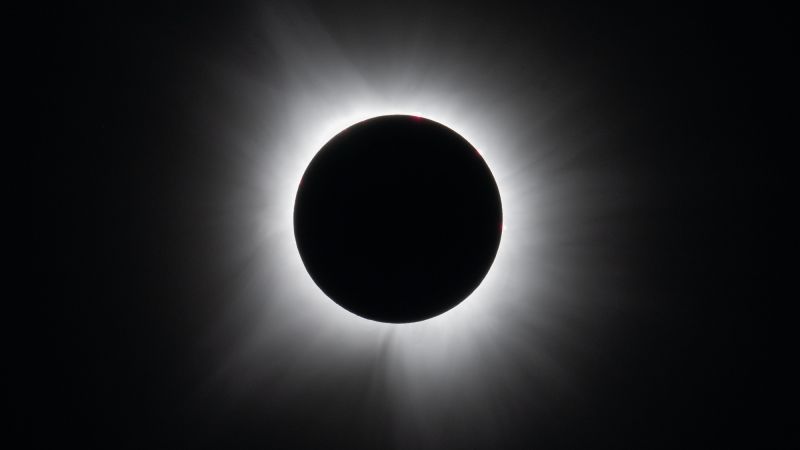
A Total Solar Eclipse in 2026: Everything You Need to Know
A total solar eclipse will occur – Mark your calendars for a breathtaking cosmic event on August 12, 2026, when a total solar eclipse will grace the skies for the first time in over two years. This rare phenomenon, where the Moon’s shadow fully blocks the Sun’s light, will offer a fleeting yet unforgettable spectacle to observers in select regions. From the Arctic to the Iberian Peninsula, the path of totality will stretch across thousands of miles, creating a unique opportunity for people to witness the heavens transform in an instant.
Understanding the Mechanics of a Total Solar Eclipse
A total solar eclipse occurs when the Moon precisely aligns between the Earth and the Sun, casting a shadow that temporarily obscures the Sun’s light. According to NASA, this alignment is a result of the Moon’s orbital path and its distance from Earth, making such events both predictable and spectacular. The Moon’s shadow will carve a narrow corridor across the globe, with observers within this zone experiencing a momentary plunge into darkness as the Sun is entirely hidden.
Where the Magic Will Happen
The path of totality will begin near the Arctic coastline at approximately 1 p.m. ET, as the shadow sweeps across the region and heads toward the North Pole. From there, it will traverse Greenland, Iceland, and eventually reach the western edges of Portugal and northern Spain. While the duration of totality varies, some areas like Greenland will see the Sun completely vanish for just over two minutes, while northern Spain may experience only about 20 seconds of darkness, depending on weather conditions.
Historical Significance and Future Events
This eclipse holds special importance for Spain, as it marks the country’s first total solar event on its mainland since 1905. It also sets the stage for a series of three eclipses between now and 2028, as noted by the European Space Agency (ESA). For Europe, this will be the first total solar eclipse since 2006, highlighting its rarity and the excitement it generates among sky-watchers. The ESA’s director of science, Carole Mundell, emphasized the event’s emotional impact, stating in a statement:
“A total solar eclipse is one of those rare moments when millions of people can look up together and feel both wonder and curiosity. It is a shared moment that connects us to the Universe and reminds us that the desire to explore and understand is one of humanity’s greatest strengths.”
Weather Challenges and Viewing Opportunities
Despite the astronomical precision of the event, inclement weather remains a major hurdle for eclipse enthusiasts. The Spanish Scientific and Advisory Committee for the Trio of Eclipses noted that the shadow will pass over Galicia and the Balearic Islands as daylight fades into evening. This timing means viewers in Spain will need to be ready at the right moment to capture the full experience. For those outside the path of totality, the ESA plans to broadcast a livestream from the Astrophysical Observatory of Javalambre in Teruel, ensuring the spectacle is accessible to all.
Preparation and Safety Guidelines
Observing a solar eclipse requires careful preparation to avoid eye damage. Direct sunlight is harmful to the human eye, but during totality, when the Sun is fully obscured, it is safe to look without protection. However, the moment the Sun begins to reappear, observers must immediately use certified eclipse glasses or a handheld solar viewer. These tools are far darker than regular sunglasses and adhere to international safety standards. It’s crucial to avoid using torn, scratched, or damaged equipment, as even minor imperfections can lead to severe injury.
For those using optical devices like telescopes or binoculars, the same caution applies. While these tools can magnify the view, they can also concentrate sunlight, causing damage if the filters are not intact. The ESA recommends using solar filters on the front of cameras and telescopes, ensuring safe observation. This event serves as a reminder of the importance of preparedness and the wonders of the natural world.
A Celestial Window for Scientific Discovery
Beyond the visual allure, solar eclipses provide valuable scientific insights. During totality, the Sun’s corona—a glowing plasma layer—becomes visible, offering researchers a rare chance to study its composition and behavior. The public is encouraged to participate as citizen scientists, contributing data that can help advance solar research. This collaborative effort bridges the gap between experts and everyday observers, fostering a shared sense of curiosity about the cosmos.
Future Eclipses to Anticipate
The August 2026 eclipse is just the beginning of a series of solar events in the coming years. NASA reports that the next total solar eclipse with a coast-to-coast path across the United States will occur on August 12, 2045, covering states from California to Florida. Before that, in 2027, the shadow will pass over southern Spain, North Africa, Saudi Arabia, and Yemen, providing another opportunity for international observers. Meanwhile, the United States will not see a total eclipse again until March
