
A SpaceX rocket was on a collision course with the moon. Here’s what could happen
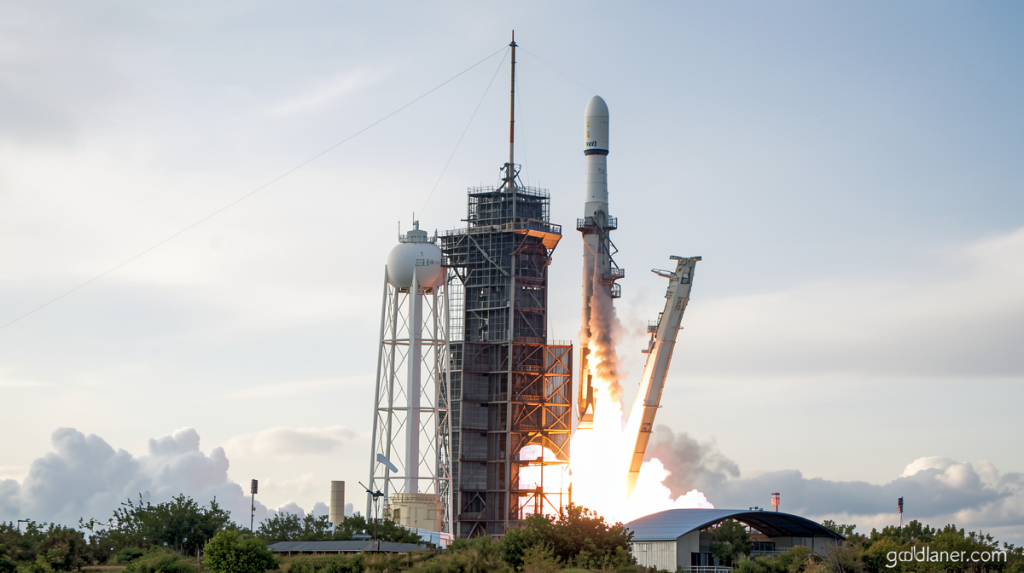
A SpaceX Rocket Was Heading to the Moon: What to Expect
Goldlaner.com – A SpaceX rocket was on a collision course with the moon, and the impact is imminent. A massive piece of human-made hardware is hurtling toward Earth’s natural satellite, destined to leave its mark on the lunar surface. The second stage of a SpaceX Falcon 9 rocket, weighing approximately four tons, is on an unexpected trajectory that will bring it crashing into the moon at speeds exceeding 5,000 miles per hour. This unintentional celestial encounter was anticipated to unfold in the early hours of Wednesday morning. The cylindrical rocket component has been drifting through the vacuum of space since its launch more than a year ago.
Impact Details and Scientific Significance
Originally deployed on January 15, 2025, the Falcon 9 carried two commercial robotic landers toward their lunar destination. While the powerful first stage booster completed its job and returned safely to Earth, the upper stage continued its journey as a silent passenger, eventually becoming an unguided projectile on a collision course with the moon. Researchers have calculated that the collision will generate a crater measuring between 65 and 90 feet across, equivalent to 20 to 30 meters in diameter. The impact point lies near Einstein Crater, positioned roughly where the number 10 would appear on a clock face superimposed over the moon’s surface.
Dr. Paul Wiegert, an astronomy and physics professor at Western University in London, Ontario, provided insight into what observers might witness.
If you imagine the moon is a clock, it’ll sort of roughly hit where the 10 would be. But that part of the moon is lit right now, so the bright flash will be muted by that brightness of the moon itself.
The distance from Earth presents additional challenges for observation. At approximately 225,623 miles away, the impact won’t be visible to the naked eye. Even telescopes may struggle to capture the event clearly. However, sunlight reflecting off the debris plume created by the long cylindrical rocket could make detection possible through specialized instruments.
Mission Background and Disposal Methods
The Falcon 9’s cargo included two distinct lunar landers with different outcomes. Texas-based Firefly Aerospace developed the Blue Ghost lander, which achieved a successful soft landing on the moon in March 2025. Tokyo-based Ispace contributed the Resilience lander, which unfortunately failed to land safely several months after its companion. Julianna Scheiman, director of NASA Science and Dragon Programs at SpaceX, explained the reasoning behind the upper stage’s unusual fate during a Monday news conference.
For missions heading to low-Earth orbit, the nearby region where the International Space Station circles our planet, SpaceX and other operators usually dispose of the upper stage by allowing it to burn up Earth’s atmosphere. But for high energy missions, we need to perform a different maneuver to ensure the second stage itself is safe per the appropriate rules and regulations.
Scheiman noted that solar activity combined with gravitational forces eventually redirected the second stage toward the moon. The agency’s Center for Near Earth Object Studies, which monitors space rocks that might threaten Earth, also verified the impact trajectory.
Looking Ahead: Lunar Debris and Future Exploration
This collision offers scientists a unique opportunity to study the moon’s surface composition and dynamics. The artificial impact provides data that could help researchers understand how to protect astronauts and future infrastructure on the lunar surface. NASA’s Artemis program aims to establish a sustained human presence on the moon. As more missions target Earth’s closest celestial neighbor, managing space debris accumulation becomes increasingly critical. Unlike Earth, the moon lacks a protective atmosphere to burn up incoming objects, meaning debris persists much longer in lunar orbit.
Independent astronomers tracked the Falcon 9 upper stage using publicly available orbital data, confirming its path toward the moon. NASA will continue monitoring the booster for training purposes and plans to observe the impact site scientifically after the collision occurs. While the general public won’t have a live viewing option, imagery from the event should become available in the days following the impact. Astronomers across the Americas, positioned with optimal viewing conditions, aimed both ground and space-based telescopes at the moon in anticipation of the early Wednesday morning event.
The rocket’s upper stage, estimated at 8,818 pounds or 4,000 kilograms, represents just one piece of humanity’s growing presence beyond Earth. As lunar exploration accelerates, understanding how to manage orbital debris will become essential for safe and sustainable space operations.
Frequently Asked Questions
When will the SpaceX rocket impact the moon? The impact is expected to occur in the early hours of Wednesday morning following the launch on January 15, 2025.
Can I see the impact with my naked eye? No, the impact won’t be visible to the naked eye due to the moon’s distance of approximately 225,623 miles. Specialized telescopes may capture the event.
What is the size of the crater that will form? Researchers estimate the collision will generate a crater measuring between 65 and 90 feet across, or 20 to 30 meters in diameter.
Where exactly will the impact occur? The impact point lies near Einstein Crater, positioned roughly where the number 10 would appear on a clock face superimposed over the moon’s surface.
Why didn’t SpaceX deorbit the upper stage? For high-energy missions like this one, SpaceX performs a different maneuver to ensure the second stage is safe per regulations, allowing it to eventually collide with the moon rather than burning up in Earth’s atmosphere.
