
A gender reveal mishap sparked a deadly wildfire. Who’s being held accountable is unusual
A Gender Reveal Mishap Sparks a Deadly Wildfire. Who’s to Blame?
A gender reveal mishap sparked a deadly – In the quiet town of Yucaipa, California, a seemingly ordinary celebration took an unexpected turn into tragedy. A pregnant couple, joined by their children and family friends, gathered at the El Dorado Ranch Park to mark a special occasion. The event, meant to be a joyous gender reveal, involved a pyrotechnic device designed to emit smoke in blue for a boy or pink for a girl. As the device was activated, a fire broke out, igniting a blaze that would spread for months and claim the life of a firefighter. This incident, captured on surveillance footage, has since become a focal point in a unique legal case, as questions arise about responsibility for the disaster.
The Role of Manufacturers in Wildfire Litigation
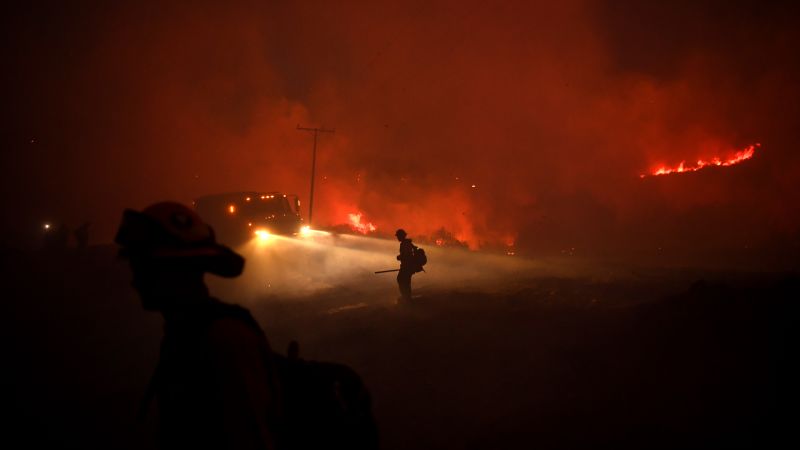
The El Dorado Fire, which scorched nearly 23,000 acres by November 2020, stands out in a legal landscape dominated by lawsuits against utility companies. Unlike those cases, where corporations are often directly linked to power lines sparking wildfires, this situation involves manufacturers whose products were used in an unintended way. Federal prosecutors argue that the companies involved in creating and distributing the smoke bombs failed to ensure their safety, despite knowing the risks. This has sparked debate among legal experts about the extent of manufacturer liability in such incidents.
“Manufacturers typically argue that they aren’t responsible for how consumers use their products, especially after the items are sold,” said Adam Zimmerman, a professor at the University of Southern California Gould School of Law. “They can always claim that the duty to prevent misuse lies with the buyer, not the seller.”
Zimmerman’s comments highlight a key distinction in this case. While utility companies in California are often held strictly liable for wildfires caused by their infrastructure, businesses selling goods like smoke bombs have a more indirect role. This means their legal exposure is usually lower unless there’s evidence of design flaws or inadequate warnings. The settlement reached last week underscores how the circumstances of the El Dorado Fire have forced a reevaluation of that standard.
The Settlement: A Record-Breaking Agreement
Three companies involved in the production, importation, and marketing of the smoke bomb agreed to a federal settlement in 2024. The agreement, totaling over $4 million, covers costs incurred by the U.S. Forest Service in combating the fire and repairing damage to federal land. The primary defendant, Wholesale Fireworks Corp., the device’s designer and importer, was ordered to pay the bulk of the amount. Its subsidiary, American Fireworks Warehouse LLC, also contributed. A smaller sum of $50,000 was allocated to Pink or Blue Gender Team Inc., which handled the distribution and promotion of the product.
The settlement hinges on the premise that the smoke bombs should not have been sold into California, where their use is prohibited due to fire hazards. Prosecutors emphasized that the devices were not properly labeled or warned about the risks of being used in dry conditions. “The two smoke bombs used in the gender reveal party should have never been sold from out of state into California,” federal prosecutors stated. “They were illegally imported, and their creators knew the dangers.”
The Human Cost: A Firefighter’s Life Lost
The fire claimed the life of firefighter Charles Morton, a beloved member of the San Bernardino County Fire Department. His death has left a lasting impact on the community, with officials noting the severity of the incident. “The El Dorado Fire had a tremendous impact on the community of San Bernardino,” said San Bernardino County District Attorney Jason Anderson when the couple was charged in July 2021. “At least six agencies were involved in containing, extinguishing, and investigating the deadly blaze.”
The couple, Refugio Manuel Jimenez Jr. and Angelina Renee Jimenez, faced criminal charges for causing the fire and the firefighter’s death. In February 2024, Jimenez Jr. pleaded guilty to involuntary manslaughter and reckless endangerment, receiving a sentence of two years of felony probation, a year in county jail, and community service. His wife, Angelina, admitted to three misdemeanor charges for causing damage to property through fire, resulting in one year of summary probation and community work.
This case has also drawn attention to the broader legal challenges of holding manufacturers accountable for wildfires. While utility companies are often the default targets in such lawsuits, the El Dorado Fire demonstrates how consumer products can play a critical role in igniting disasters. The unique circumstances—such as the use of a pyrotechnic device during a gender reveal—have complicated the legal narrative, making this case a rare but significant example of product liability in the context of wildfires.
A New Paradigm in Wildfire Responsibility
Legal analysts note that this case is unusual compared to the utility-related lawsuits that have become commonplace over the past decade. For instance, Pacific Gas & Electric was held responsible for the 2018 Camp Fire, which killed 85 people and became the deadliest wildfire in California history. The company paid billions in damages, a stark contrast to the $4 million settlement in this case.
“The difference lies in the nature of the liability,” said Zimmerman. “Utility companies have a duty to maintain their infrastructure, whereas manufacturers must prove that their products were misused in a way that their design or labeling did not adequately warn about.” This distinction has made it challenging for the smoke bomb companies to be held to the same standard as utility giants. Yet, the settlement has set a precedent, showing that even indirect involvement can lead to significant financial consequences.
The El Dorado Fire also serves as a cautionary tale about the risks of using pyrotechnic devices in dry, flammable environments. While the couple’s actions were initially seen as a simple celebration, the fire’s persistence over two months and its devastating reach have highlighted the unintended consequences of such events. “This case is a reminder that even small sparks can lead to catastrophic outcomes,” said a spokesperson for the U.S. Forest Service. “It’s crucial to understand the potential risks before using any fire-based products, especially in areas prone to wildfires.”
As the settlement concludes the legal saga, the case remains a notable example of how responsibility can shift in complex wildfire scenarios. While the couple and the companies involved face penalties, the broader implications for product liability and consumer safety are still being debated. The incident has also prompted discussions about stricter regulations on pyrotechnic devices, particularly in regions where wildfires are a constant threat. For now, the story of the El Dorado Fire stands as a unique intersection of celebration, accident, and legal accountability.
