
Flowers under pillows and naked rituals: What really happens at Swedish Midsummer
Flowers under Pillows and the Dance of the Little Frogs: The Swedish Midsummer Festival
Flowers under pillows and naked rituals – Sweden’s Midsummer Festival, a cherished celebration of the summer solstice, is steeped in ancient traditions and vibrant customs that have endured for centuries. While modern interpretations often blend the old with the new, the core rituals remain rooted in pre-Christian paganism and the mystical connection between nature and human life. This festival, held on the longest day of the year, is not only a cultural cornerstone but also a time when Swedes gather to honor the sun, rejoice in community, and indulge in a mix of exuberance and reverence.
A Global Phenomenon with Local Flavor
Though the Midsummer solstice is observed across the Nordic countries and parts of Eastern Europe, Sweden has developed its own distinct version that feels more immersive and symbolic. The festival’s timing, usually falling on the weekend around June 19–25, is a period of anticipation for many. As Hollywood actress Alicia Vikander once explained to Jimmy Kimmel on a viral YouTube segment, the Midsummer is a time of joy, with the iconic “frog dance” being a favorite among Swedes of all ages.
“Everybody between the ages of five and 95 in Sweden knows this dance and does it every year.”
For those unfamiliar with the tradition, the frog dance—a whimsical, high-energy routine—may seem peculiar, but it holds deep cultural significance. Participants leap in circles, wave their hands above their heads, and make quacking noises, all while pretending to mimic the movements of frogs. The dance is said to symbolize the playful spirit of the solstice, a moment when the boundary between the physical and spiritual worlds is believed to be thin. Such eccentricity is part of what makes Midsummer a uniquely Swedish event.
Traditions Rooted in Nature and Myth
The festival’s origins trace back to the ancient Norse pagan rituals, which celebrated the sun’s power and the fertility of the land. Midsummer night, in particular, was regarded as a magical time when the veil between worlds was lifted, and supernatural forces were at their most active. This belief is reflected in the customs that persist today, such as the planting of flowers and the wearing of wreaths. For instance, young women would gather seven types of wildflowers and place them under their pillows, a practice said to help them dream of their future spouses. Though the tradition is less common now, it still lingers in the cultural memory of many Swedes.
Another enduring custom is the decoration of maypoles, which are raised on the eve of the solstice. These poles, adorned with birch branches and blossoms, become the focal point of communal dancing. The ritual of circling the maypole in time with traditional music is a symbol of unity, with participants holding hands and swaying to the rhythm of the season. The maypole itself represents the axis of the world, connecting the heavens and earth—a concept that resonates with the Norse worldview.
Midsummer also involves a feast that is as much about tradition as it is about indulgence. The traditional meal, often featuring pickled herring, new potatoes, smoked salmon, and strawberry cakes, is accompanied by the ritualistic drinking of snaps, a strong spirit distilled from grains or potatoes. These drinks are typically shared in a circle, with participants clinking glasses and singing folk songs that have been passed down through generations. The combination of food, drink, and music creates an atmosphere of celebration that feels both rustic and lively.
Skansen: A Living Museum of Midsummer
For international visitors seeking an immersive experience, Skansen in Stockholm offers a window into the heart of Swedish Midsummer. As the world’s oldest open-air museum, this site reconstructs traditional Swedish life with authentic buildings, crafts, and festivals. The Midsummer celebrations there are particularly elaborate, beginning on the eve with wreath-making and the setup of a bustling market. The event attracts thousands of attendees, blending historical reenactment with modern festivities.
On Midsummer’s Eve, visitors gather to watch the maypole being raised at 11 a.m., a spectacle that marks the start of the main celebrations. The tradition is performed by a group of dancers in colorful regional costumes, each representing a different part of Sweden. These costumes, often handmade and vibrantly detailed, are a visual feast that underscores the pride Swedes take in their heritage. The dancing continues throughout the day, with folk music providing the soundtrack to the revelry.
One of the most anticipated parts of the event is the evening dance, a nod to the public gatherings that once brought communities together in pre-modern times. The atmosphere is electric, with people of all ages participating in the rituals. Even those who prefer to observe from the sidelines are drawn into the joy, whether by watching the dancers or joining in the singing. The MC, who guides the program, ensures that the event is accessible to all, speaking in both Swedish and English to accommodate a diverse audience.
Symbolism and Significance in Everyday Life
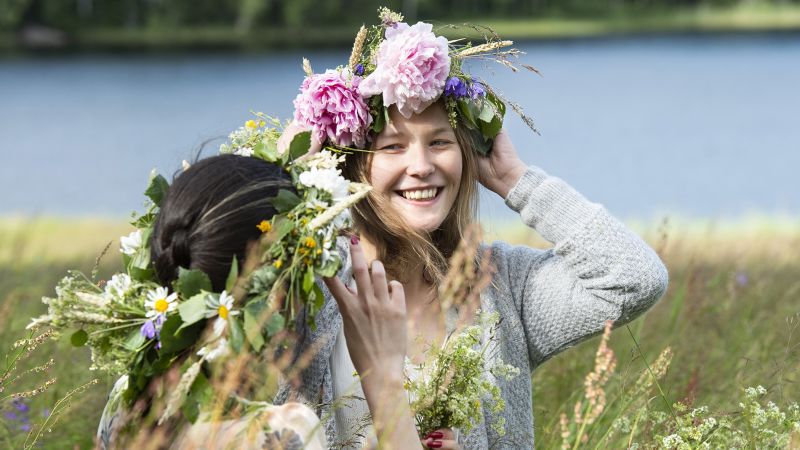
Many of the traditions associated with Midsummer are not just for spectacle but carry symbolic meaning. For example, wearing a flower wreath is believed to bring luck and fertility, a practice that extends beyond the festival itself. These wreaths, made from fresh blooms, are sometimes dried and used in other seasonal rituals, such as the Christmas bath, which is thought to harness the healing properties of plants for the long winter ahead.
Another custom, walking barefoot in the dewy grass on the morning of the solstice, is said to ensure good health. Some Swedes take this tradition a step further by choosing to dance or roll around in the grass fully naked, a practice that combines the celebration of the sun’s power with a touch of primal joy. These rituals reflect a deep connection to the natural world, a theme that has been central to Swedish culture since its pagan roots.
Despite its ancient origins, Midsummer remains a dynamic celebration that evolves with the times. The festival is not just about honoring the past but also about fostering a sense of belonging. Whether through the maypole dance, the traditional meal, or the communal singing, Midsummer is a time when Swedes come together to share joy, history, and a collective spirit of festivity. For those lucky enough to attend events like Skansen’s, it’s an opportunity to witness the living legacy of these traditions and experience the unique charm of Swedish culture firsthand.
As the sun reaches its highest point on the summer solstice, the Midsummer Festival serves as a reminder of the enduring power of tradition. It’s a time when the past and present collide, creating a celebration that is as much about community as it is about the changing seasons. Whether through the lighthearted frog dance or the solemn raising of the maypole, the festival encapsulates the essence of Swedish identity—a blend of mysticism, joy, and a deep reverence for the natural world.
