
Flight diverted because of power bank charging device in hold luggage
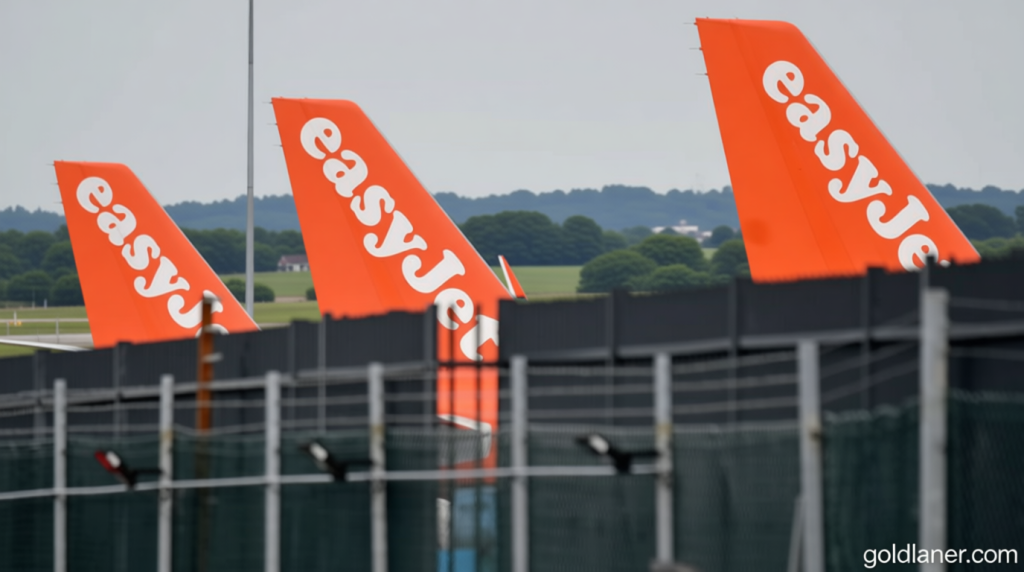
Flight Diverted Over Power Bank Charging in Hold Luggage
Emergency Diversion During Mid-Flight
Flight diverted because of power bank – An EasyJet aircraft en route to London had to change course to Rome after a passenger left a power bank charging a device in their hold baggage, according to the airline. The incident occurred on Tuesday as Flight EZY2618 departed from Hurghada, a bustling Egyptian coastal city on the Red Sea, heading toward its intended destination. FlightAware tracking data revealed the plane was operating at an altitude of approximately 10,980 meters (36,000 feet) when the diversion was initiated. Three and a half hours into the journey, the crew received notice of the power bank’s operation in the luggage compartment, prompting the captain to decide on the precautionary measure of rerouting the flight to Rome Fiumicino Airport. The plane landed at 11:33 p.m. local time, marking the end of an unexpected detour.
“After being informed that a power bank was actively charging another device in the passenger’s hold luggage, the Captain opted to divert the aircraft as a safety protocol in adherence to regulatory standards,” EasyJet stated in a formal communication to CNN. The airline emphasized that the well-being of its passengers and crew remains its primary concern, operating all aircraft in full compliance with manufacturer guidelines. “We apologize for the disruption and delay caused by this diversion,” the statement concluded.
Passengers affected by the diversion were provided with accommodations and meals for the night before continuing their journey to London Luton Airport on Wednesday morning. While the delay was brief, the event underscores the growing caution among airlines regarding the use of lithium-ion batteries in confined spaces. EasyJet’s decision aligns with broader industry efforts to mitigate risks associated with these devices, which have become essential for modern travelers.
Global Restrictions on Power Bank Usage
Since March, the International Civil Aviation Organization (ICAO) has implemented updated regulations to address concerns over power bank safety. These rules limit each passenger to carrying two power banks and prohibit recharging them while in flight. The shift in policy reflects a rising number of incidents linked to lithium-ion batteries, which are commonly found in smartphones, laptops, and portable charging devices.
Several airlines have taken proactive measures to restrict power bank use, even before the ICAO guidelines. Singapore Airlines, for instance, banned passengers from using power banks to charge their devices during all flights. Similarly, Southwest Airlines instructed travelers in May 2025 to keep power banks visible while charging, reducing the risk of them being stored in overhead compartments or under seats. In South Korea, the government enforced a nationwide ban on placing power banks and e-cigarettes in overhead storage, following a fire on an Air Busan flight in January 2025 that injured three individuals. The country’s transport ministry cited the portable power bank as a potential cause of the blaze.
Risks of Lithium-Ion Batteries in Flight
Lithium-ion batteries, while efficient and widely used in consumer electronics, pose specific dangers in aviation. These batteries contain flammable chemicals that can ignite if overcharged, exposed to excessive heat, or damaged. Such conditions may trigger a thermal runaway—a self-sustaining reaction that generates intense heat and smoke, potentially leading to fires or explosions. The Federal Aviation Administration (FAA) reported 563 incidents involving smoke, fire, or extreme heat related to lithium-ion batteries between March 2006 and February 2026. Of these, 230 were attributed to battery packs, highlighting the significant risk these devices carry.
Thermal runaway is a critical factor in many aviation safety protocols. When a lithium-ion battery overheats, it can release gases and ignite, spreading to adjacent items in the cabin or cargo hold. This risk is amplified when power banks are left unattended in hold luggage, where temperature fluctuations and pressure changes may exacerbate their instability. Airlines and regulatory bodies have increasingly prioritized preventing such scenarios, especially after high-profile incidents that raised public awareness about the hazards.
Industry Response and Passenger Compliance
The ICAO guidelines aim to standardize safety practices across international carriers, ensuring a consistent approach to managing battery-related risks. However, individual airlines have also tailored their policies to address specific concerns. For example, some carriers require passengers to store power banks in designated areas or use them only during certain phases of the flight. Others have opted for stricter rules, such as prohibiting the use of power banks altogether in certain circumstances.
These measures have sparked debates among travelers and industry experts. While passengers rely on power banks for convenience, especially on long-haul flights, the restrictions are seen as necessary to prevent potential disasters. EasyJet’s diversion serves as a real-world example of how even a single incident can prompt immediate action, reinforcing the importance of vigilance in aviation safety. The airline’s statement highlights its commitment to safety, emphasizing that the decision to divert was made in accordance with established protocols.
Airline officials and safety experts continue to monitor the effectiveness of these regulations. The ICAO’s March directive is part of a broader trend toward stricter oversight of battery technology in aviation. As power banks become more powerful and compact, the risk of incidents increases, necessitating ongoing adjustments to safety measures. Passengers are encouraged to familiarize themselves with airline policies and ensure their charging devices are handled responsibly during flights.
The incident on EZY2618 also raises questions about the balance between technological convenience and safety. While power banks offer a reliable solution for keeping devices charged, their improper use can compromise flight safety. Airlines and regulatory bodies must work together to educate passengers and implement measures that reduce the likelihood of such events. The diversion to Rome, though brief, illustrates the real-time decisions made by flight crews to prioritize safety, even at the expense of minor delays.
In the wake of the ICAO’s restrictions, airlines are likely to remain vigilant. The FAA’s data underscores the frequency of lithium-ion battery-related incidents, with power banks being a notable contributor. As the aviation industry continues to evolve, integrating new technologies while maintaining safety standards will be a critical challenge. The case of EZY2618 serves as a reminder of the importance of adhering to these regulations, ensuring that the skies remain safe for all travelers.
