
World Cup beginner’s guide: What you need to know for the biggest sporting event in the world
World Cup Beginner’s Guide: A Deep Dive into the Ultimate Global Sporting Event
World Cup beginner s guide – As the 2026 World Cup approaches, the world is gearing up for what promises to be the most anticipated international competition in recent history. This massive event, held every four years, brings together nations from every corner of the globe, showcasing the pinnacle of soccer talent and strategy. Whether you’re a seasoned fan or new to the sport, this guide aims to unravel the intricacies of the tournament, ensuring you’re well-equipped to follow the action with confidence.
The Tournament Format: Structure and Strategy
The 2026 edition features 48 teams competing for the coveted World Cup trophy, marking a significant expansion from previous editions. These teams are divided into 12 groups, each containing four nations, with the group stage set to begin in December. The draw determines which countries will face one another, and within each group, every team will play against the others once. This setup ensures that all participants will have at least three matches before the knockout rounds, creating a highly competitive and unpredictable foundation for the tournament.
Once the group stage concludes, the top two teams from each group will advance to the next phase, joining eight third-place finishers to form a total of 32 teams. This expansion has introduced a new Round of 32, which is expected to heighten the excitement and drama as more teams vie for a place in the final stages. The knockout rounds will follow a traditional bracket structure, with teams progressing through the Round of 16, quarterfinals, semifinals, and the final. Additionally, a third-place match will be held for the losers of the semifinals, ensuring every game contributes to the tournament’s narrative.
Scoring and Match Mechanics: How the Game Works
The scoring system is straightforward yet crucial to the tournament’s dynamics. A win earns a team three points, a draw awards one point, and a loss yields none. This system encourages teams to adopt various strategies, balancing offensive flair with defensive resilience. The goal is to maximize points across three group matches, with the final rankings determining which teams advance to the knockout stages.
Once the group phase is complete, the knockout rounds will bring a different kind of intensity. Matches in these stages are decided by a single winner, eliminating draws and adding layers of suspense. If a game ends in a tie after 90 minutes, teams will have 30 minutes of extra time, split into two 15-minute halves. If the score remains unchanged, the match will proceed to a penalty shootout, where players take turns attempting to score from 12 yards. The team with the most successful kicks advances, and in the event of a tie after 10 attempts, sudden death will decide the victor.
This structure has created a unique balance between consistency and unpredictability, allowing for dramatic underdog stories while favoring the most dominant teams. Despite the global reach of the sport, some fans may still wonder why soccer has such a massive following. The answer lies in its blend of simplicity, strategy, and emotional depth, which has captivated audiences for over a century.
Historical Context: The Evolution of a Global Phenomenon
Soccer, or football as it’s known in most countries, has a rich history that dates back thousands of years. Ancient civilizations like the Greeks and Chinese played early forms of the game, but it wasn’t until the 19th century that modern rules were standardized. The FIFA World Cup, established in 1930, has since become the sport’s defining event, with the first edition held in Uruguay. Over the decades, the tournament has grown in scale and prestige, reflecting the sport’s universal appeal.
“There are forms of ball games that exist in lots of ancient societies,” notes soccer historian Matthew Taylor. “I suppose the most well-known one recently…”
Taylor’s observation underscores the sport’s deep roots and its evolution into a modern spectacle. The World Cup’s ability to unite nations through a shared passion for the game is a testament to its cultural significance. From the bustling stadiums of South America to the packed terraces of Europe, the tournament has become a global celebration of athleticism, creativity, and competition. This year’s expanded format will further amplify that excitement, with more teams and more opportunities for upsets.
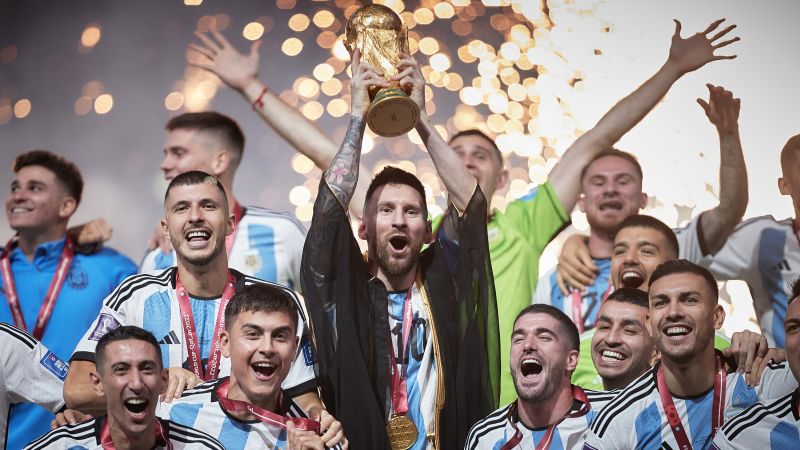
While the top-tier teams like France, Spain, Argentina, Brazil, England, and Portugal are strong favorites to emerge victorious, the World Cup is never short on surprises. Even the most dominant squads can face unexpected challenges, and underdog stories often steal the spotlight. For example, the 2022 tournament saw Argentina defeat the heavily favored England in the final, while the 2018 event featured France’s dramatic comeback victory. These moments of unpredictability are what keep fans engaged, proving that no team is ever truly safe until the final whistle.
Fun Facts and Hidden Details: What You Might Not Know
Did you know that the World Cup is the only major international competition where the host country automatically qualifies for the tournament? This tradition, which began in 1930, has allowed nations like Brazil, Italy, and Germany to build their legacies within their home nations. The 2026 World Cup, hosted in the United States, Mexico, and Canada, will mark the first time three countries jointly organize the event, adding a new layer of cultural diversity to the proceedings.
Another interesting detail is the role of substitutions. During a match, managers can make up to five changes to their lineup, providing flexibility to adapt strategies or manage player fatigue. This rule, introduced to enhance competitiveness, has become a vital tool for coaches. In the group stage, teams are often required to rotate players to maintain energy levels, especially in a grueling 90-minute format.
Even the terminology used in the World Cup is a point of interest. The phrase “March Madness” is commonly used to describe college basketball’s NCAA tournament, but it’s a term that soccer fans might not be familiar with. The author humorously references this in the article, acknowledging the challenges of understanding such terms for newcomers. With the 2026 tournament, however, the goal is to make the game accessible to all, regardless of prior knowledge.
For those eager to test their knowledge, CNN’s Ultimate World Cup Quiz offers a fun way to engage with the sport. Whether you’re predicting the winner of the tournament or trying to recall the rules of a penalty shootout, this quiz adds an interactive element to the experience. As the teams prepare for the challenges ahead, one thing is certain: the World Cup will deliver a mix of heart-stopping moments and strategic masterpieces, ensuring it remains the most thrilling event in the world of sports.
With the 2026 edition set to begin, fans can look forward to a season filled with excitement, drama, and the timeless allure of soccer. The tournament’s expanded format, combined with its rich history and emotional narratives, ensures that it will continue to captivate audiences for years to come. So, grab your seat, follow the action, and prepare to be amazed by the brilliance of the world’s favorite game.
