
Inside the culture that makes Norway so good at sports
How Norway’s Sport Philosophy Creates Champions
Inside the culture that makes Norway – When the Norwegian national team took the field at the World Cup, it served as a powerful reminder that this Scandinavian nation has mastered the art of athletic excellence. Despite having a population of merely 5.5 million people, Norway consistently produces elite competitors across numerous disciplines. From football and tennis to golf and Olympic winter events, this compact country punches well beyond its demographic weight.
The Brazil Match: A Lesson in Pressure
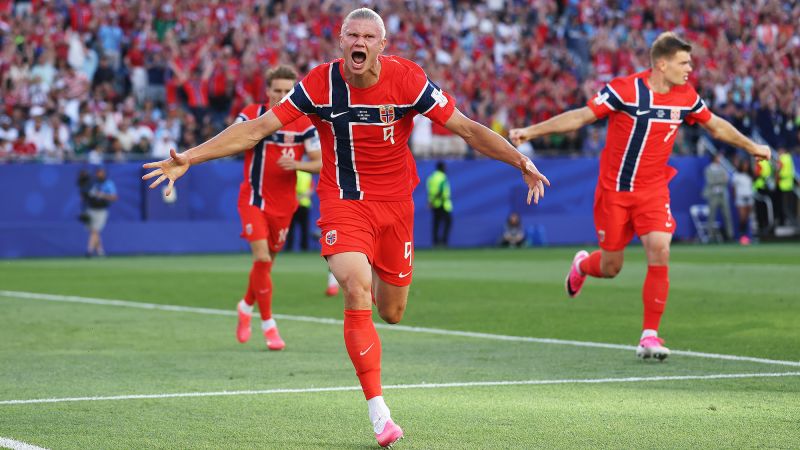
While Erling Haaland undoubtedly commands attention as Norway’s premier attacking talent, one particular moment during their encounter with Brazil revealed something deeper about their sporting DNA. In the closing stages of that match, a forty-second sequence captured the essence of Norwegian play. Captain Martin Ødegaard and his teammates circulated the ball with such ease that it appeared almost casual, almost playful, against a nation that practically invented the concept of footballing pressure.
“They don’t play with pressure,” explained Norwegian podcaster Martin Sleipnes to CNN Sports. “In that sequence, they just play as if they’re teenagers on a five-a-side game, they just enjoy themselves. You can tell it by watching the body language, when the pressure goes away you are free to do whatever.”
Haaland later articulated this distinction on social media platforms. He noted that expecting victory from a country with 250 million inhabitants creates a different kind of burden. “To have 250 million, or however many it is in Brazil, to expect you to win a football game is not easy. So, the pressure is on them, and you could kind of see that today, we just played football and enjoyed it,” he observed.
Historically, Norway holds a unique position against Brazil. In five meetings between the two nations, the Røde, Hvite, Blå has secured three victories, making them the sole opponent Brazil has never defeated.
Winter Dominance and Beyond
After a twenty-eight year absence from the World Cup stage, Norway’s football team now builds upon their remarkable winter sports achievements. At the Milan Cortina Games in February, they accumulated a record-breaking eighteen gold medals alongside forty-one total medals. This accomplishment is particularly striking given that Norway’s population roughly matches that of South Carolina, yet they regularly outperform nations like China with 1.4 billion people, the United States with 342 million, Germany with 84 million, Italy with 59 million, and Canada with 40 million.
While winter excellence might be expected from a Nordic country, Norway’s success extends far beyond snow and ice. Their triathlon program stands as the world’s finest. Viktor Hovland ranks among golf’s elite competitors. Casper Ruud climbed to world number two in the ATP rankings. Haaland battles for the World Cup’s Golden Boot while establishing himself as one of football’s most dangerous strikers. Ada Hegerberg captured the Ballon D’Or, soccer’s most prestigious individual award.
The Foundation: Fun First
Behind all this success lies a consistent philosophy rooted in enjoyment from the grassroots upward. The approach is simple yet effective: if one child receives a trophy, all children receive trophies. The goal is maximizing participation year after year.
“We are not concerned about winning, but about learning,” said Bodø/Glimt’s General Manager Frode Thomassen to CNN Sports earlier this year, explaining how a minnow club from a small town in the Arctic Circle had managed to beat Manchester City, Atlético Madrid and Inter Milan in its first season in the Champions League.
Erik Thorstvedt, a former Norwegian goalkeeper, embodies this philosophy. He watches with pride as his son thrives within the current World Cup squad. “We know that to enjoy football and make it the thing you like to do most in life,” he told CNN, “don’t put too much pressure on the kids.”
Multi-Sport Development
Until children reach twelve years old in Norway, youth sports prohibit scorekeeping and eliminate league standings entirely. This deliberate absence of competitive pressure prevents premature specialization and encourages young athletes to explore multiple disciplines.
The results speak for themselves. Sondre Brunstad Fet once defeated Johannes Høsflot Klæbo in cross country skiing during their teenage years. Klæbo, who now holds eleven gold medals as the most successful winter Olympian in history, originally envisioned himself as a footballer. Midfielder Patrick Berg recently demonstrated his versatility by effortlessly sinking three-point basketball shots in a social media video. Alexander Sørloth played handball and represented Norway as a speed skater at age twelve before joining Haaland as a World Cup striker.
Perhaps other nations, particularly the United States, might benefit from studying this Norwegian model. When enjoyment drives participation rather than winning drives everything, the results follow naturally.
