
How three Norway players are continuing the mission their dads started at the 1994 World Cup
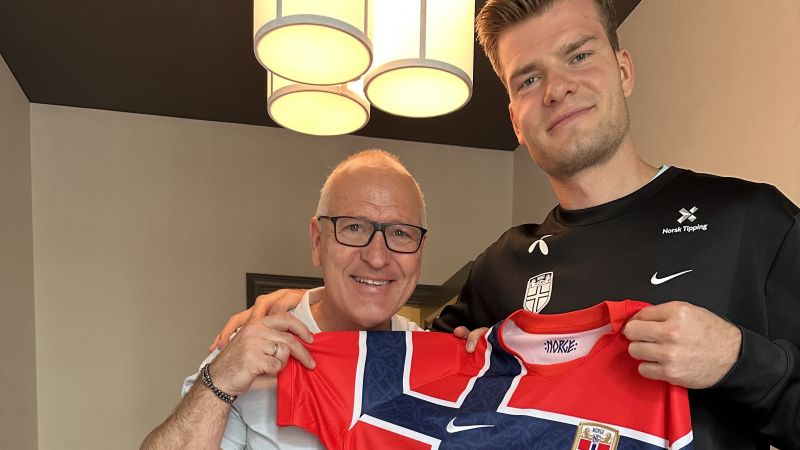
Norway’s 1994 World Cup Legacy Lives On Through Three Players
How three Norway players are continuing – At the 2026 FIFA World Cup, three Norwegian players are continuing the legacy of their fathers who competed in the 1994 tournament. Kristian Thorstvedt, Alexander Sørloth, and Erling Haaland share a unique connection to that historic event, where their parents played alongside each other in the U.S. This generational link highlights a remarkable journey, as the sons now carry the torch of their fathers’ ambitions and efforts on the global stage.
A 32-Year Cycle of Passion and Pride
The 1994 World Cup remains a pivotal moment for Norwegian soccer, even though the team fell short of their goals. Despite a commendable 1-0 win over Mexico and draws with Ireland, they were eliminated by Italy, marking a chapter of perseverance and unrealized potential. Today, the sons of those players are rekindling that passion, proving that the spirit of their fathers lives on in the modern era of the sport.
Kristian Thorstvedt’s emotional journey mirrors that of his father Erik, who played as a goalkeeper. “I had tears streaming down my face,” Thorstvedt said, recalling his debut against Iraq. His father’s experience as a part of the 1994 team adds a profound layer of pride to his current role. Similarly, Alexander Sørloth, who followed in his father Gøran’s footsteps, expressed deep admiration for his son’s path in the World Cup, which is now shaped by a different generation of challenges and opportunities.
From Hardship to Redemption
The 1994 team’s narrow exit left a legacy of determination, which the current players are now building upon. Their fathers’ sacrifices in the tournament laid the groundwork for today’s successes, and the sons are redefining what it means to represent Norway on the world stage. The family ties in the squad underscore how past struggles can inspire future triumphs, creating a cycle of resilience that is both unique and deeply meaningful.
Patrick Berg, another player in the squad, carries the weight of his father Ørjan Berg’s contributions to Norwegian soccer. Ørjan earned 19 caps between 1988 and 2000, a testament to the early development of the sport in the country. Berg’s journey, like his teammates, reflects a blend of heritage and modern ambition. The presence of multiple generations of athletes in the same World Cup highlights a growing trend in Norway’s sports culture, where families are shaping the nation’s identity through shared passion and dedication.
Tradition Meets Innovation
While the tradition of family legacies in sports is common, having three players in the same World Cup squad is a rare phenomenon. This echoes Norway’s broader sports landscape, where athletes have long excelled in disciplines like winter sports and golf. The current generation, however, is leveraging modern techniques and global opportunities to take that legacy further. “We don’t need to force our ambitions onto our children,” Thorstvedt noted, emphasizing the freedom young players have in choosing their paths.
Kristian Thorstvedt nearly chose a different career before his father’s influence brought him back to soccer. His story illustrates the delicate balance between individual aspirations and family legacy. As Norway’s national team continues to evolve, the sons of 1994 players are not only honoring their fathers’ achievements but also pushing the boundaries of what is possible for the nation’s footballing future. Their journey represents a harmonious blend of past and present, a testament to the enduring power of family and tradition in sports.
“He’s scoring more than a goal per match for Norway,” Thorstvedt noted, highlighting the impact of Erling Haaland’s talent. Haaland, whose father Alf-Inge was a part of the 1994 squad, now carries the weight of that legacy with his own extraordinary performances. The Haaland family’s story is a powerful reminder of how a single generation can shape the destiny of a nation’s sport.
